About this artwork
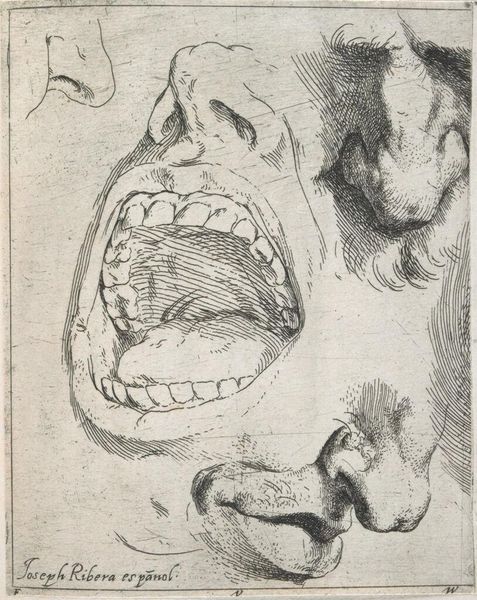
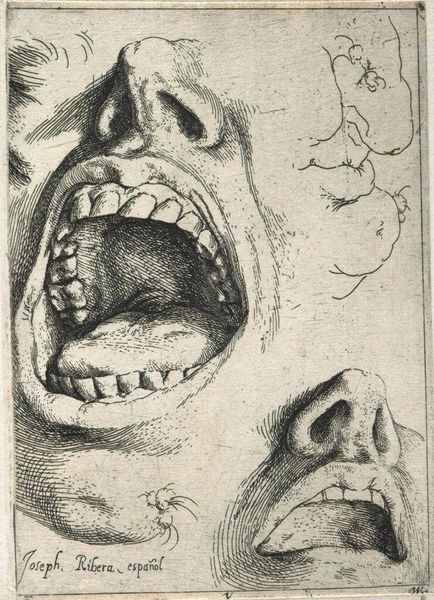
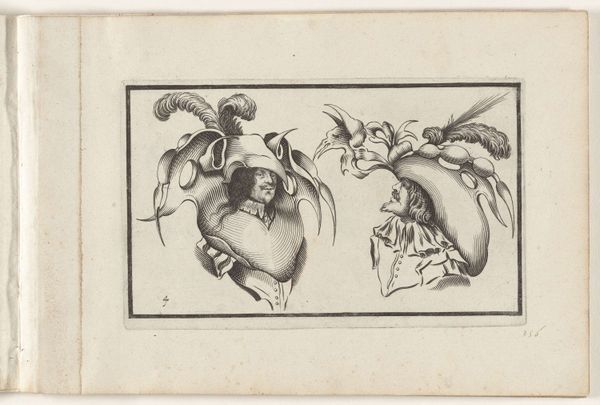
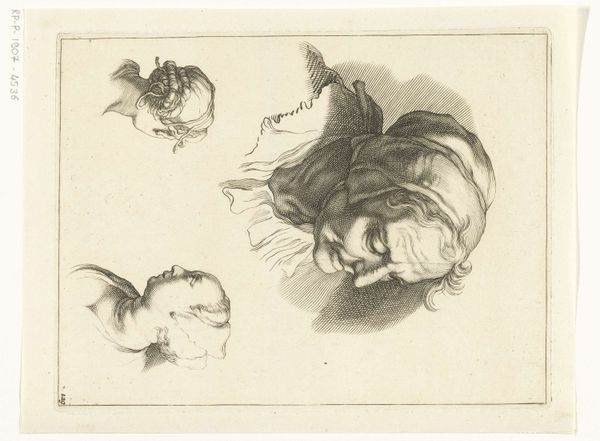
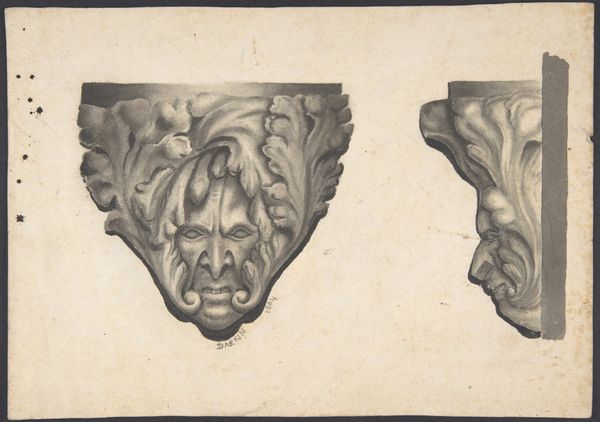
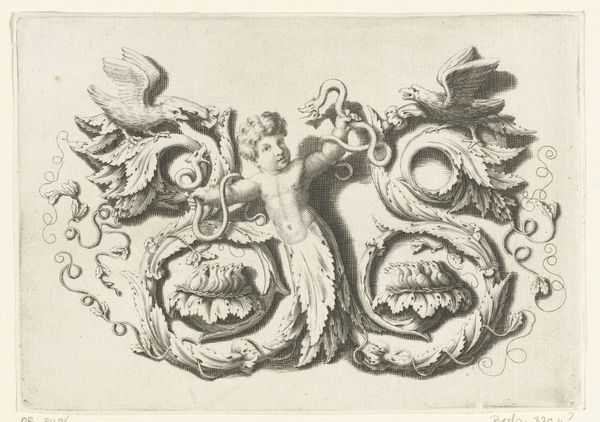
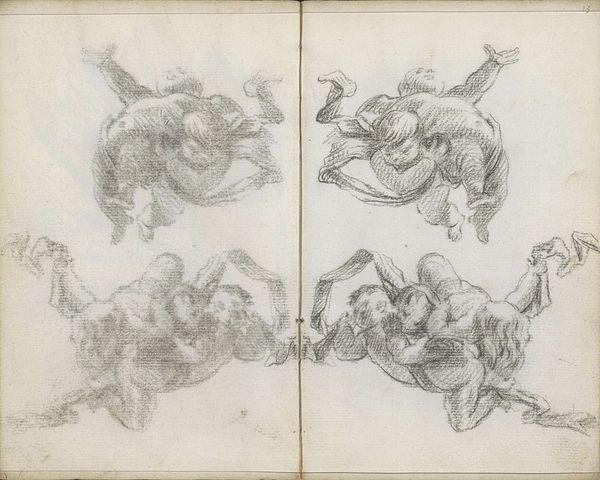
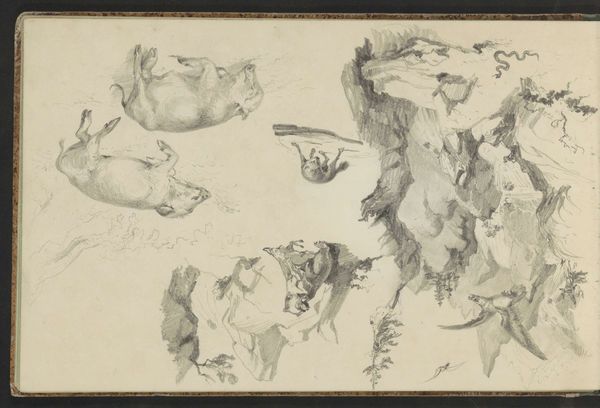
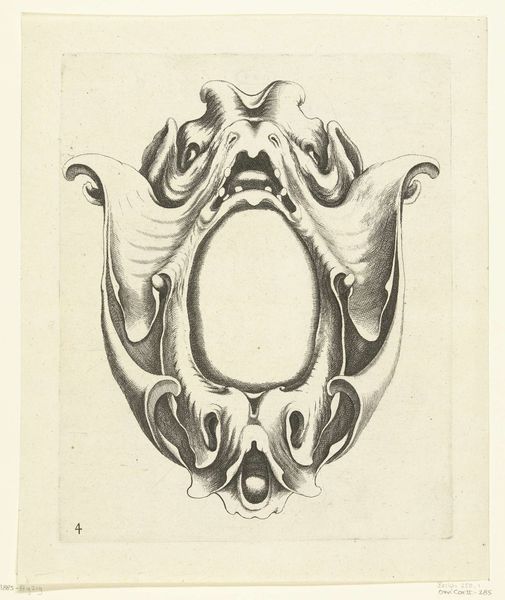
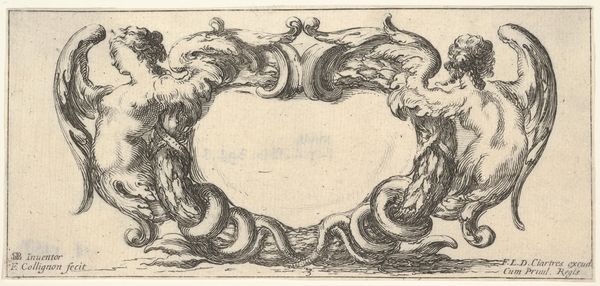
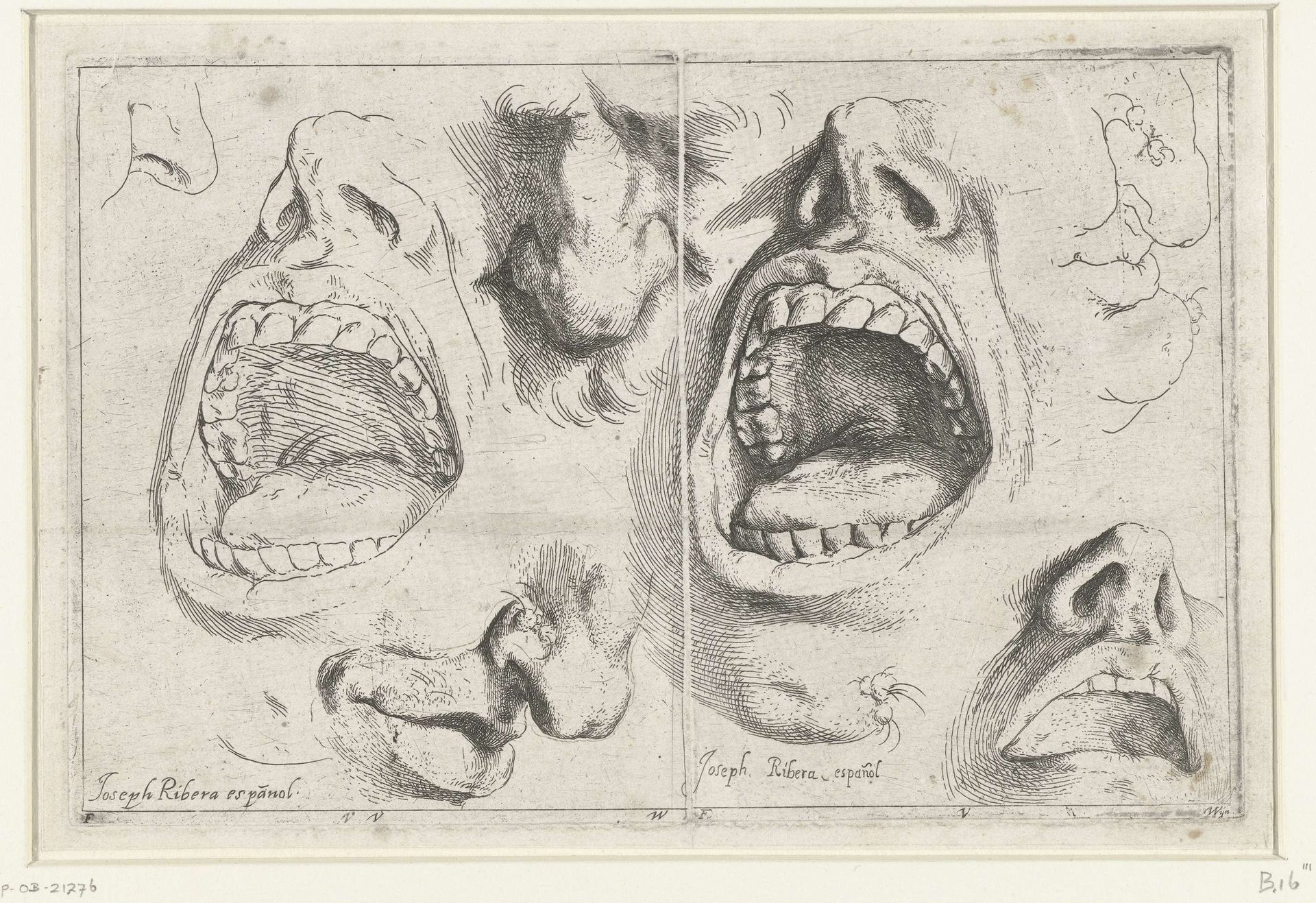
This print of studies of noses and mouths was created by Jusepe de Ribera sometime around the 17th century using etching. It's made through an intricate, labor-intensive process. The artist would have covered a metal plate with a waxy, acid-resistant ground, then scratched an image into it with a needle. Next, the plate would be immersed in acid, which bites into the exposed lines, creating grooves. Finally, the plate is inked, wiped clean, and pressed onto paper, transferring the image. Look closely, and you’ll see the dense network of fine lines giving volume to the forms. The precision required reflects Ribera's skill and the considerable time investment needed for this process. In a world of mass production, it is easy to overlook the labor involved in creating an image like this. But remembering the etcher’s craft allows us to see this print not only as an aesthetic object, but also as a record of human effort and ingenuity. It bridges the gap between fine art and the skilled trades.

Artwork details
- Medium
- drawing, paper, ink
- Dimensions
- height 114 mm, width 115 mm, height 114 mm, width 103 mm
- Copyright
- Rijks Museum: Open Domain
Tags
Comments
Share your thoughts
About this artwork
This print of studies of noses and mouths was created by Jusepe de Ribera sometime around the 17th century using etching. It's made through an intricate, labor-intensive process. The artist would have covered a metal plate with a waxy, acid-resistant ground, then scratched an image into it with a needle. Next, the plate would be immersed in acid, which bites into the exposed lines, creating grooves. Finally, the plate is inked, wiped clean, and pressed onto paper, transferring the image. Look closely, and you’ll see the dense network of fine lines giving volume to the forms. The precision required reflects Ribera's skill and the considerable time investment needed for this process. In a world of mass production, it is easy to overlook the labor involved in creating an image like this. But remembering the etcher’s craft allows us to see this print not only as an aesthetic object, but also as a record of human effort and ingenuity. It bridges the gap between fine art and the skilled trades.
Comments
Share your thoughts