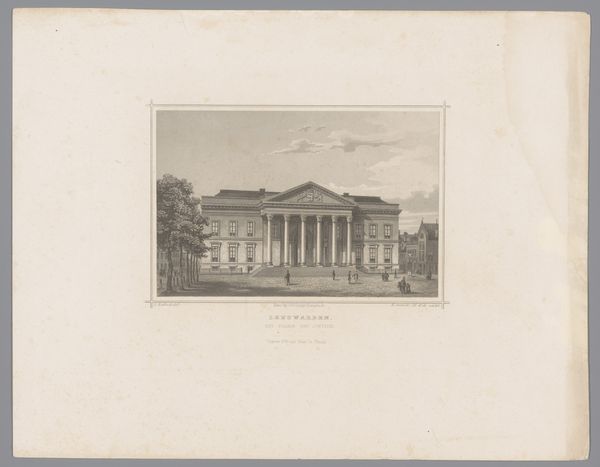
print, etching, engraving
#
16_19th-century
#
neoclassicism
# print
#
etching
#
landscape
#
cityscape
#
engraving
#
watercolor
#
realism
Dimensions: height 183 mm, width 274 mm
Copyright: Rijks Museum: Open Domain
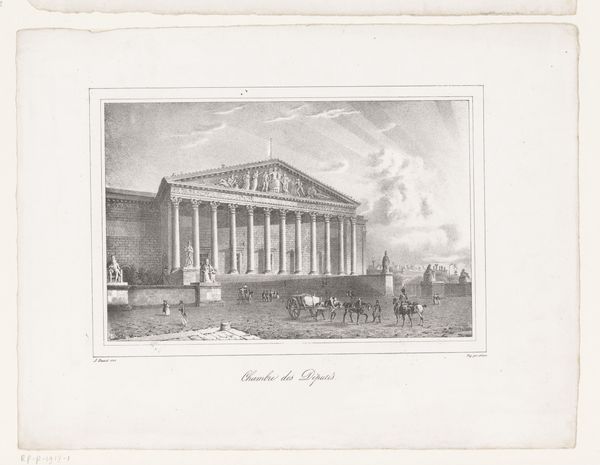
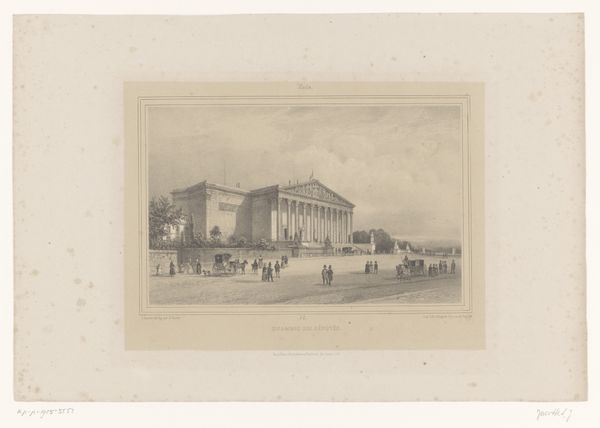
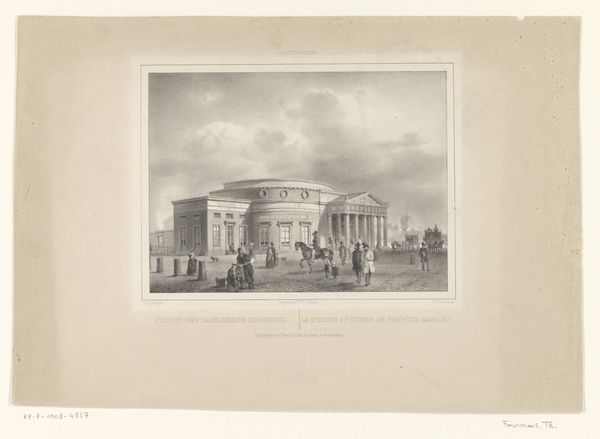
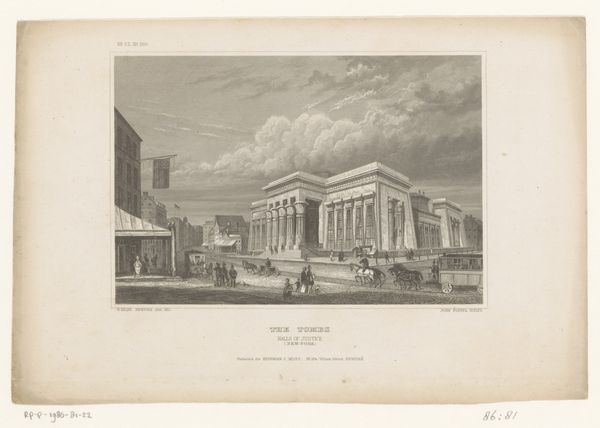
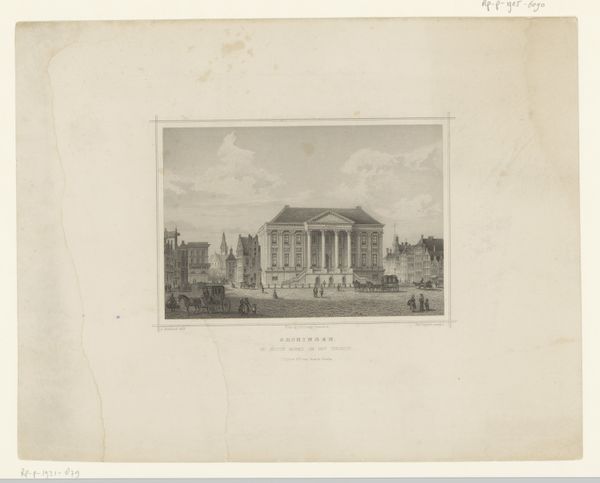
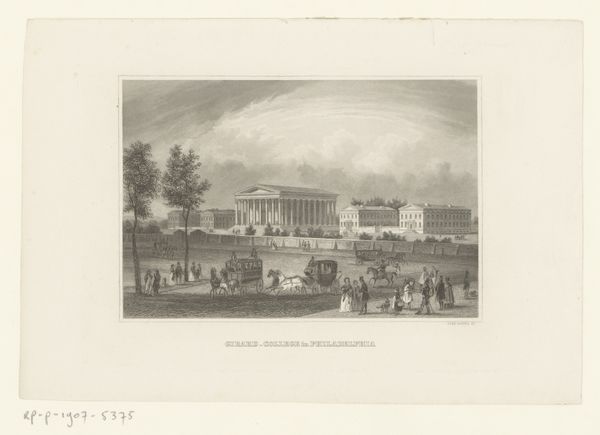
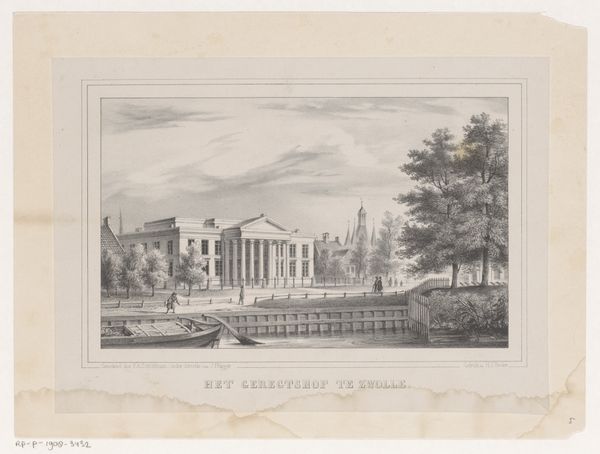
Editor: This print, titled "Gezicht op het Paleis van Justitie te Leeuwarden," dating from 1850, offers a cityscape, and it appears to be an etching or engraving, showing the Palace of Justice in Leeuwarden. I find it interesting how detailed it is. What can you tell me about this piece? Curator: Looking at this image through a materialist lens, I'm immediately drawn to the etching and engraving techniques used. These were labor-intensive processes, accessible to certain artists within particular economic structures. What does it mean to reproduce an image of the Justice Palace through this medium? It democratizes the image, somewhat. Editor: I hadn't considered that. So the medium influences who can see and understand it? Curator: Precisely! Consider also the rise of Neoclassicism visible in the Palace's design. The building itself signifies power, but the print renders this power consumable. We must examine who the intended consumer was for these images and how it connects to emerging urban identities in the 19th century. Are the people present in the image carefully arranged to support the narrative? Editor: They do seem strategically placed—some engaged in conversation, others passing by. Almost staged. I see now that the print medium changes its social and political function entirely. Curator: Indeed. This isn't simply a representation, it’s a produced commodity interacting with an audience and economy. Editor: So, the meaning of the work is rooted in its means of production and how that production connects to society. It reframes the way that the Justice Palace would be originally perceived. I never would have thought of it this way. Thank you.
Comments
No comments
Be the first to comment and join the conversation on the ultimate creative platform.
 Collect
 React
React Comment
More like this