1727 - 1729
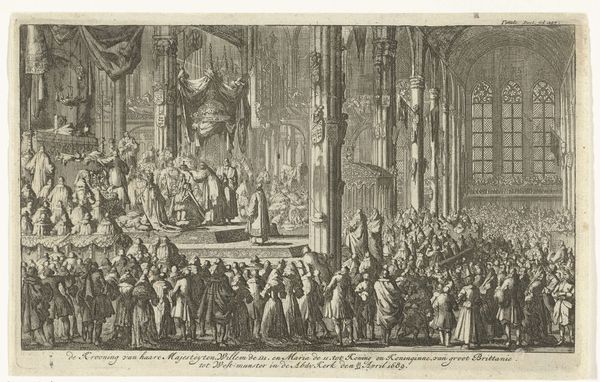
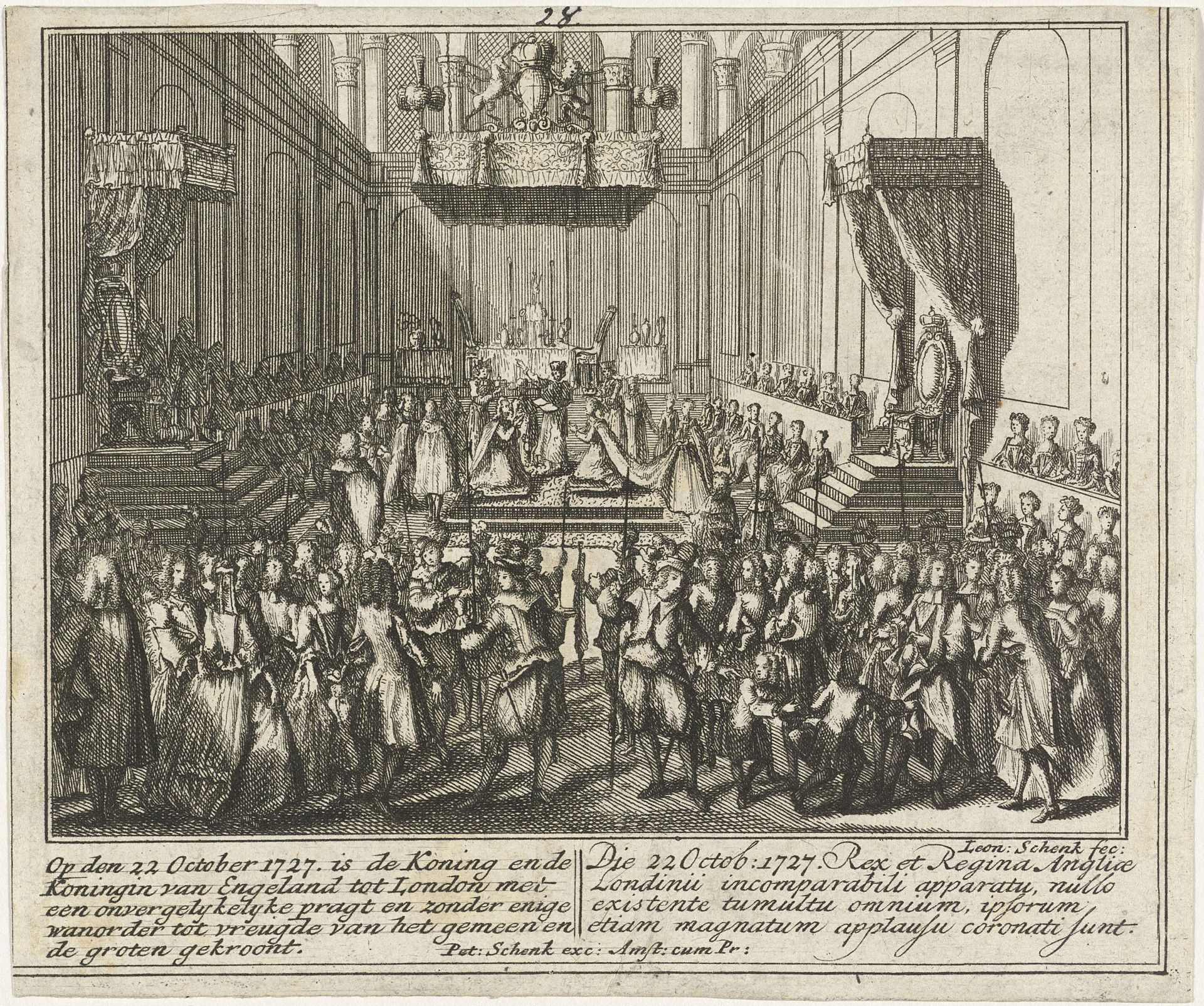
Kroning van George II, koning van Engeland

Leonard Schenk
1696 - 1767Location
RijksmuseumListen to curator's interpretation
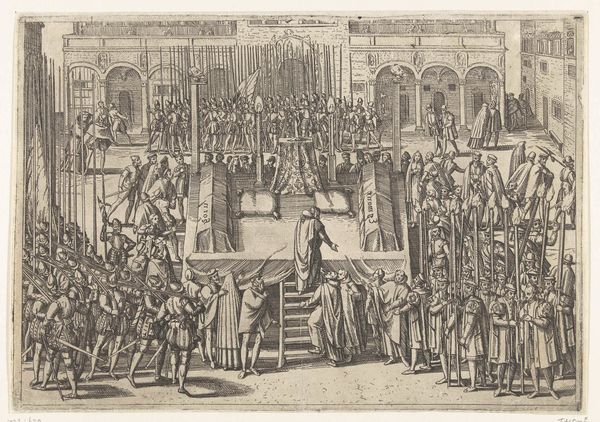
Curatorial notes
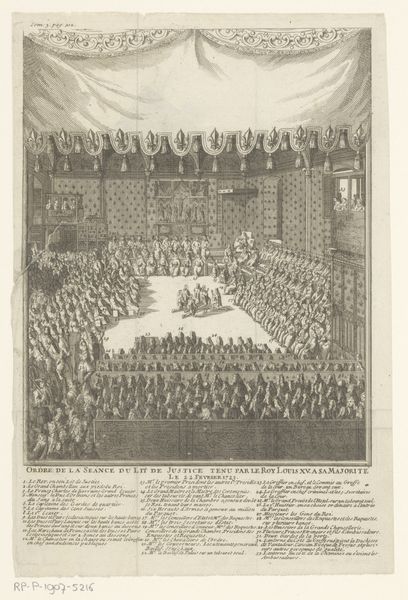
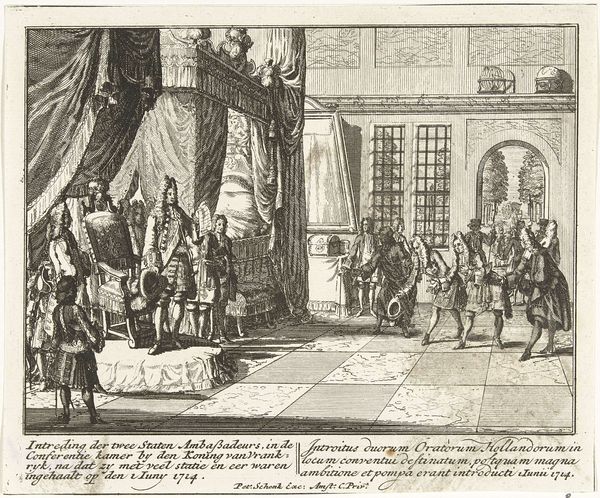
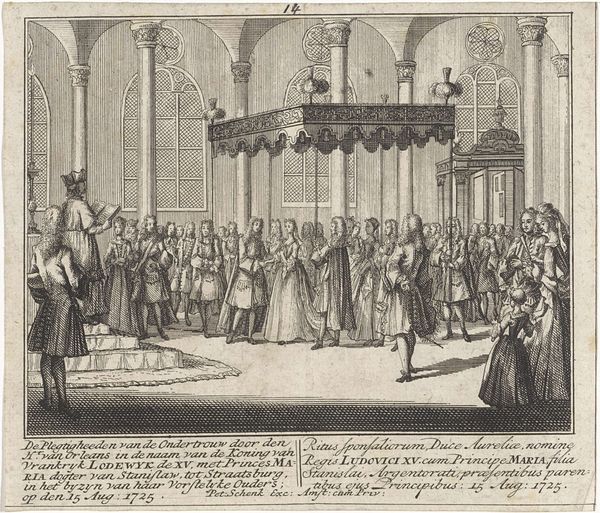
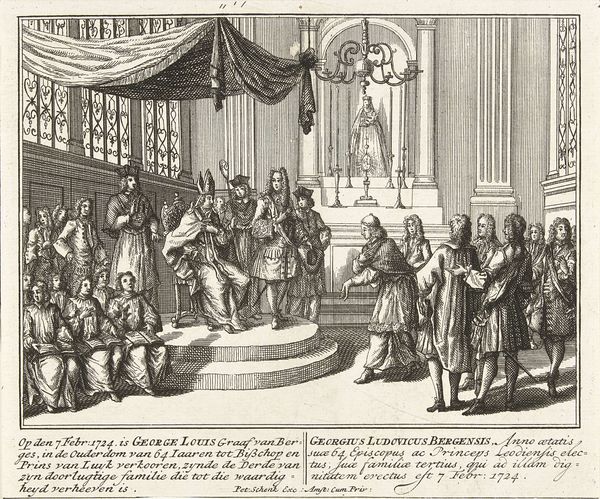
Leonard Schenk made this etching of the coronation of George II in 1727. It wasn't made in England, where the depicted event took place, but in Amsterdam. The event is described in both Dutch and Latin. While ostensibly documenting a British royal ceremony, Schenk’s print engages with a broader European discourse around monarchy, power, and representation. The image creates meaning through visual codes, cultural references, and historical associations that would have been familiar to a Dutch audience, like the clothing, the architecture, and the act of coronation. The Dutch Republic, having won independence from the Spanish Empire just over a century before, had a complex relationship with the idea of monarchy. While officially a republic, the Netherlands had often relied on powerful families like the House of Orange to provide leadership. This print, produced in Amsterdam, may reflect on the nature of leadership. Historians examine sources like pamphlets, newspapers, and personal letters to fully understand the context in which art like this was produced and consumed. What was the public role of art? What are the social conditions that shape artistic production?