Possibly 1910 - 1930
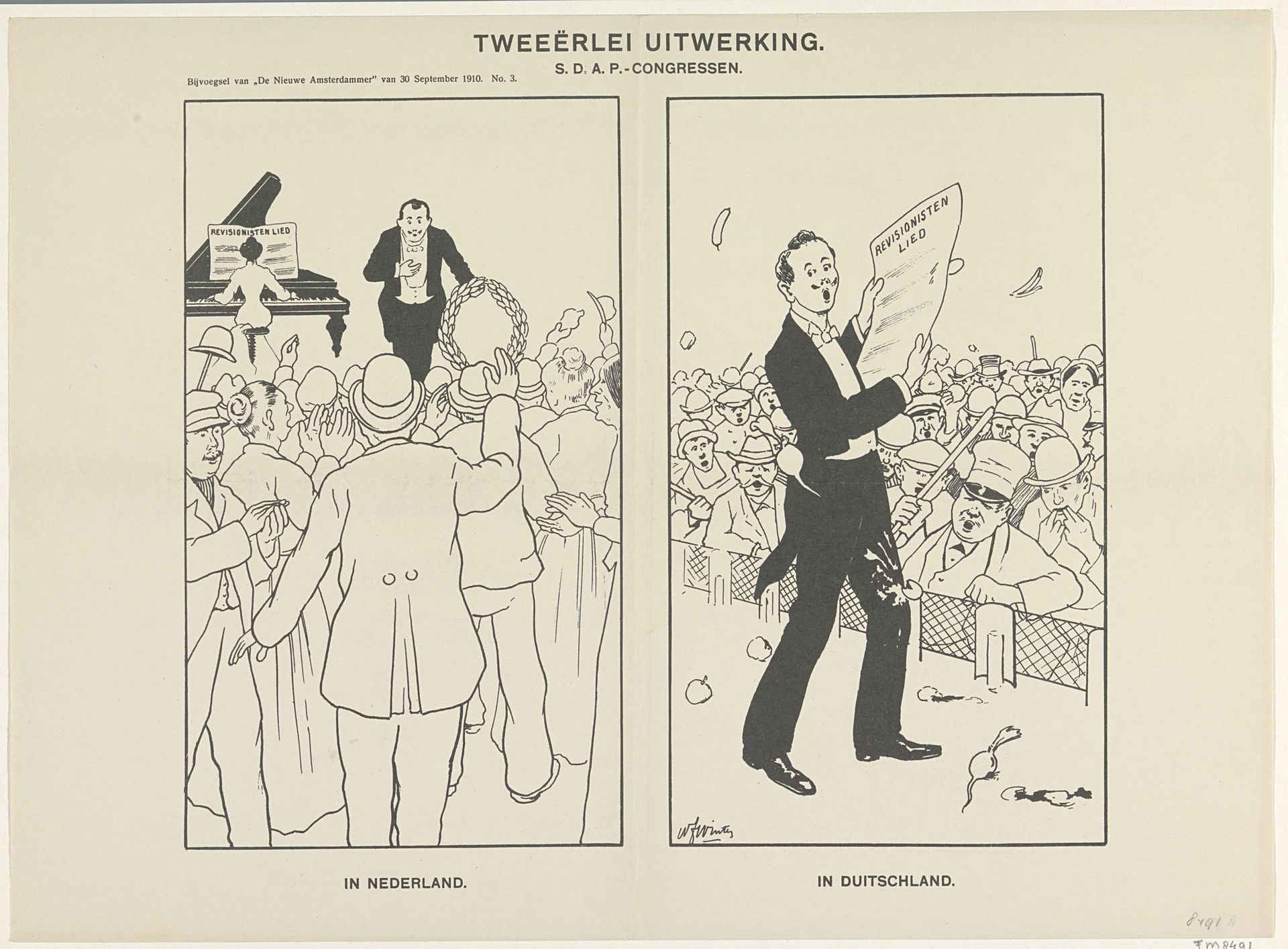
Spotprent op de SDAP partijcongressen, 1910

Listen to curator's interpretation
Curatorial notes
Curator: I’m immediately drawn to the clear visual distinction between the left and right panels in this print. The starkness emphasizes a sharp contrast in atmosphere. Editor: Indeed. What we have here is a graphic piece attributed to Willem Frederik Winter, potentially dating from between 1910 and 1930. Its title, "Spotprent op de SDAP partijcongressen, 1910", or "Cartoon on the SDAP Party Congresses, 1910," hints at its socio-political roots within early 20th-century Dutch politics. Considering this, that stark difference might represent ideological divisions. Curator: Precisely. Symbolically, notice how the left side depicts apparent enthusiasm and approval – people cheering, holding up what looks like laurel wreaths. In contrast, the right panel features objects being thrown at the speaker and what look to be mice scurrying about at his feet, which could mean feelings of dislike and disdain from his detractors in Germany. Editor: I notice, also, how clothing is used to suggest differences, the style on the left seeming somehow modern while the German side of things suggests disapproval of such modernity. This cartoon sketch uses common symbols for division to showcase the tension around the SDAP congress. It makes me consider the contemporary context of socialism at the time, the debates surrounding reformism, and the international impact of socialist ideas. What are they protesting, do you imagine? Curator: Revisionism, probably, seeing how they have Revisionisten Lied [Revisionist Song] listed right above the presenter, making him a direct part of their antipathy for reform of socialism. Editor: The use of seemingly straightforward symbolism within the illustration does invite further study of the social anxieties and complex ideologies present in the SDAP, don't you think? Even if some of the cultural significance escapes us today, the artist’s position is difficult to ignore. Curator: Ultimately, pieces like these remind us how the interpretation of art, and even music, can be molded and re-molded in ways that have serious implications for gender and other areas. It's an active and powerful illustration of an historical sociopolitical divide. Editor: Agreed; studying such contrasts gives the symbolism context to remain culturally poignant through the ages.