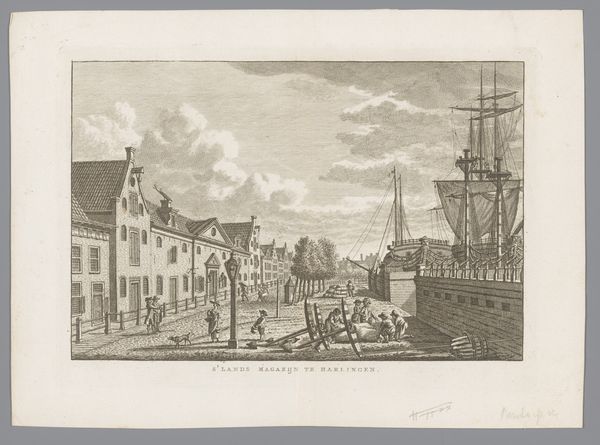
Gezicht vanaf het Haringvliet richting Engelse kerk te Rotterdam 1762
0:00
0:00

leendertbrasser
Rijksmuseum
Dimensions: height 320 mm, width 423 mm
Copyright: Rijks Museum: Open Domain
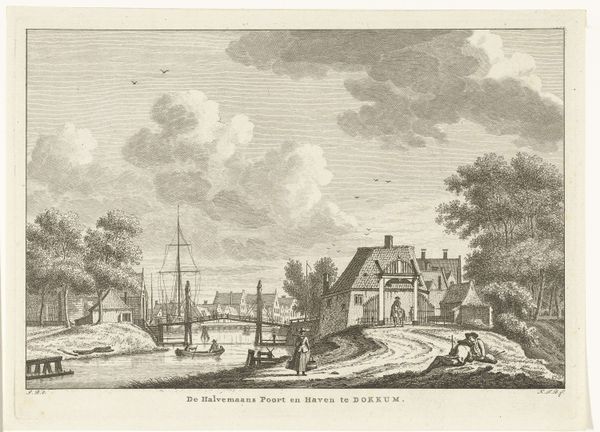
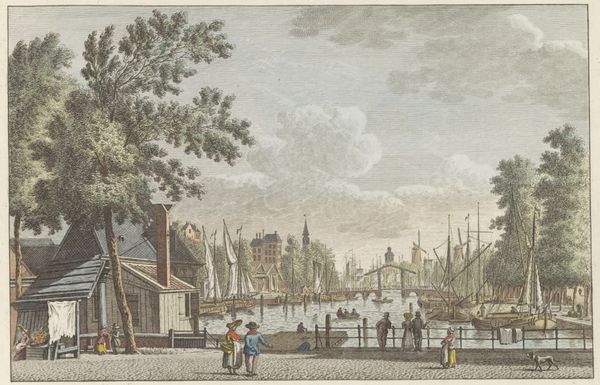
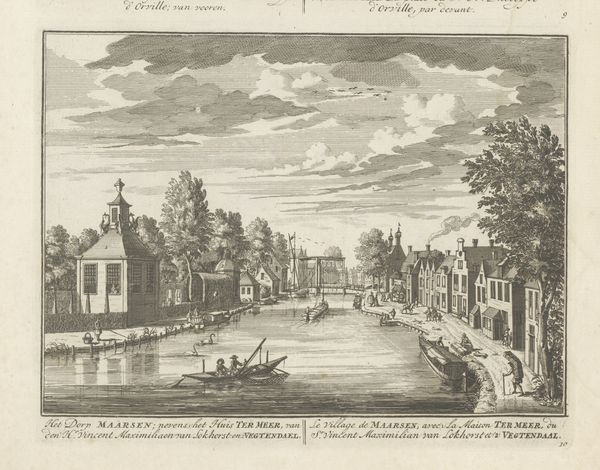
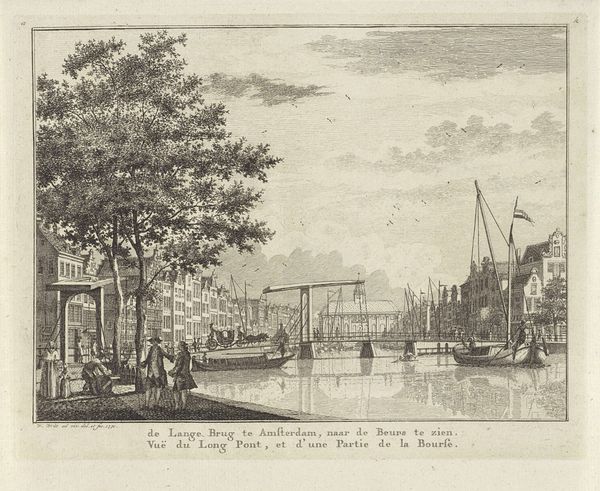
Curator: This is “View from the Haringvliet towards the English Church in Rotterdam” by Leendert Brasser, created in 1762. It's currently housed in the Rijksmuseum. What’s your first impression? Editor: Tranquility. It’s that very still, slightly hazy quality that makes you feel like you’re stepping into another century. Everything's in shades of grey; the boats, the buildings... it’s almost ghostly. Curator: I think that feeling comes through quite strongly from the engraver’s art. Brasser used printmaking to document Rotterdam's evolving cityscape during a period of economic growth and social change. Think of the role engravings played, acting almost like postcards of the era! Editor: True. I love the everyday moments he captured too. See the folks chatting by the boats, the little dog trotting along? It’s a detailed but almost nonchalant slice of life. You wouldn’t necessarily feel it was "grand art," but the human element draws me right in. Curator: And those little details tell bigger stories about the social landscape, what people valued. Rotterdam was, and still is, a place of international connection and commerce. The English Church prominently in the view highlights the multicultural aspect. It reminds us that cities are always spaces of interaction. Editor: The detail is truly extraordinary for an engraving. The subtle lines that create those skies, those rippling waters... The medium emphasizes structure. And it really emphasizes that particular moment. Looking at the baroque churches here I think the technique creates a kind of order as much as documents its style. Curator: Indeed, the print medium here renders the city both enduring and intimately tangible. By rendering reality so precisely, does Brasser capture the "truth" or construct it? Editor: A perfect question with no simple answer, perhaps like history itself! Curator: Thanks to Brasser's artistry we've both reflected on an image, on how cityscapes hold their stories, and how an artist in 1762 could engage in something akin to urban storytelling through etching and burin.
Comments
No comments
Be the first to comment and join the conversation on the ultimate creative platform.
 Collect
 React
React Comment
More like this