About this artwork
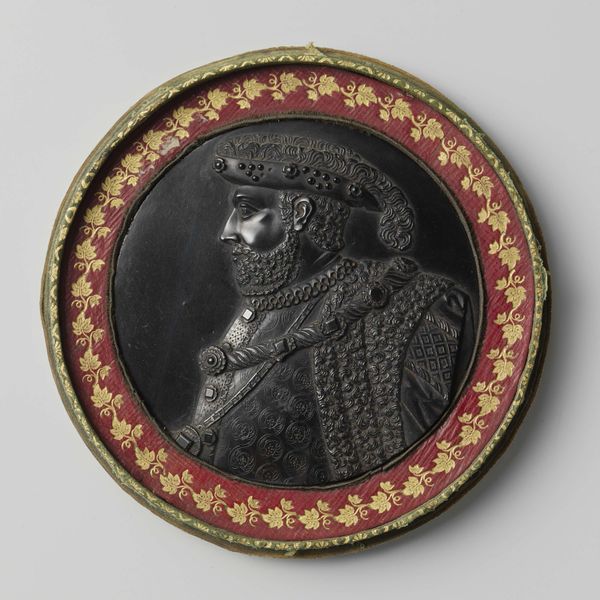
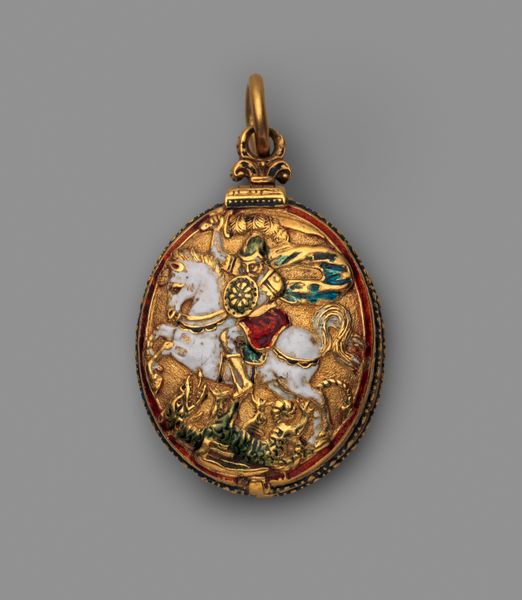
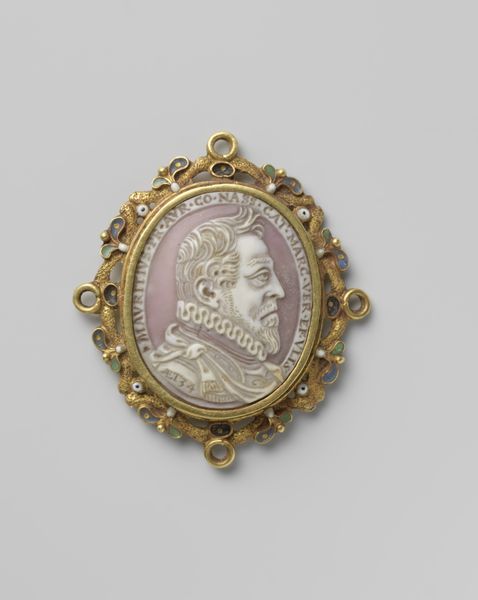
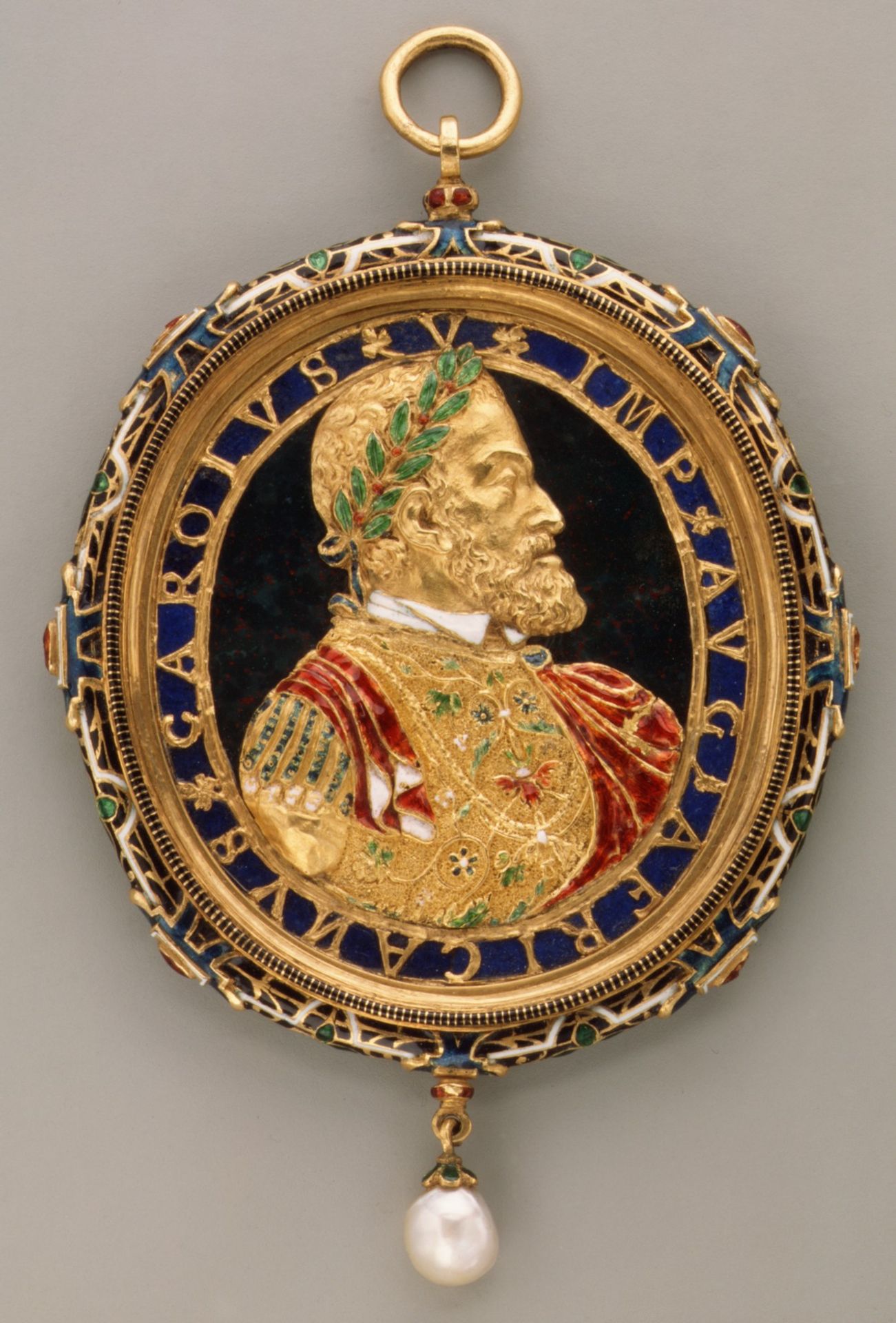
Alfred André crafted this enamel pendant of Emperor Charles V, around 1880, now residing at the Metropolitan Museum of Art. The artwork's visual essence lies in its concentric composition and richly textured surface, creating a captivating interplay of light and shadow. The use of gold for the Emperor's figure contrasts with the dark enamel background, which imbues the piece with a sense of depth. André's manipulation of form is of interest here. The circular shape of the pendant, inscribed with 'CAROLVS V. IMP AVG CAES', is not merely decorative. It functions structurally, directing our gaze towards the Emperor's profile. The surrounding frame, embellished with intricate detailing and precious stones, further enhances the pendant's symbolic value as an object of status. This emphasis on ornamentation and precious materials echoes the complex semiotic systems of power. The Emperor’s image, rendered with meticulous detail, is not simply a portrait, but a carefully constructed representation of authority and historical legacy. The pendant's visual language invites us to consider how art serves to encode and communicate cultural values, offering a glimpse into the enduring interplay between aesthetics and meaning.
Emperor Charles V 1875 - 1899


Artwork details
- Medium
- ornament, metal, gold, sculpture, engraving
- Dimensions
- 4 1/4 × 2 5/8 in. (10.8 × 6.7 cm)
- Location
- Metropolitan Museum of Art, New York, NY
- Copyright
- Public Domain
Tags
portrait
ornament
decorative element
metal
gold
11_renaissance
historical fashion
sculpture
men
history-painting
decorative-art
engraving
Comments
No comments
About this artwork
Alfred André crafted this enamel pendant of Emperor Charles V, around 1880, now residing at the Metropolitan Museum of Art. The artwork's visual essence lies in its concentric composition and richly textured surface, creating a captivating interplay of light and shadow. The use of gold for the Emperor's figure contrasts with the dark enamel background, which imbues the piece with a sense of depth. André's manipulation of form is of interest here. The circular shape of the pendant, inscribed with 'CAROLVS V. IMP AVG CAES', is not merely decorative. It functions structurally, directing our gaze towards the Emperor's profile. The surrounding frame, embellished with intricate detailing and precious stones, further enhances the pendant's symbolic value as an object of status. This emphasis on ornamentation and precious materials echoes the complex semiotic systems of power. The Emperor’s image, rendered with meticulous detail, is not simply a portrait, but a carefully constructed representation of authority and historical legacy. The pendant's visual language invites us to consider how art serves to encode and communicate cultural values, offering a glimpse into the enduring interplay between aesthetics and meaning.
Comments
No comments