1834
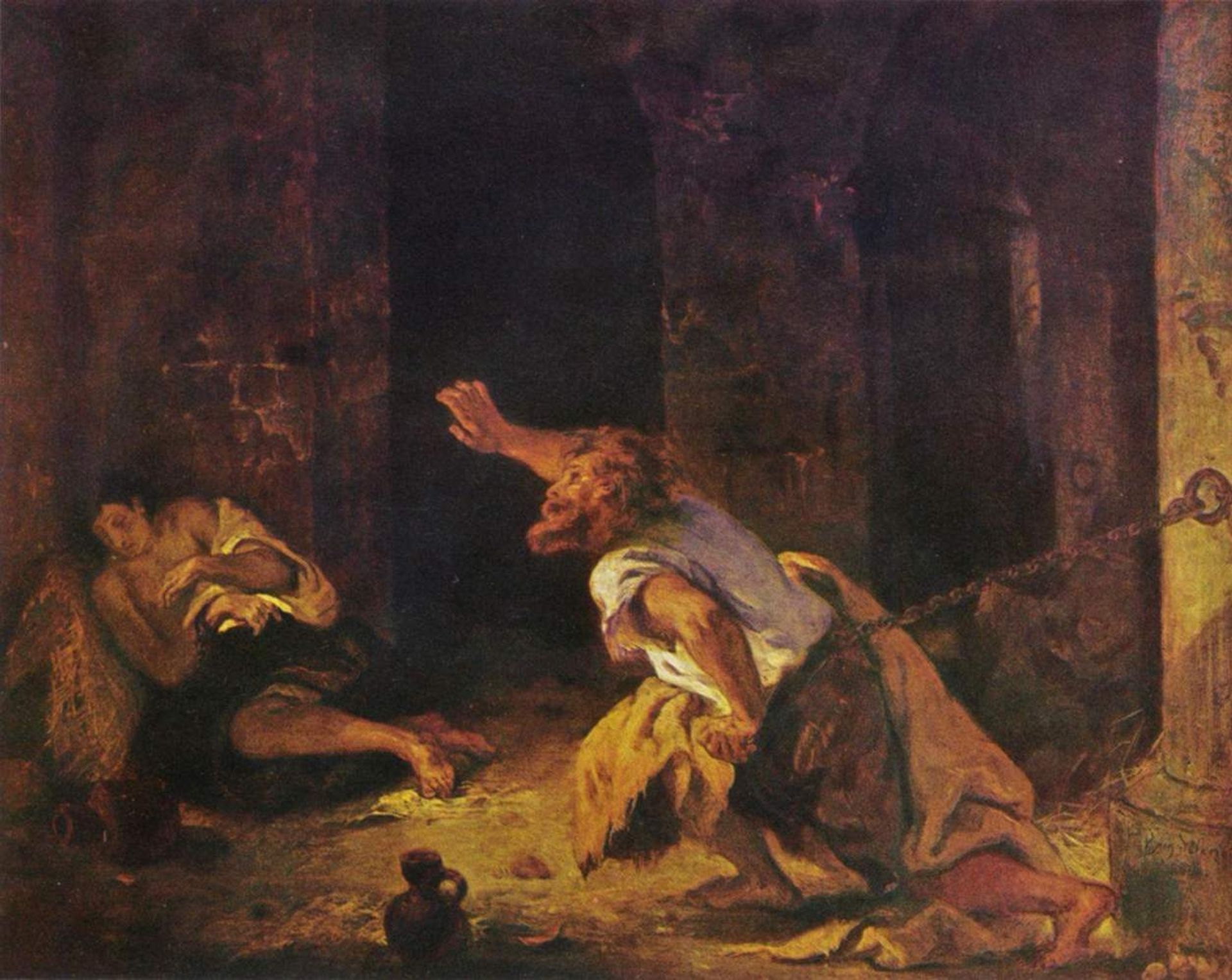
The Prisoner of Chillon


Listen to curator's interpretation
Curatorial notes
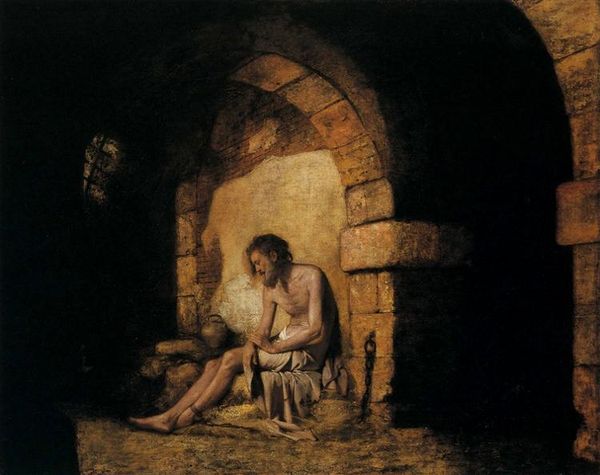
Eugène Delacroix created "The Prisoner of Chillon," now in the Louvre, using oil on canvas to render a scene of confinement and despair. The painting's somber palette, dominated by dark browns and muted yellows, sets a tone of oppressive gloom. The composition is stark: a prisoner stretches, manacled, towards a sliver of light, while another lies prone, seemingly lifeless. Delacroix's brushwork, loose and expressive, adds to the emotional intensity. We can see that the architecture is rendered with a kind of gestural freedom. The painting's structure, with its sharp contrast between light and shadow, creates a stage for the drama of human suffering. Delacroix uses these elements—tone, texture, and composition—to destabilize traditional heroic narratives, offering instead a raw, unflinching look at human vulnerability. This formal choice invites us to consider the cultural codes that valorize freedom, and question their meaning in the face of such stark realities.