About this artwork
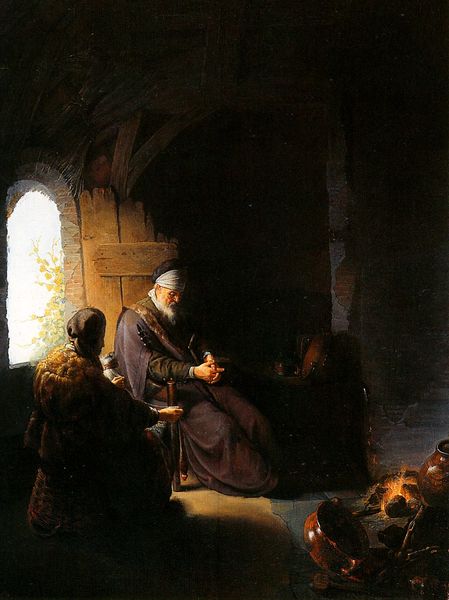
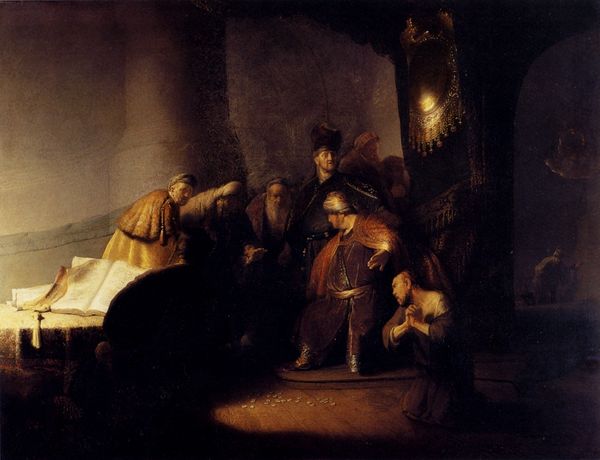
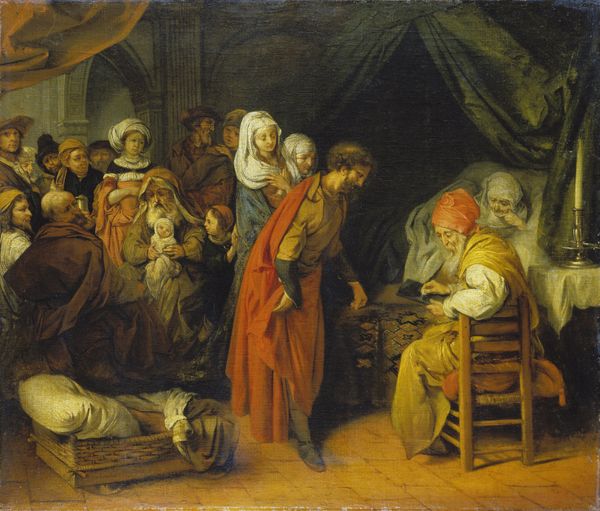
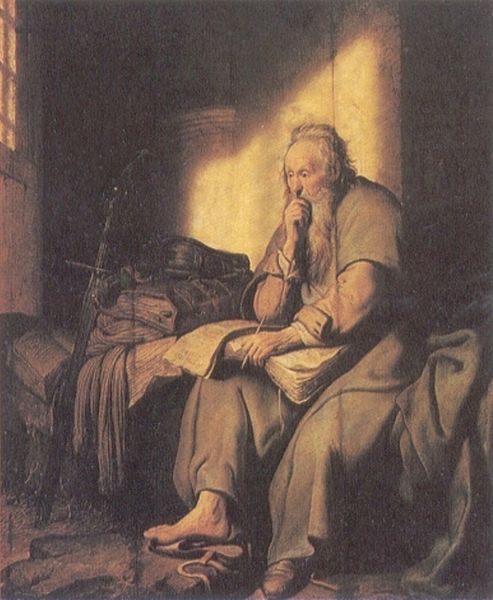
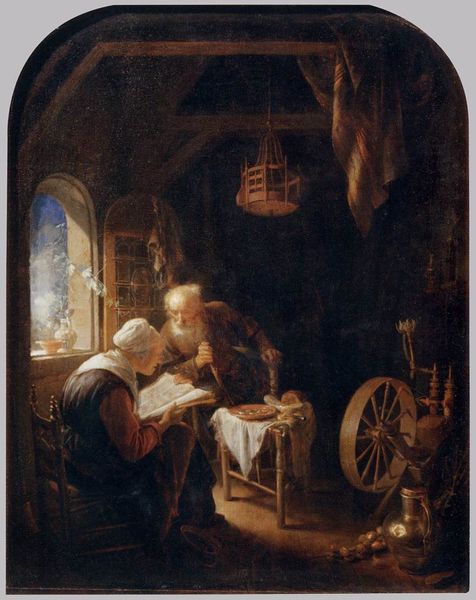
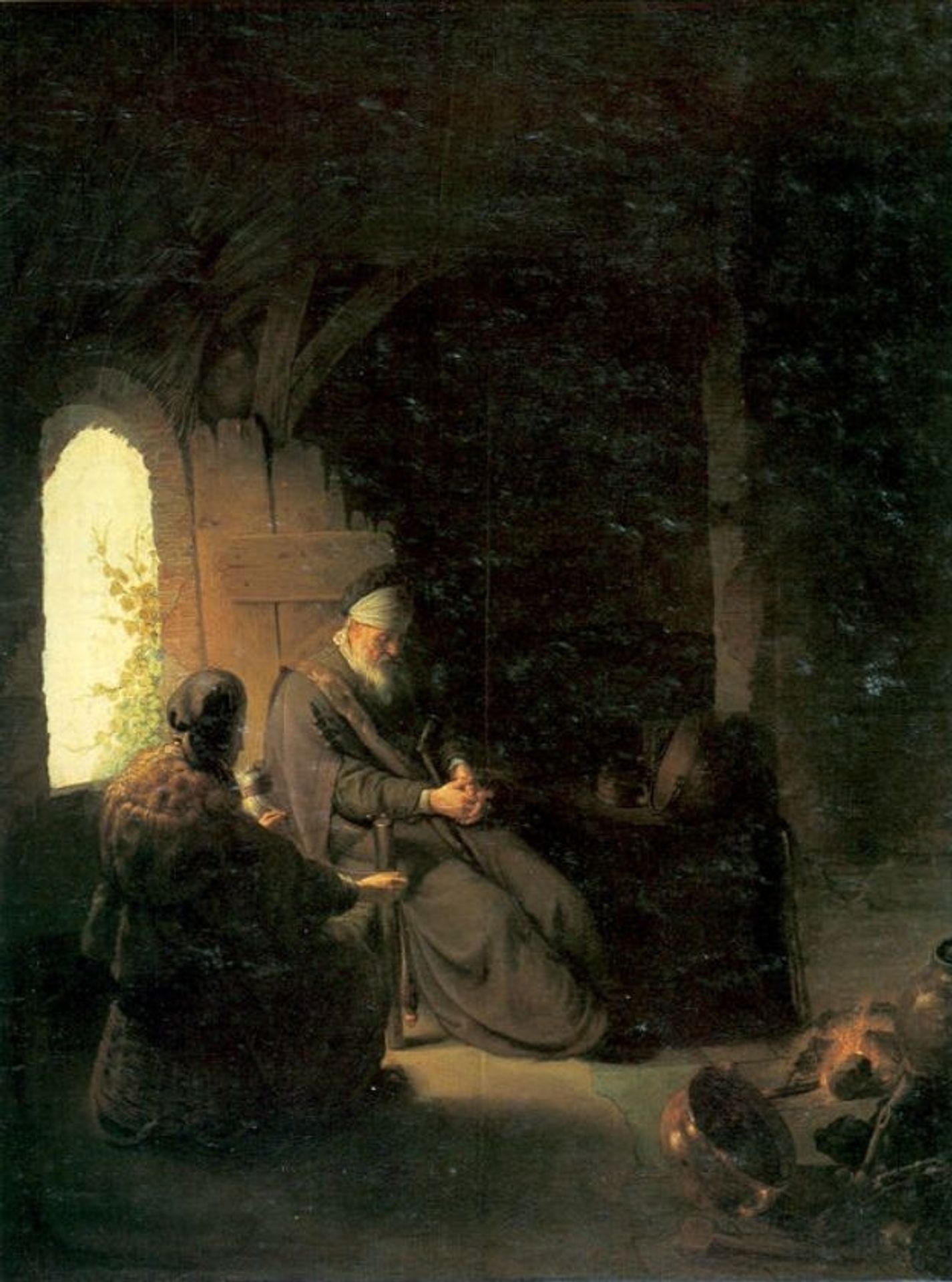
Rembrandt van Rijn, working in the Dutch Republic, painted 'Anna and the Blind Tobit' with oil on canvas. The painting reflects the visual and cultural codes of 17th century Holland, interpreting a story from the Old Testament Apocrypha. The Dutch Republic was unique in Europe for its religious tolerance and republican government. It had a thriving art market, where genre painting and scenes from everyday life were very popular. Religious scenes were common but were often interpreted through a contemporary lens. Rembrandt ran a large studio, and his pupils assisted in the making of his paintings. While Rembrandt never left Holland, he was a keen collector of exotic costumes and props that could add a touch of orientalism to his biblical scenes. Rembrandt scholars consult archival sources such as studio inventories, letters, and other historical documents, which can reveal much about the artist's working methods and the cultural meanings that he hoped to convey.
Anna and the Blind Tobit 1630


Artwork details
- Medium
- painting, oil-paint
- Dimensions
- 47.7 x 63.8 cm
- Location
- National Gallery, London, UK
- Copyright
- Public domain
Tags
portrait
narrative-art
baroque
dutch-golden-age
painting
oil-paint
painted
chiaroscuro
mixed media
Comments
No comments
About this artwork
Rembrandt van Rijn, working in the Dutch Republic, painted 'Anna and the Blind Tobit' with oil on canvas. The painting reflects the visual and cultural codes of 17th century Holland, interpreting a story from the Old Testament Apocrypha. The Dutch Republic was unique in Europe for its religious tolerance and republican government. It had a thriving art market, where genre painting and scenes from everyday life were very popular. Religious scenes were common but were often interpreted through a contemporary lens. Rembrandt ran a large studio, and his pupils assisted in the making of his paintings. While Rembrandt never left Holland, he was a keen collector of exotic costumes and props that could add a touch of orientalism to his biblical scenes. Rembrandt scholars consult archival sources such as studio inventories, letters, and other historical documents, which can reveal much about the artist's working methods and the cultural meanings that he hoped to convey.
Comments
No comments