About this artwork
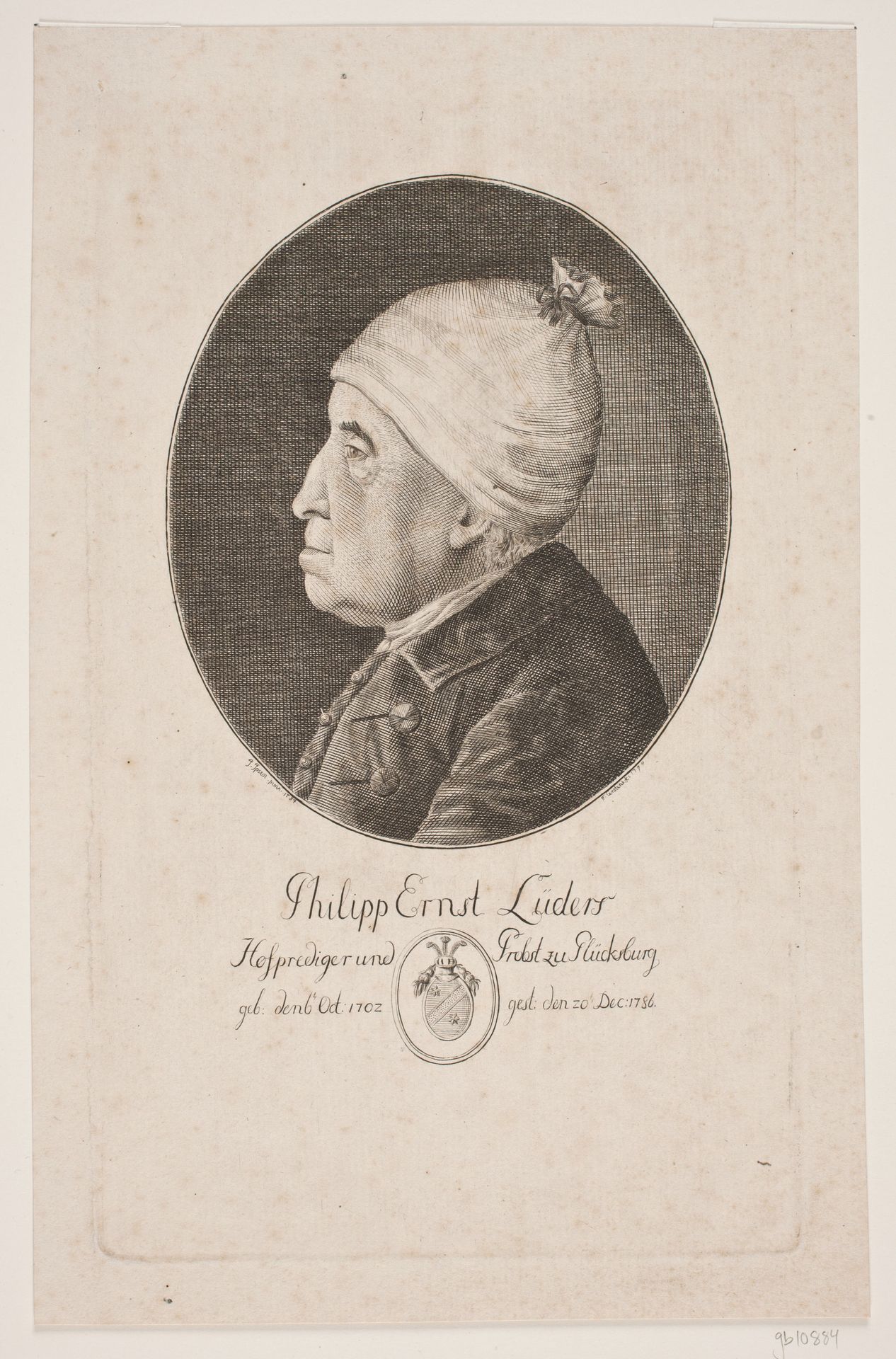
Editor: This is a print from 1794 titled "Provst Philip Ernst Lüders" by Friedrich Carstens. It’s an engraving, and the detail is really striking. I'm immediately drawn to the way the texture is created solely with lines. How do you interpret this work, especially considering it's a print? Curator: As a materialist, I’m intrigued by the process itself. Engraving demands a particular kind of labor. The artist is directly working with the copper plate, a very physical process of incising lines. The resultant print is then endlessly reproducible, impacting its value and availability to different social classes. Consider also the material quality of the paper; was this meant for widespread distribution, or a more exclusive clientele? Editor: That makes me think about how different it is from, say, an oil painting where there’s only one original. The possibility of multiples really changes the audience. Curator: Precisely. This democratizing aspect of printmaking challenges traditional art hierarchies. Was Carstens mass-producing portraits or attempting to elevate printmaking to the status of 'high art'? Furthermore, consider the social context: Who was Philip Ernst Lüders and what message was Carstens trying to convey to the consumers of this print? What function did this image serve within 18th-century society? Editor: So, looking at the materials and production tells us about the intended audience and its role in society, not just about artistic skill. Curator: Exactly. We're examining the conditions of production and consumption, which are fundamentally tied to the artwork's meaning and cultural significance. Editor: That’s a very different way of seeing art than I'm used to, it has me thinking of art’s relationship with consumerism. Thanks. Curator: My pleasure. It's about situating the artwork within the broader network of materials, labor, and social forces.
Provst Philip Ernst Lüders
1794


Artwork details
- Medium
- print, engraving
- Dimensions
- 222 mm (height) x 135 mm (width) (plademaal)
- Location
- SMK - Statens Museum for Kunst
Tags
portrait
neoclacissism
history-painting
engraving
Comments
Be the first to share your thoughts about this work.
About this artwork
Editor: This is a print from 1794 titled "Provst Philip Ernst Lüders" by Friedrich Carstens. It’s an engraving, and the detail is really striking. I'm immediately drawn to the way the texture is created solely with lines. How do you interpret this work, especially considering it's a print? Curator: As a materialist, I’m intrigued by the process itself. Engraving demands a particular kind of labor. The artist is directly working with the copper plate, a very physical process of incising lines. The resultant print is then endlessly reproducible, impacting its value and availability to different social classes. Consider also the material quality of the paper; was this meant for widespread distribution, or a more exclusive clientele? Editor: That makes me think about how different it is from, say, an oil painting where there’s only one original. The possibility of multiples really changes the audience. Curator: Precisely. This democratizing aspect of printmaking challenges traditional art hierarchies. Was Carstens mass-producing portraits or attempting to elevate printmaking to the status of 'high art'? Furthermore, consider the social context: Who was Philip Ernst Lüders and what message was Carstens trying to convey to the consumers of this print? What function did this image serve within 18th-century society? Editor: So, looking at the materials and production tells us about the intended audience and its role in society, not just about artistic skill. Curator: Exactly. We're examining the conditions of production and consumption, which are fundamentally tied to the artwork's meaning and cultural significance. Editor: That’s a very different way of seeing art than I'm used to, it has me thinking of art’s relationship with consumerism. Thanks. Curator: My pleasure. It's about situating the artwork within the broader network of materials, labor, and social forces.
Comments
Be the first to share your thoughts about this work.