print, paper, engraving
portrait
neoclacissism
paper
engraving
Dimensions: height 151 mm, width 101 mm
Copyright: Rijks Museum: Open Domain
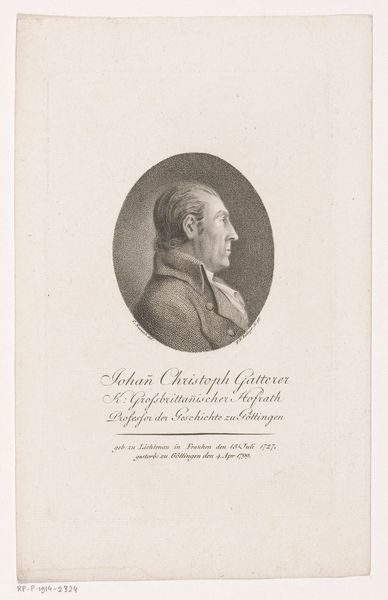
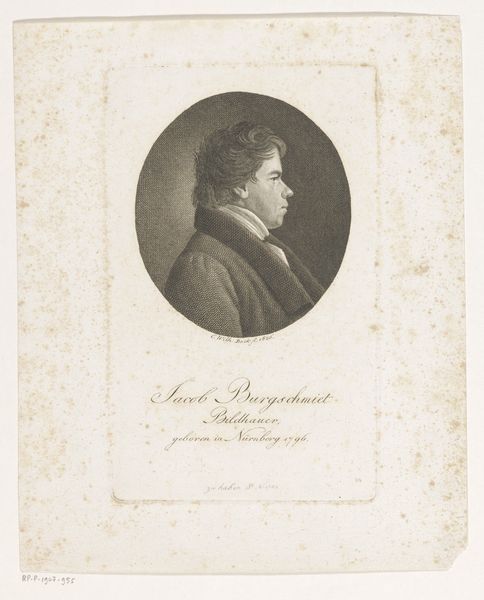
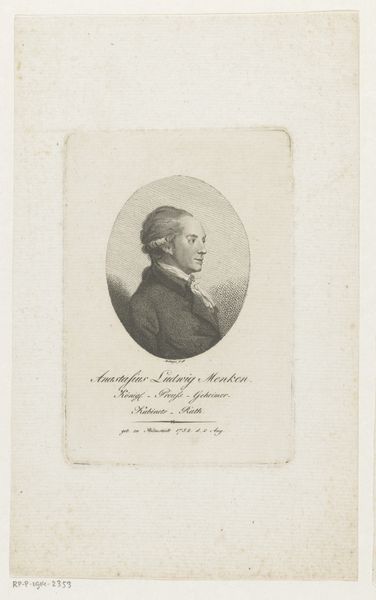
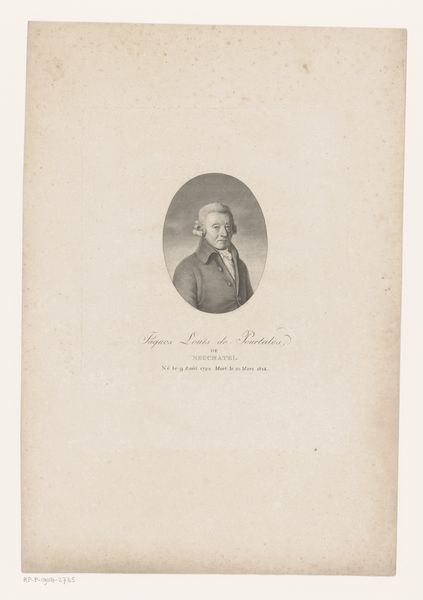
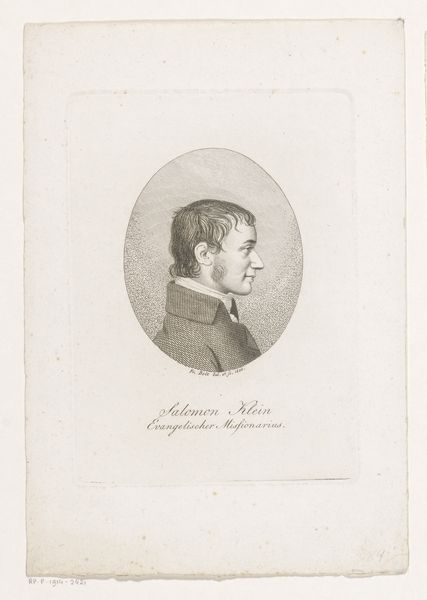
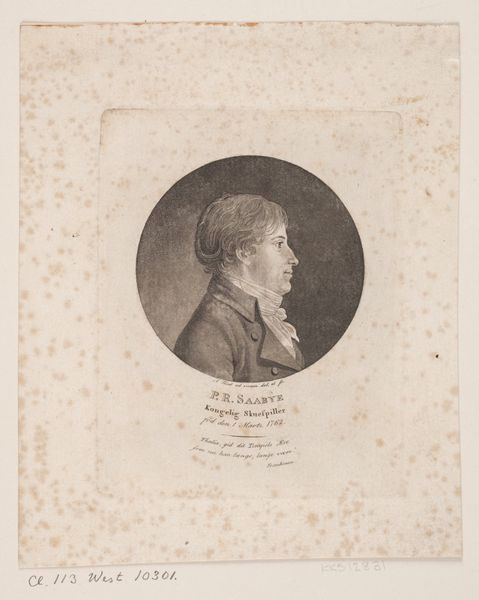
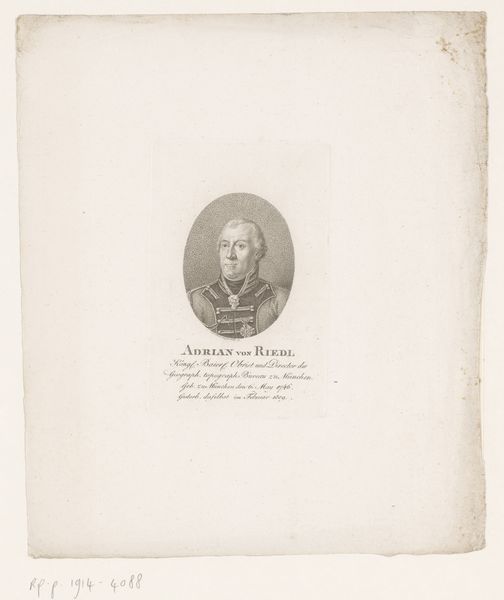
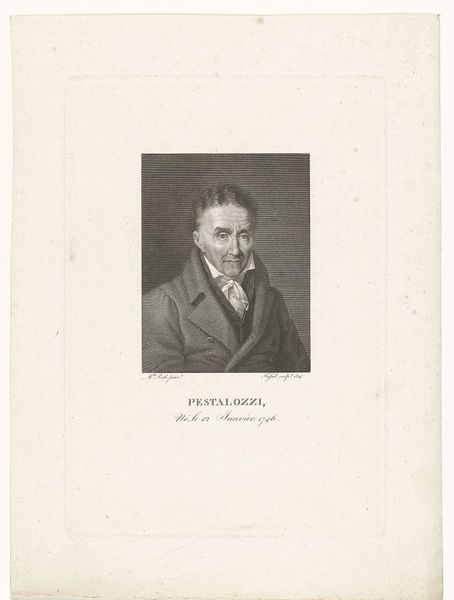
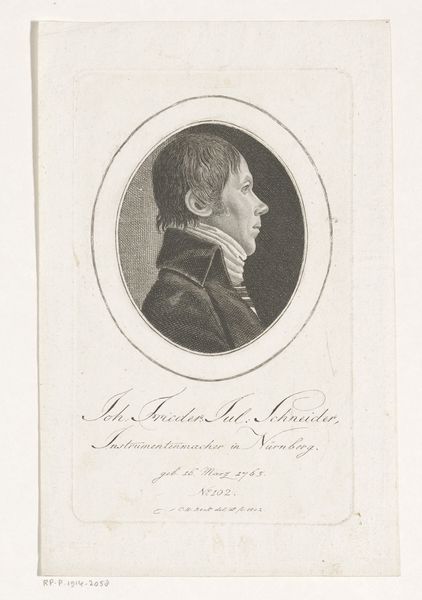
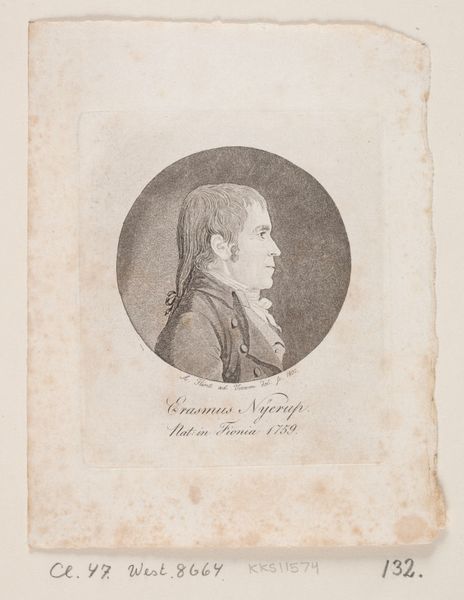
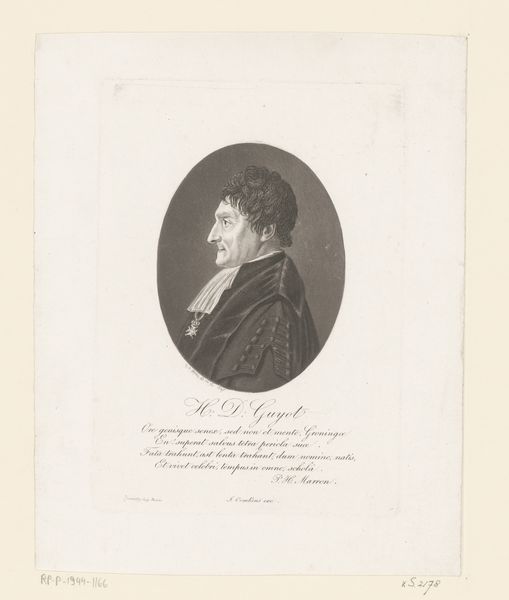
Curator: The stern, almost severe, profile of Johann Georg Schulthess from this 1798 engraving… there's something melancholic, yet undeniably refined, about the whole piece. What catches your eye first? Editor: Definitely the printmaking, and thinking about its labor intensiveness; those crosshatched lines upon lines, slowly building shadow on a copper plate. He wears this hat—a signifier—likely marking status but made from fabric from somebody’s mill. Curator: Exactly. The artist, Friedrich Wilhelm Bollinger, captures him in a classic neoclassical style, fitting for the era, almost… Apollonian, don't you think? All those careful engravings on paper lending such depth. Editor: True, we see the rise of industrial-scale paper production in this period—alongside an explosion of engraved portraiture! How many portraits of learned men were created in the late 18th century with similar materials? Curator: Infinite, perhaps. There is a real tension—an intellectual giant made from paper and ink, these most ubiquitous materials! It almost cheapens it, right? Is that reverence? I think not. Editor: I see less cheapening than a distribution network: portraits used to be exclusively for the aristocracy. Suddenly this preacher, philosopher, translator—it notes here that he’s translated philosophical Greek writings—becomes visible and reproducible. He’s consumed! Curator: But the solemnity Bollinger gives him! That piercing gaze…it cuts through the superficial and it really invites introspection, a moment of considered, contemplative silence... which I suppose, with all this mass printing, you’d need, otherwise there would be madness! Editor: Yes. This is what a modern celebrity looks like; what the marketplace permits or even fabricates… and then what that image is worth—not in artistic terms—but as symbolic capital, which, as they say, you can’t put a price on. Curator: Yes, quite. He represents something, whether it's inherent or assigned, matters less than the impact, perhaps. That legacy... made repeatable thanks to craft. Editor: A potent and reproducible symbol. Now I must run to that other room of porcelain teacups for further evidence of bourgeois social values and its intersection of design, craft, labor… and, indeed, art. Curator: (Laughs) And I suppose I should muse on this portrait a bit more and try to capture its ineffable qualities...its mysterious quietude!
Comments
No comments
Be the first to comment and join the conversation on the ultimate creative platform.
 React
React Comment