About this artwork
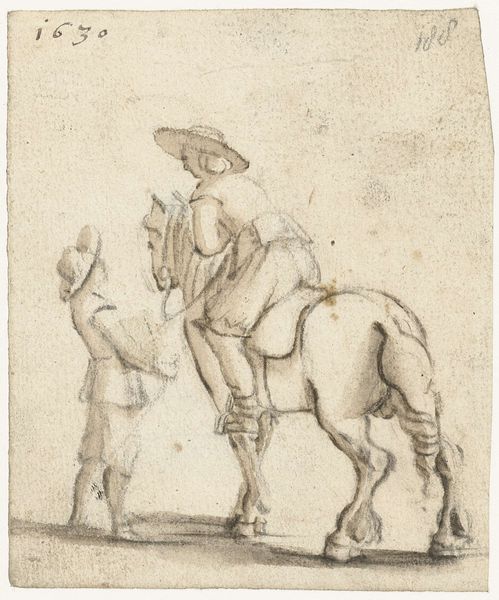
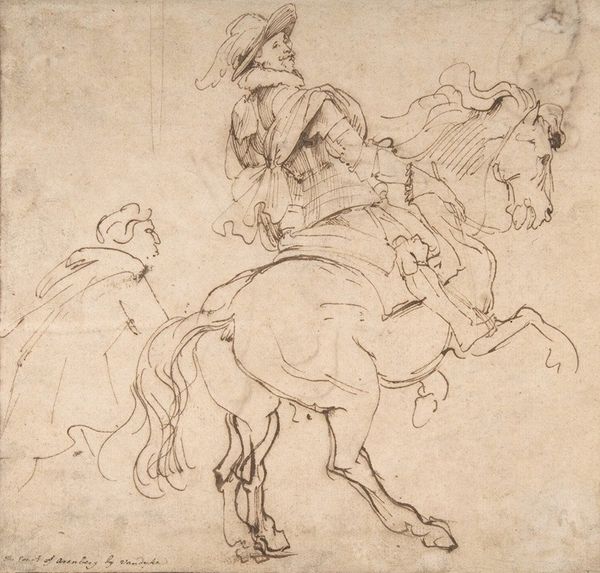
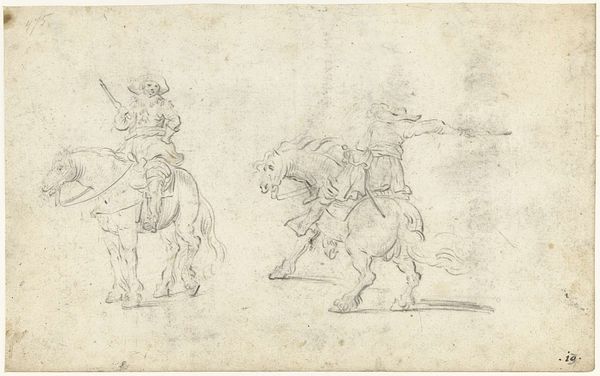
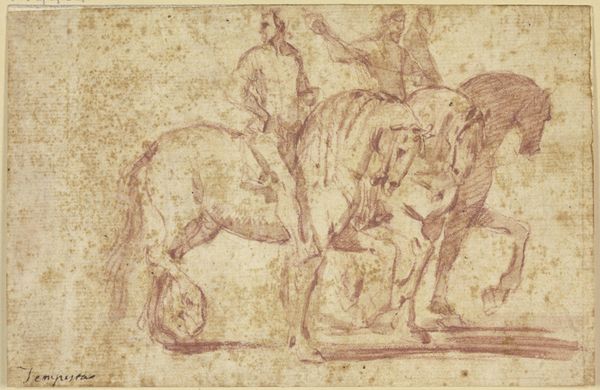
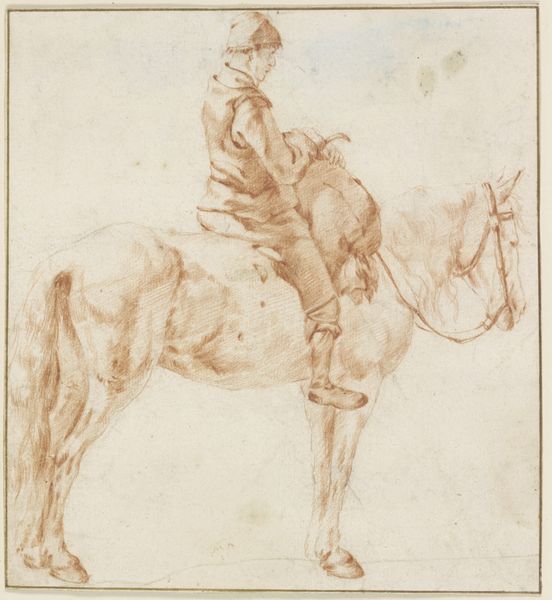
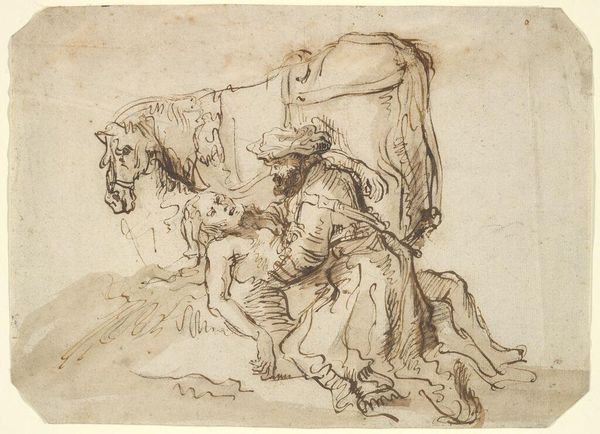
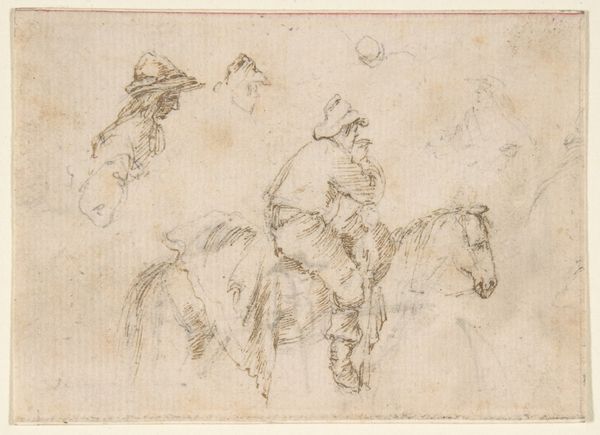
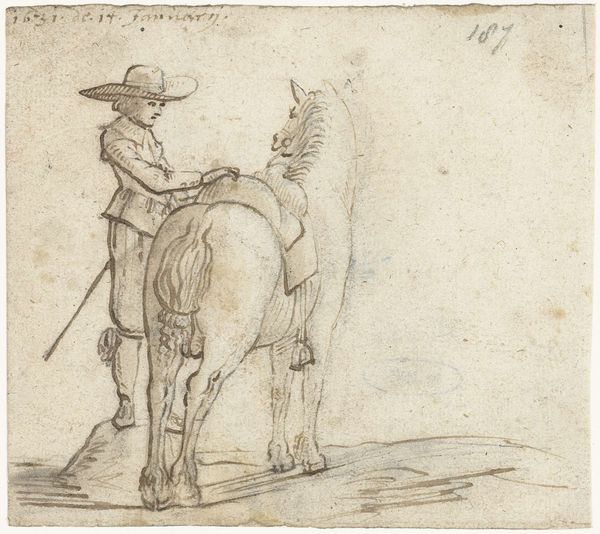
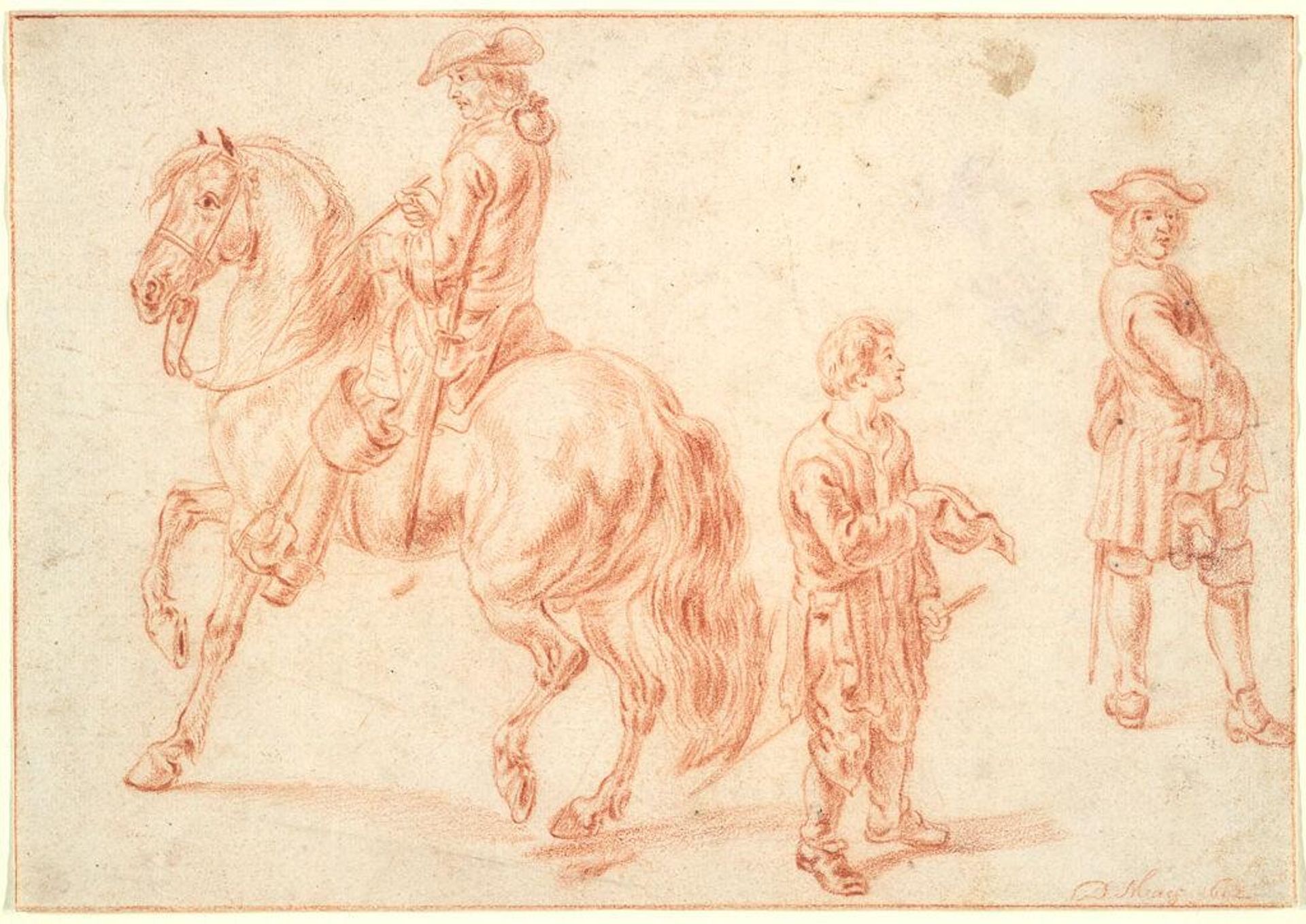
Curator: Dirk Maas, born in 1659, created this drawing, "Studies of a Cavalry Officer on Horseback, A Beggar Boy, and a Standing Cavalry Man," using red chalk. It’s a preparatory work, a collection of figures rather than a cohesive scene. Editor: It strikes me as a study in contrasts. The confident equestrian figure looms large, while the beggar seems almost pleading. The red chalk gives it a warm, immediate feel, but there's also a stark social commentary present. Curator: Absolutely. Maas was working during a time of great social stratification. Military might was often displayed alongside the realities of poverty. These studies possibly reflected the artist's observations within that environment. Editor: And the choice to depict them together, even in a preliminary sketch, forces us to confront these inequalities. The swagger of the officer is heightened by the beggar's quiet desperation. It’s a visual reminder of power dynamics. Curator: Exactly. Maas’s work highlights the public role of art in visually framing social structures and sparking implicit dialogues about equality. Editor: I find it powerful how a simple sketch can reveal the complexities of class and power. It makes you wonder about the stories behind each figure, their place within the broader social fabric.
Studies of a Cavalry Officer on Horseback, A Beggar Boy, and a Standing Cavalry Man; verso: Head of a Horse c. 17th century


Artwork details
- Dimensions
- 18.1 Ã 25.8 cm (7 1/8 Ã 10 3/16 in.)
- Location
- Harvard Art Museums
- Copyright
- CC0 1.0
Comments
No comments
About this artwork
Curator: Dirk Maas, born in 1659, created this drawing, "Studies of a Cavalry Officer on Horseback, A Beggar Boy, and a Standing Cavalry Man," using red chalk. It’s a preparatory work, a collection of figures rather than a cohesive scene. Editor: It strikes me as a study in contrasts. The confident equestrian figure looms large, while the beggar seems almost pleading. The red chalk gives it a warm, immediate feel, but there's also a stark social commentary present. Curator: Absolutely. Maas was working during a time of great social stratification. Military might was often displayed alongside the realities of poverty. These studies possibly reflected the artist's observations within that environment. Editor: And the choice to depict them together, even in a preliminary sketch, forces us to confront these inequalities. The swagger of the officer is heightened by the beggar's quiet desperation. It’s a visual reminder of power dynamics. Curator: Exactly. Maas’s work highlights the public role of art in visually framing social structures and sparking implicit dialogues about equality. Editor: I find it powerful how a simple sketch can reveal the complexities of class and power. It makes you wonder about the stories behind each figure, their place within the broader social fabric.
Comments
No comments