Possibly 1631
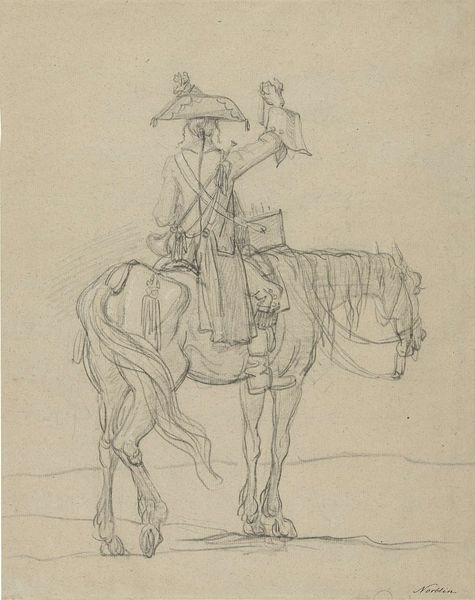
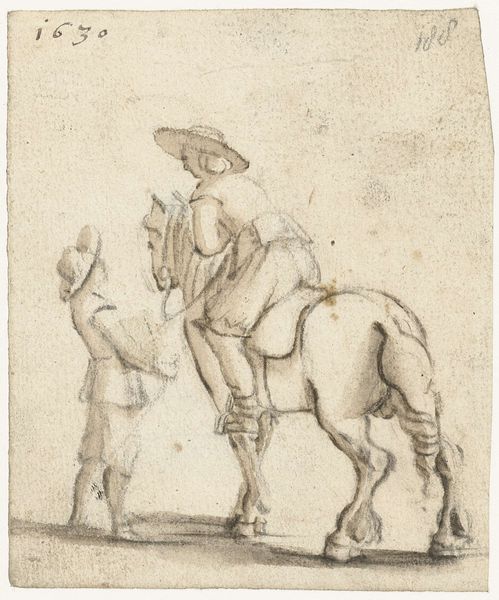
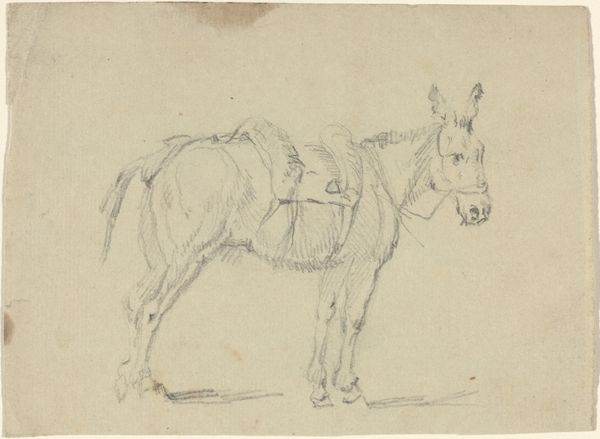
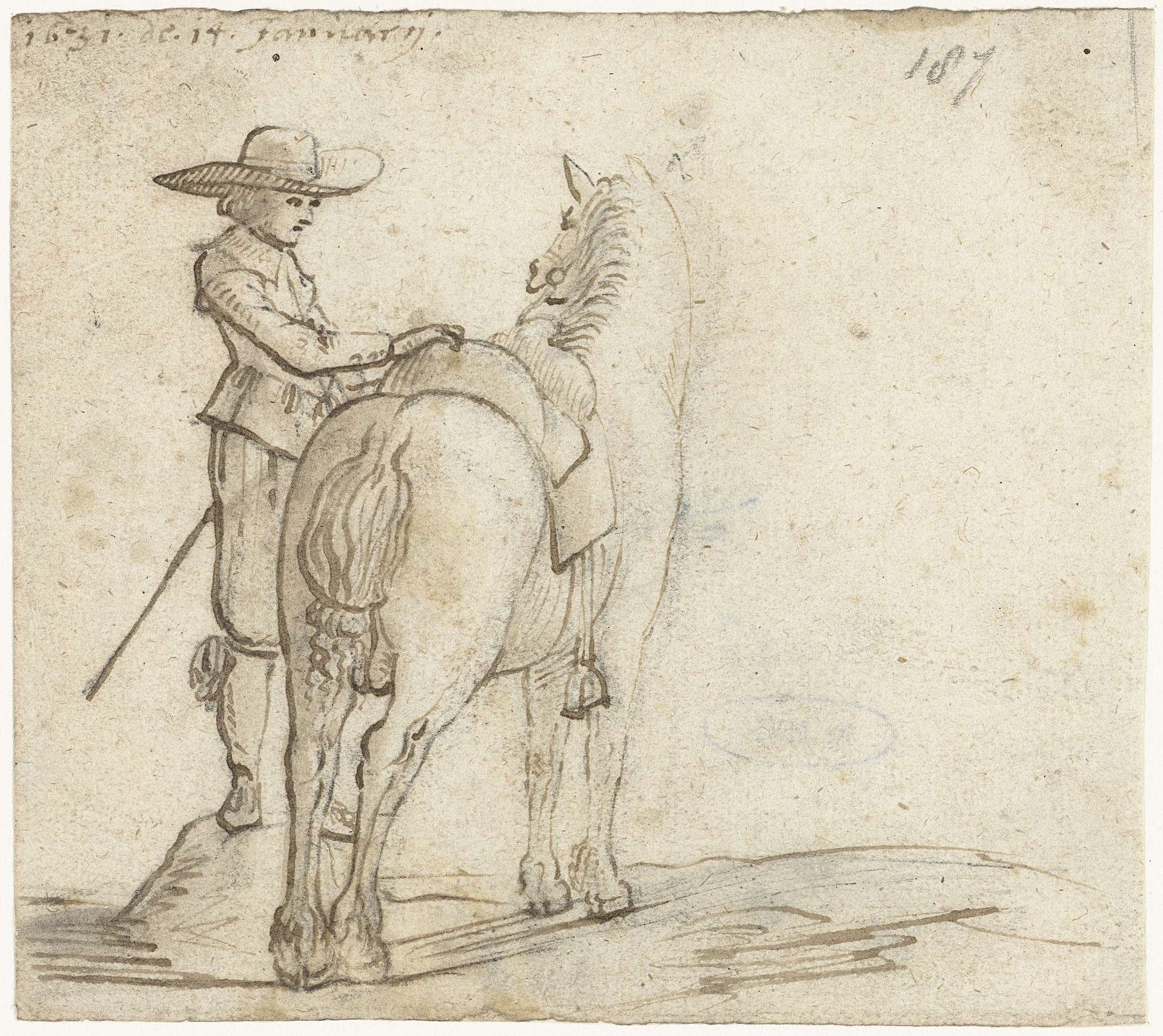
Man die het zadel van een paard verschikt

Gerard ter (II) Borch
1617 - 1681Location
RijksmuseumListen to curator's interpretation
Curatorial notes
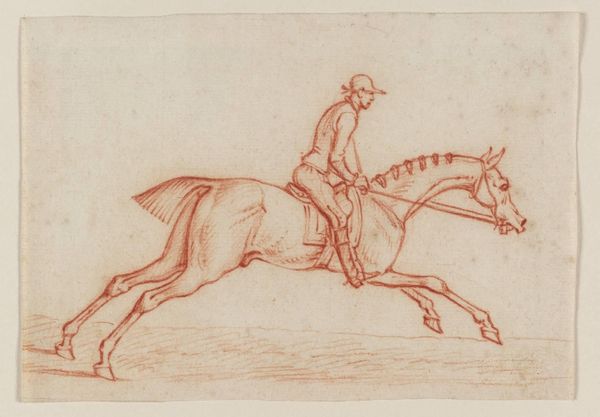
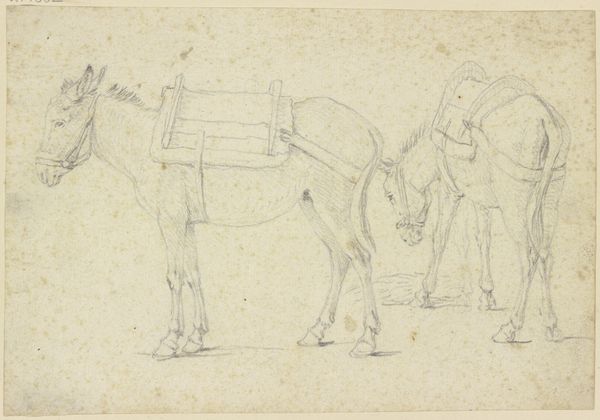
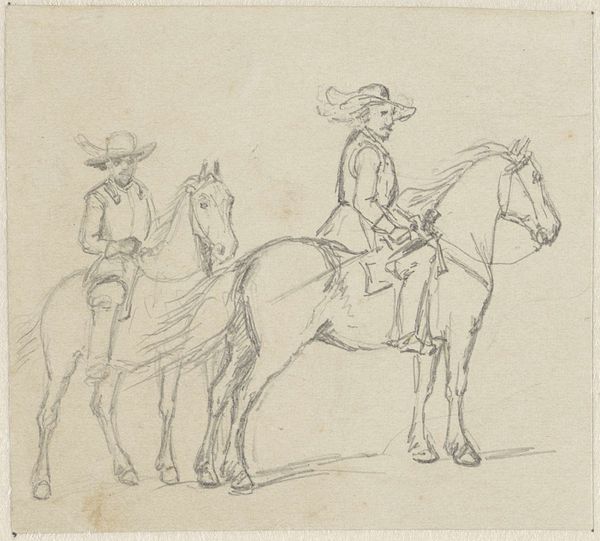
Editor: So, here we have "Man Adjusting a Horse's Saddle," potentially from 1631, by Gerard ter Borch the Younger, housed here at the Rijksmuseum. It's a delicate pencil sketch on toned paper. I’m struck by its incompleteness and the artist’s focus on the relationship between man and animal. What do you see in this piece? Curator: Well, considering Ter Borch's place in history, these kinds of quick studies offer us a glimpse into the art world beyond the finished painting. We can interpret them as raw materials, sketches born out of his daily life. Who would see a drawing like this in 1631? Only Ter Borch himself, perhaps his students and other artist friends. The existence of a sketch is an insight on artistic practice, that the museum would have a difficult time displaying if Ter Borch hadn't survived as a significant artist. Editor: So it's not necessarily meant for public consumption but rather is part of the process. Does the incomplete nature influence the artistic status, making this just a prep sketch instead of a valuable artwork? Curator: Precisely. It challenges our modern assumptions about artistic value. A finished, polished piece was the goal for artists at the time. But the sketch’s accessibility in museums today influences the contemporary reception of historical artistic intention. Today, we see a casualness, that many modern viewers like about these prep works. Editor: That’s really interesting! I guess I hadn't considered the politics of displaying process. It's cool to view art with your understanding of the impact of social practices around artworks. Curator: Exactly! Reflecting on this, I'm reminded of how even simple sketches carry significant weight once they enter the sphere of public display and academic discourse.