drawing, print, ink, pen
#
drawing
#
hand-lettering
# print
#
hand drawn type
#
hand lettering
#
personal sketchbook
#
ink
#
pen
Copyright: Rijks Museum: Open Domain
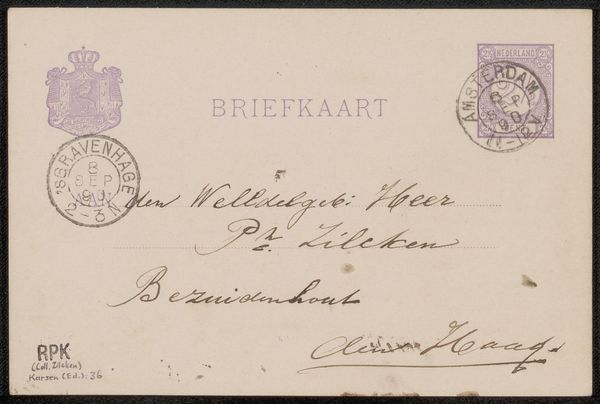
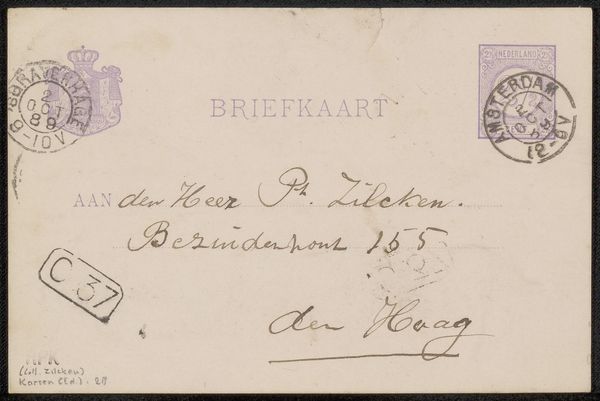
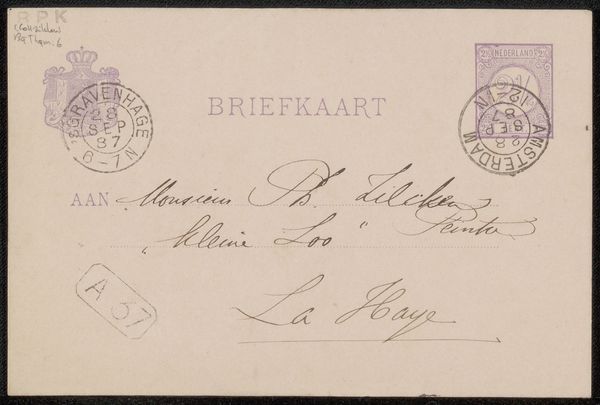
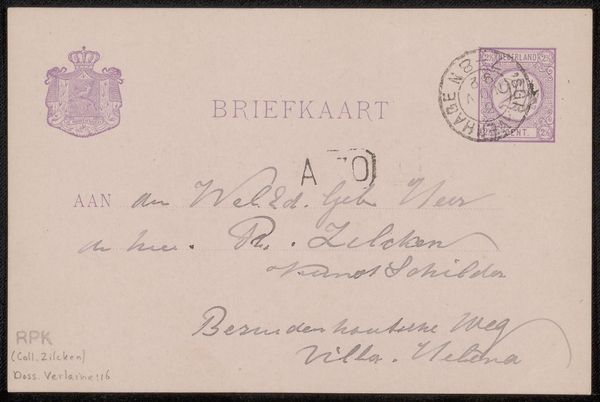
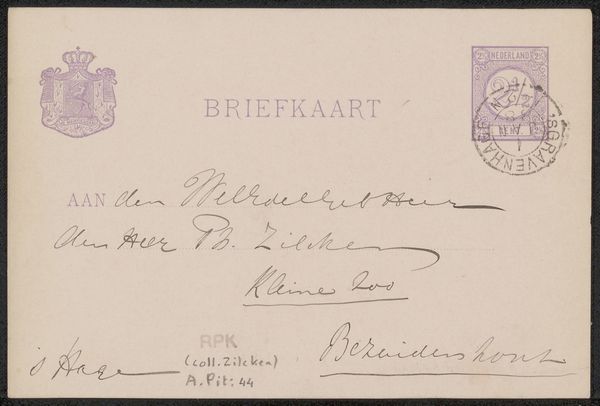
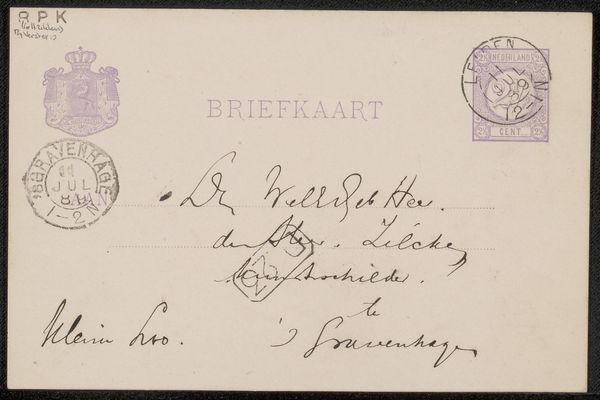
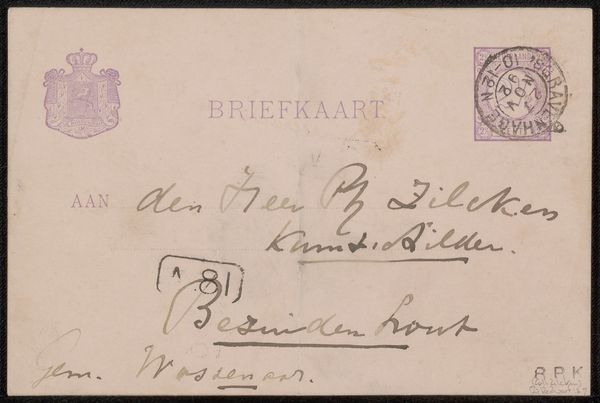
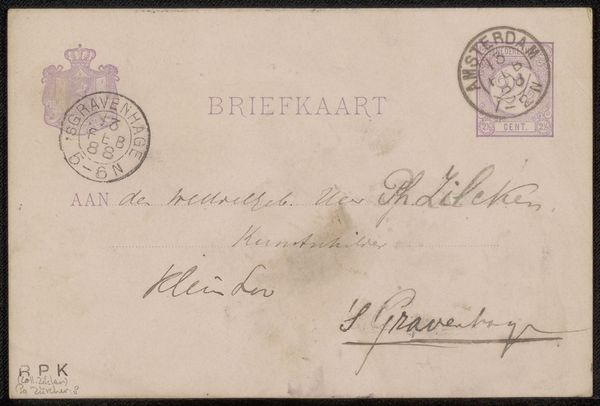
Editor: This is a scan of Willem Witsen's "Briefkaart aan Philip Zilcken," probably from 1889, done in pen and ink. It's just a simple postcard, but the handwriting and the stamps feel so personal and almost haunting. What strikes you about it? Curator: The visual language here speaks volumes, even in this small format. Consider the postal stamps. They aren't merely functional; each is a symbol of state authority, commerce, and communication made manifest. Note how they echo one another formally and symbolically framing the handwritten address. Do you find any intentionality in this arrangement? Editor: I see what you mean. They almost feel like miniature portraits, guarding the message. Curator: Exactly. This is also the hand of one artist reaching out to another – look closely at the letterforms themselves, at the flourish of the script, and consider what sort of cultural performance or ritual this constitutes. How might we analyze this sort of communicative gesture and expression today? Editor: It’s like a little coded message, revealing the personal and professional relationship between these artists beyond the literal words. Today, this would be a text message! Much less formal. Curator: Precisely. The immediacy we've gained comes at a cost. Consider, too, the question mark Witsen includes: "Kleine loo?". Such a succinct question, full of local meaning. Do we lose something when context fades, and such shorthand references become indecipherable? Editor: Definitely. It reminds me that art and communication are always embedded in a specific time and place. I see how understanding the symbols—the handwriting, the stamps, even the postal system itself—gives us a deeper connection to the past. Curator: And perhaps, a deeper appreciation for the layers of meaning embedded within the everyday artifacts of communication, even those we often overlook today.
Comments
No comments
Be the first to comment and join the conversation on the ultimate creative platform.
 Collect
 React
React Comment
More like this