1669
Definitie van de oppervlakte

Sébastien Leclerc I
1637 - 1714Location
RijksmuseumListen to curator's interpretation
Curatorial notes
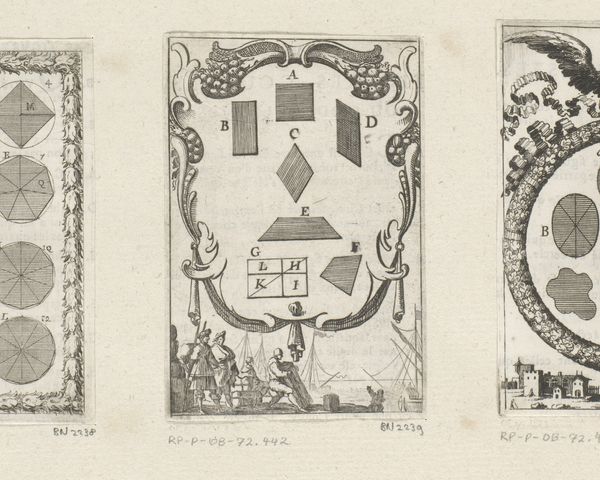
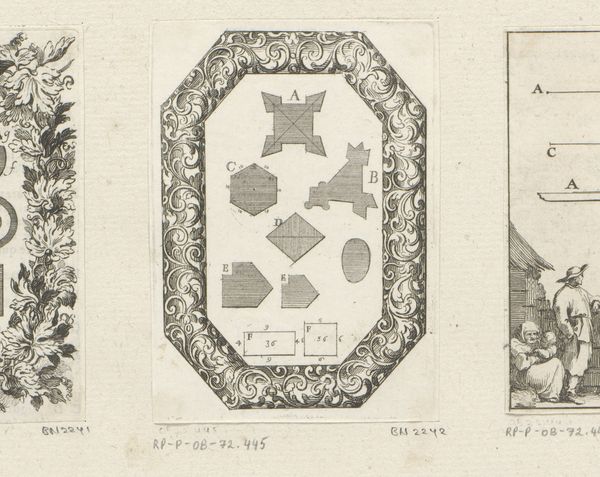
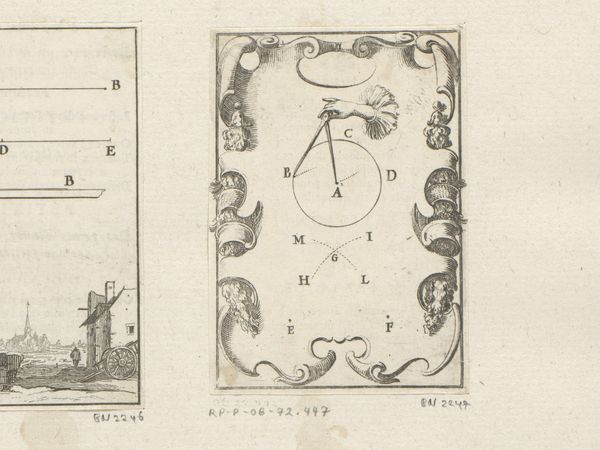
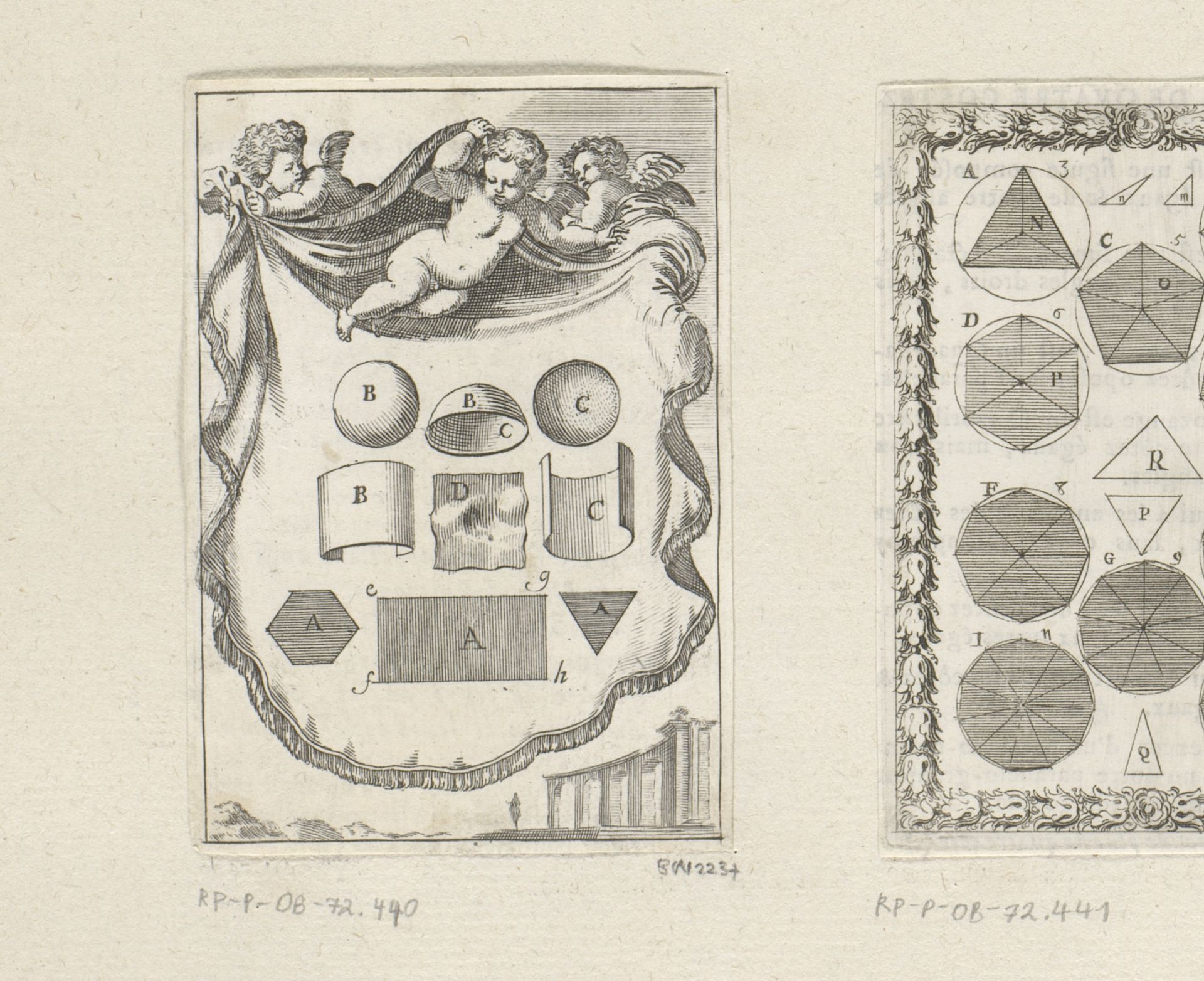
This print, "Definition of the Surface" was made by Sébastien Leclerc I in the late 17th century. Leclerc's print visualizes geometry, and we might ask, what is the social role of such an image? Engravings like this one helped to define and disseminate knowledge during the Enlightenment. Made in France, this print reflects the period's emphasis on reason, observation, and mathematical modeling as ways of understanding the world. The careful rendering of shapes, labeled with letters, speaks to the encyclopedic impulse that drove much intellectual activity. These diagrams were meant to standardize knowledge, in a way that made it accessible to all educated people. Today, historians explore prints like these to understand the circulation of scientific and mathematical ideas. By studying the institutions and networks through which prints were distributed, and comparing them to manuscript sources, we can better understand the cultural authority that was invested in mathematical knowledge.