paper, engraving
#
portrait
#
baroque
#
old engraving style
#
figuration
#
paper
#
historical photography
#
line
#
history-painting
#
academic-art
#
engraving
Dimensions: height 276 mm, width 185 mm
Copyright: Rijks Museum: Open Domain
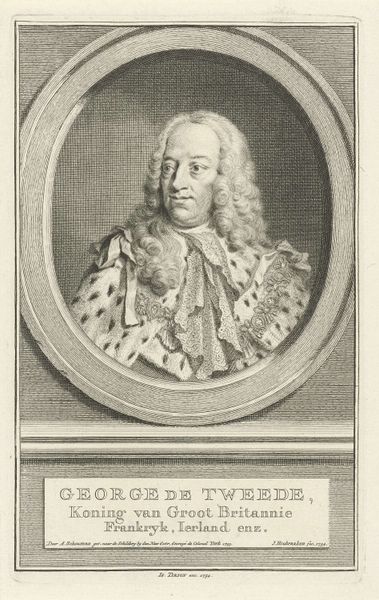
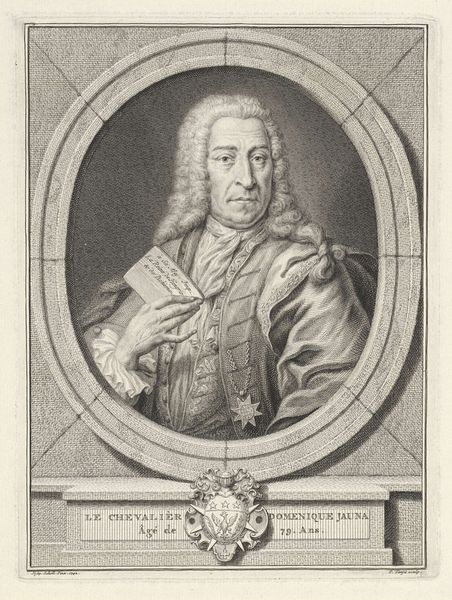
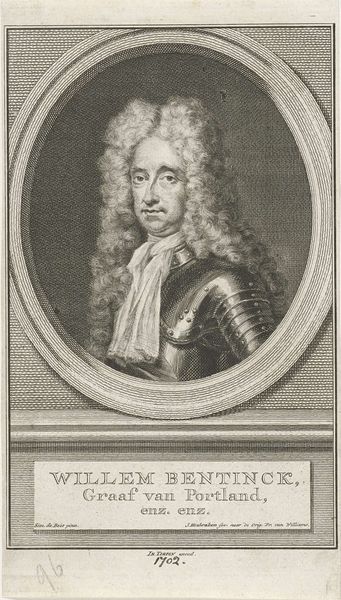
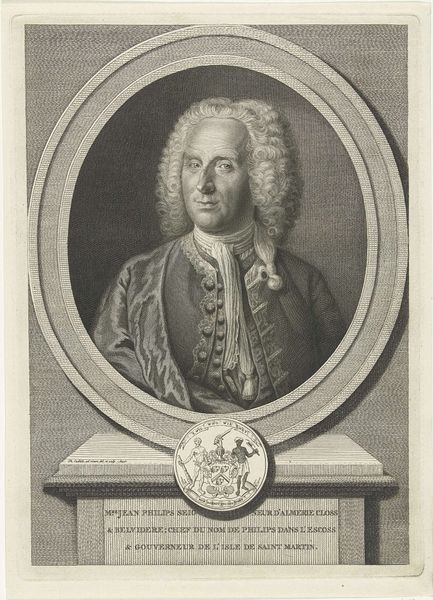
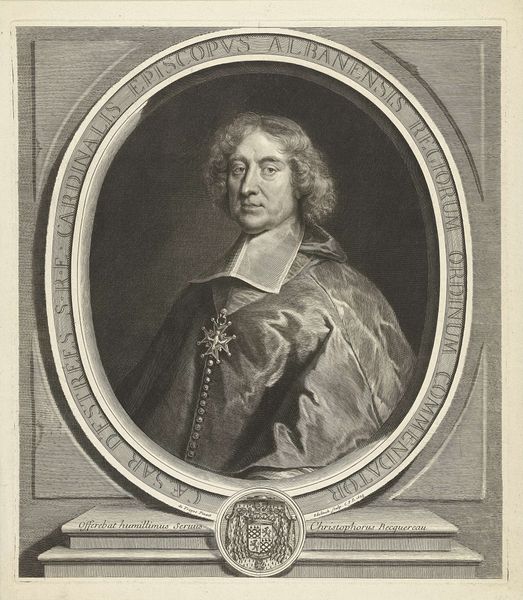
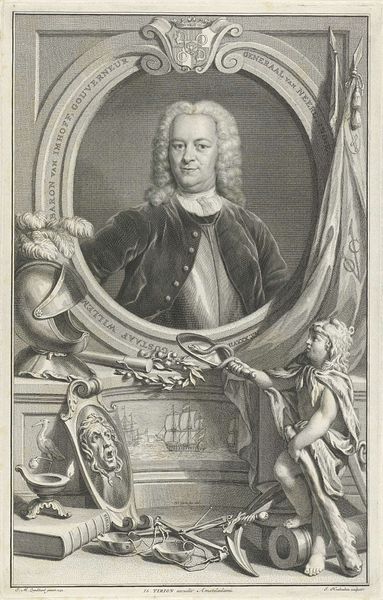
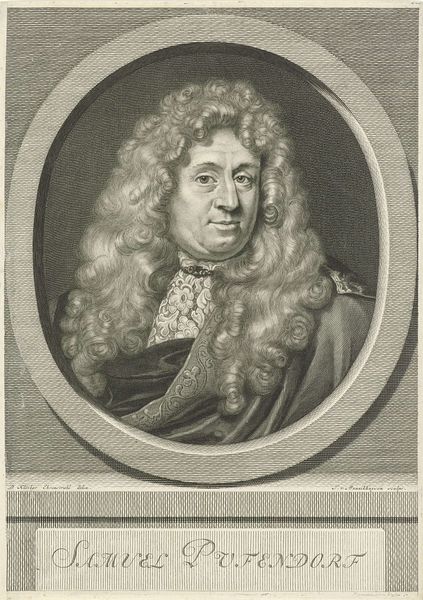
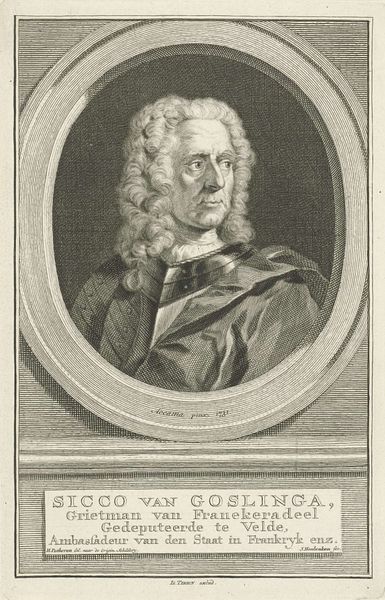
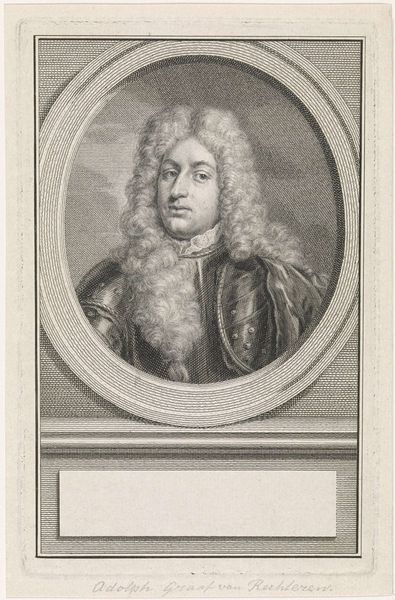
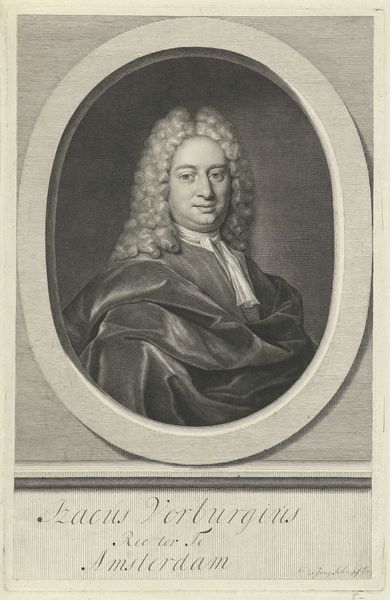
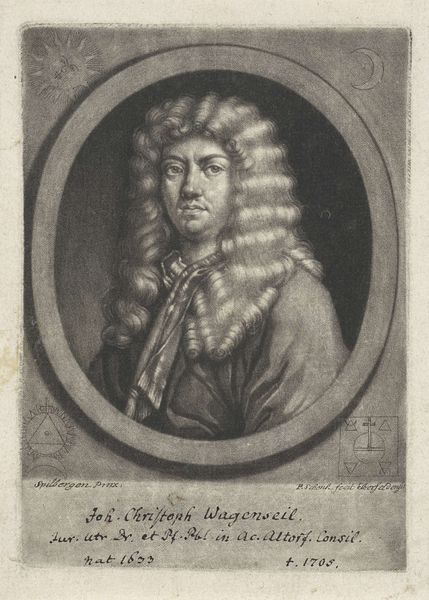
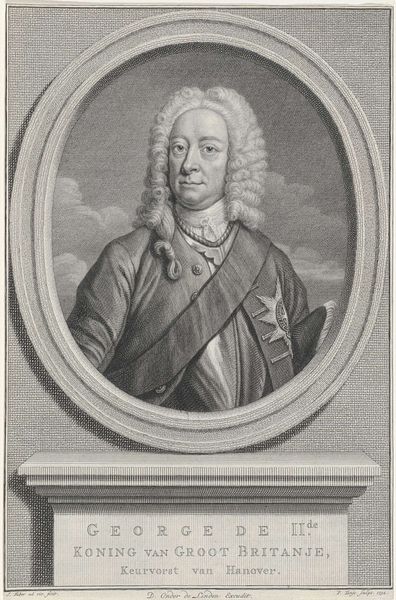
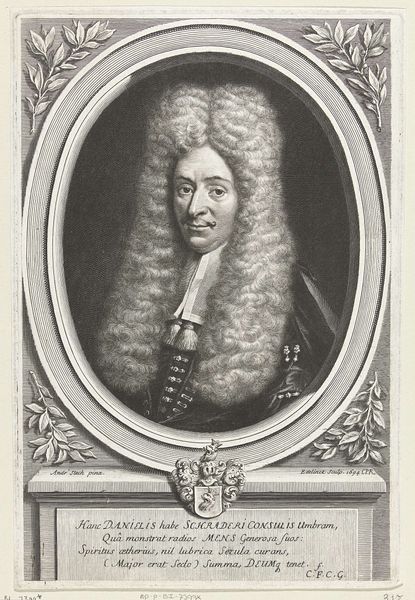
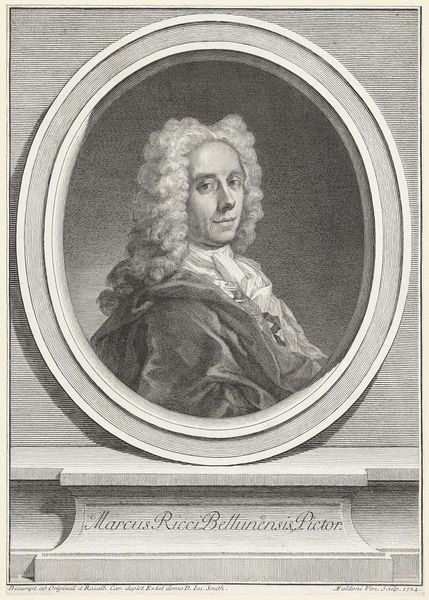
This portrait of Charles VII, Holy Roman Emperor, was made by Pieter Tanjé. It’s an engraving, meaning that the image was incised into a metal plate, then printed onto paper. Look closely, and you'll see how the qualities of the engraved line define the image. Notice how the density and direction of the lines create tone and texture, from the intricate patterns of the Emperor's robes to the subtle gradations of his face. Engraving was a highly skilled and laborious process, demanding precision and control. The engraver used specialized tools to cut lines into the metal plate, and the depth and spacing of these lines determined how much ink would be held, and thus the darkness of the printed image. Engravings like this one were often made for reproduction and dissemination. While portraits in oil paint were reserved for the elite, engravings made images accessible to a wider audience. Consider the labor involved, and the way this work served to circulate power and status in 18th-century society. It reminds us that even seemingly straightforward images are the product of complex social and economic forces.
Comments
No comments
Be the first to comment and join the conversation on the ultimate creative platform.
 Collect
 React
React Comment
More like this