About this artwork
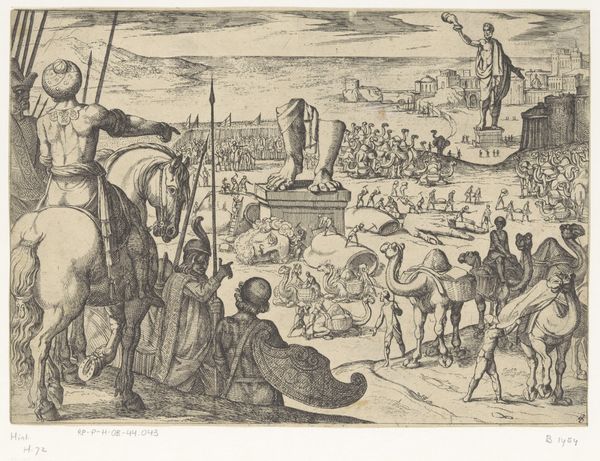
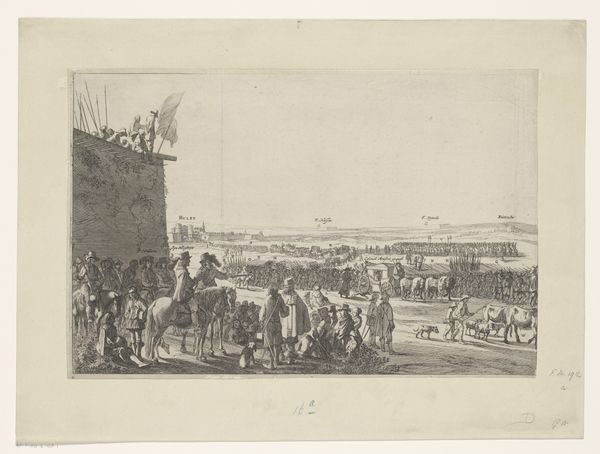
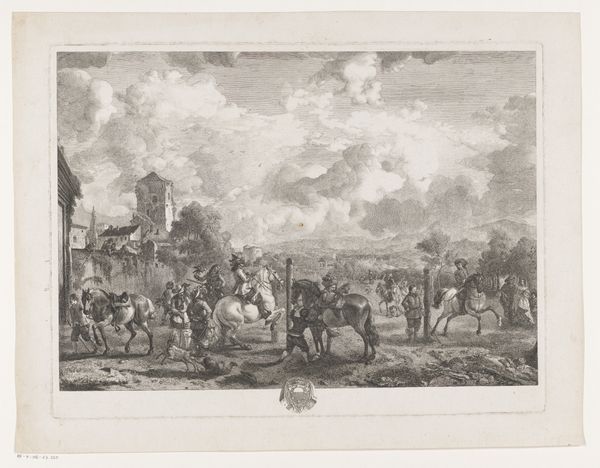
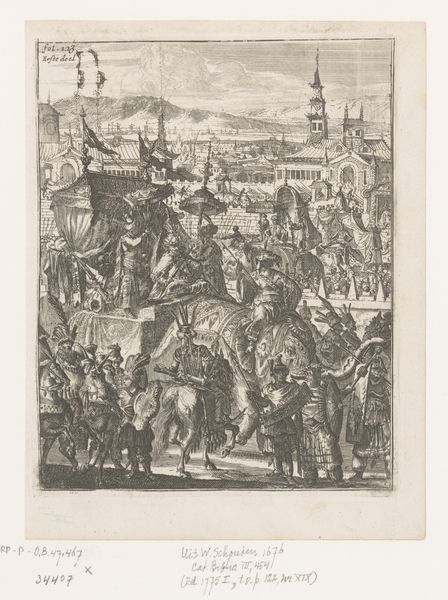
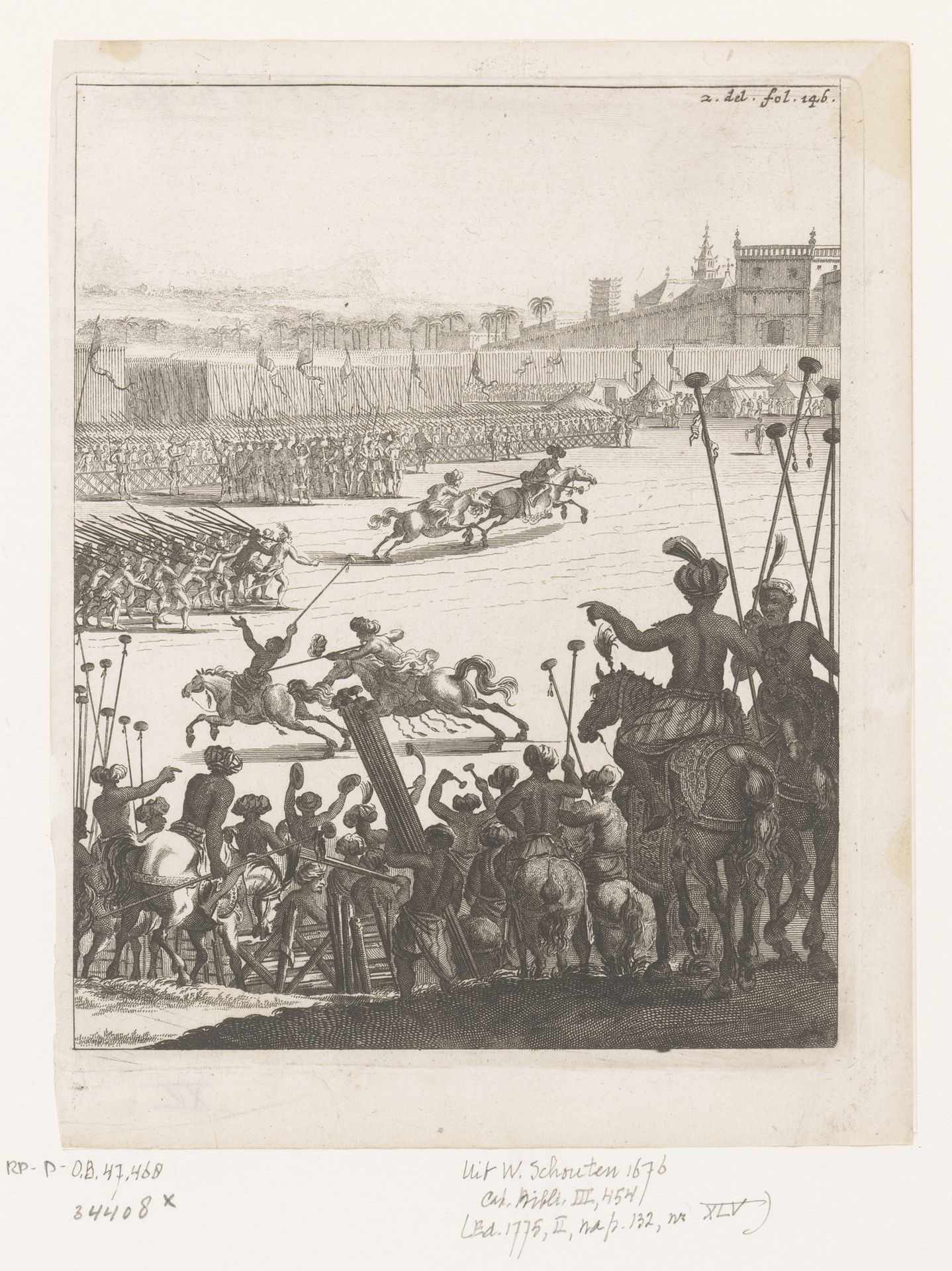
This print, "Koninklijk toernooi op Java", was produced anonymously, depicting a royal tournament in Java. The image plunges us into a world where sport, spectacle, and social order are intertwined. Look at the details: the lines of spectators, the hierarchical arrangement of figures, and the architectural backdrop, all creating a sense of carefully orchestrated public display. The print provides a window into the colonial gaze, reflecting the Dutch East India Company's interest in documenting and understanding Javanese customs. But what stories remain untold? What perspectives are missing? To truly understand this image, we need to consult a range of sources. Colonial archives, travelogues, and indigenous accounts can help us to unpack the complex social and political dynamics at play. By doing so, we can gain a richer understanding of this print, not just as a depiction of a royal tournament, but as a product of cultural exchange and colonial power.

Artwork details
- Medium
- print, paper, ink, engraving
- Dimensions
- height 192 mm, width 155 mm
- Copyright
- Rijks Museum: Open Domain
Tags
baroque
dutch-golden-age
ink paper printed
old engraving style
paper
ink
orientalism
genre-painting
history-painting
engraving
Comments
No comments
About this artwork
This print, "Koninklijk toernooi op Java", was produced anonymously, depicting a royal tournament in Java. The image plunges us into a world where sport, spectacle, and social order are intertwined. Look at the details: the lines of spectators, the hierarchical arrangement of figures, and the architectural backdrop, all creating a sense of carefully orchestrated public display. The print provides a window into the colonial gaze, reflecting the Dutch East India Company's interest in documenting and understanding Javanese customs. But what stories remain untold? What perspectives are missing? To truly understand this image, we need to consult a range of sources. Colonial archives, travelogues, and indigenous accounts can help us to unpack the complex social and political dynamics at play. By doing so, we can gain a richer understanding of this print, not just as a depiction of a royal tournament, but as a product of cultural exchange and colonial power.
Comments
No comments