About this artwork
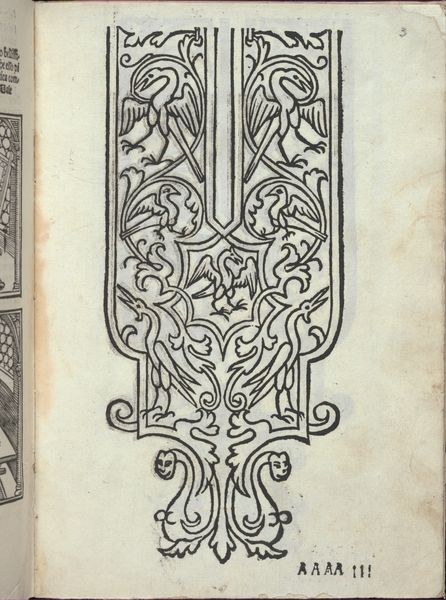
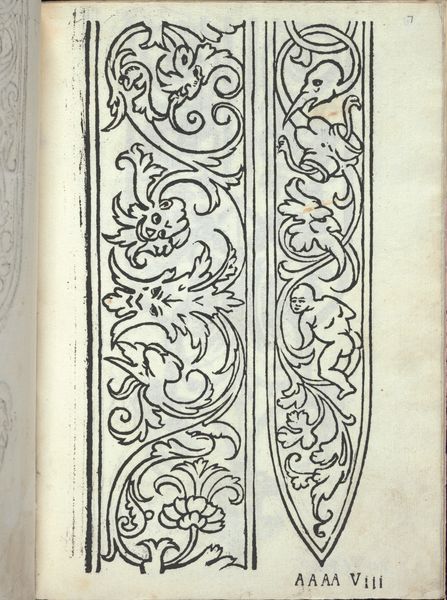
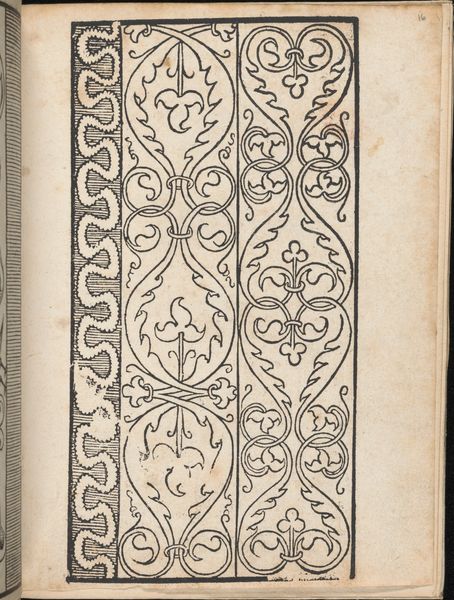
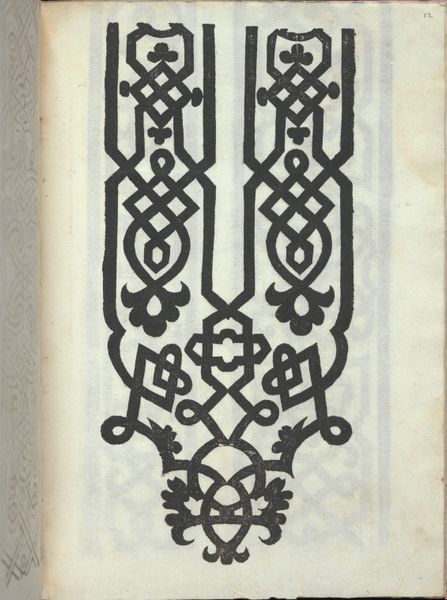
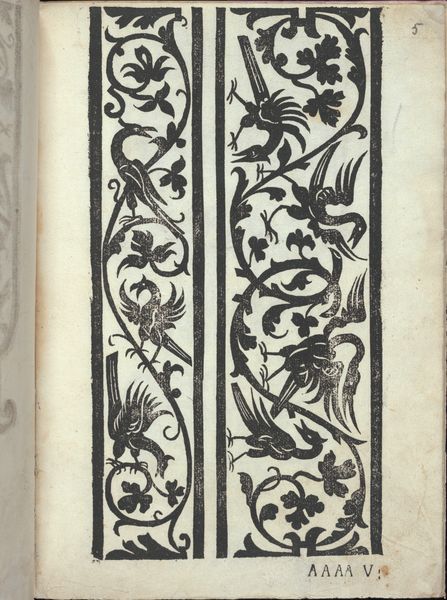
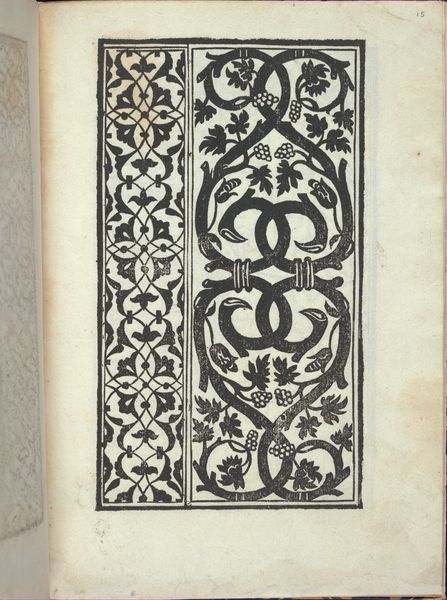
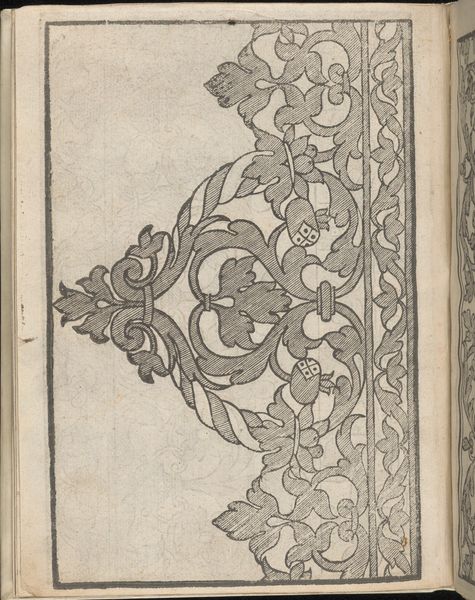
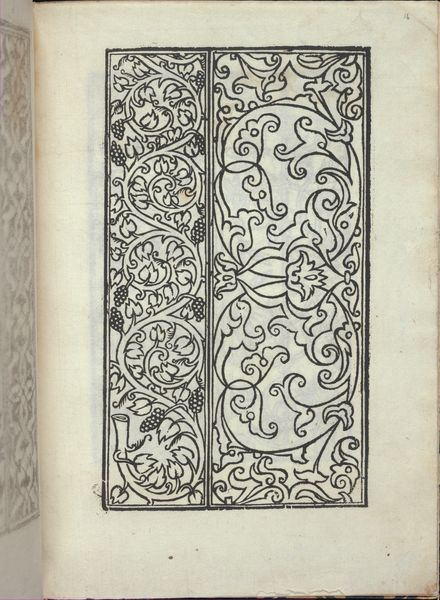
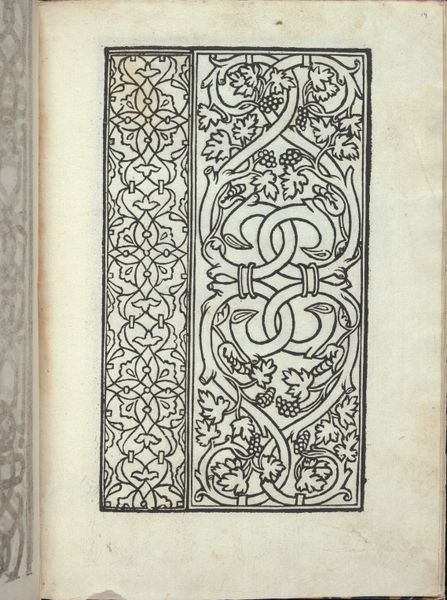
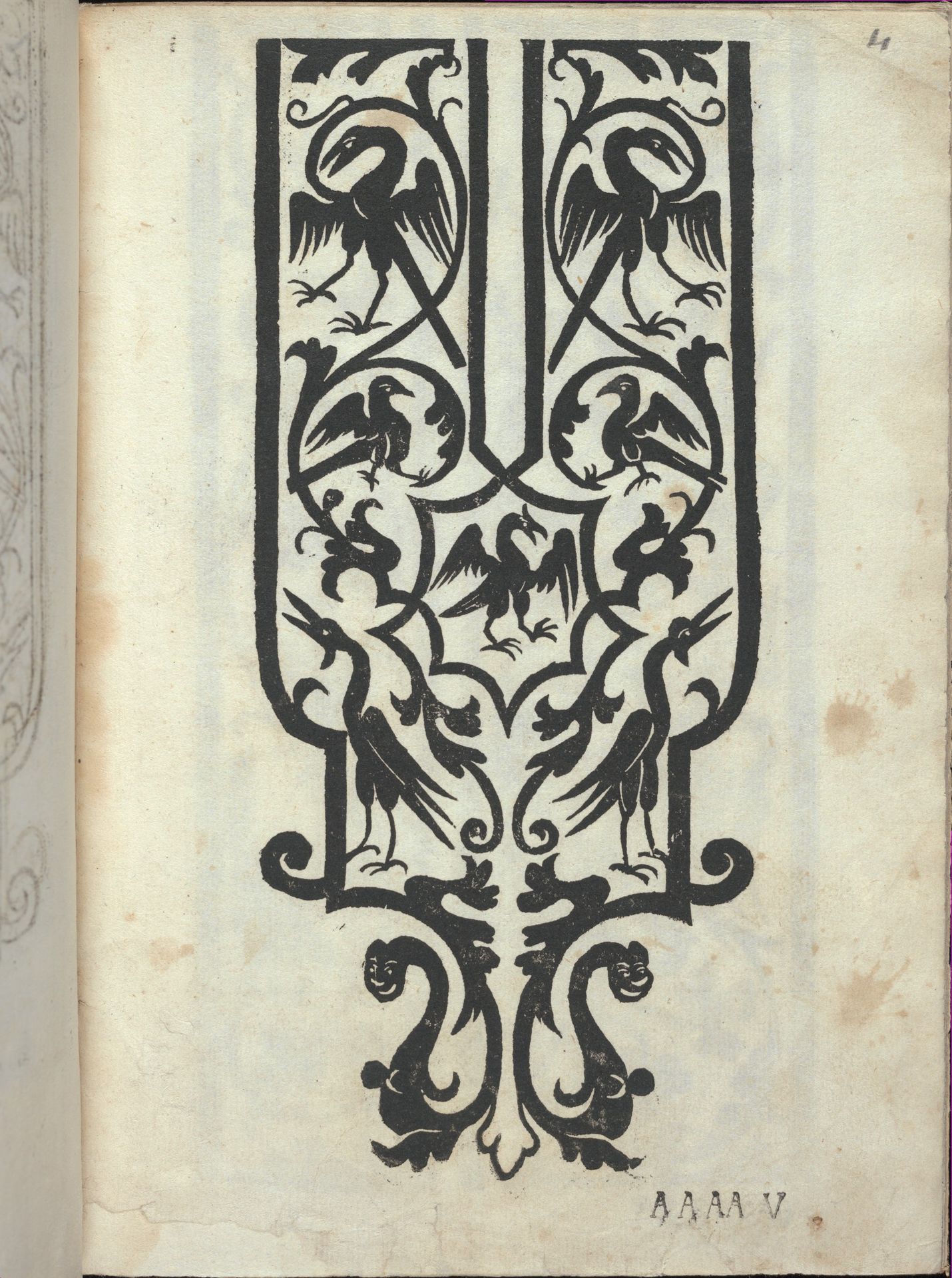
This is a page from a book of embroidery patterns, made in Venice around 1530 by Alessandro Paganino. It shows a series of motifs arranged symmetrically within a vertical band. Birds, leaves, and mask-like faces are placed in a hierarchy; the larger birds at the top give way to smaller birds and foliage as your eye moves down the page. This was a pattern book for needleworkers, particularly women, who would copy these designs onto linen for household decoration and clothing. The printing of pattern books became a significant industry in 16th century Venice, which had a substantial textile industry. As a publishing center, Venice was uniquely positioned to capitalize on new printing technologies and an increasingly literate population. Manuals such as this played a vital role in the transmission of artistic ideas and skills. To understand this object more fully, we can research the textile industry in Venice and the gendered division of labor in the 16th century.
Libro quarto. De rechami per elquale se impara in diuersi modi lordine e il modo de recamare...Opera noua, page 4 (recto)
1532

Alessandro Paganino
1500 - 1550
The Metropolitan Museum of Art
Metropolitan Museum of Art, New York, NYArtwork details
- Medium
- drawing, print, paper, ink, woodcut
- Dimensions
- Overall: 8 3/8 x 5 7/8 x 3/16 in. (21.2 x 14.9 x 0.5 cm)
- Location
- Metropolitan Museum of Art, New York, NY
- Copyright
- Public Domain
Tags
Comments
Share your thoughts
About this artwork
This is a page from a book of embroidery patterns, made in Venice around 1530 by Alessandro Paganino. It shows a series of motifs arranged symmetrically within a vertical band. Birds, leaves, and mask-like faces are placed in a hierarchy; the larger birds at the top give way to smaller birds and foliage as your eye moves down the page. This was a pattern book for needleworkers, particularly women, who would copy these designs onto linen for household decoration and clothing. The printing of pattern books became a significant industry in 16th century Venice, which had a substantial textile industry. As a publishing center, Venice was uniquely positioned to capitalize on new printing technologies and an increasingly literate population. Manuals such as this played a vital role in the transmission of artistic ideas and skills. To understand this object more fully, we can research the textile industry in Venice and the gendered division of labor in the 16th century.
Comments
Share your thoughts