print, engraving
#
portrait
# print
#
old engraving style
#
figuration
#
11_renaissance
#
personal sketchbook
#
portrait reference
#
line
#
portrait drawing
#
northern-renaissance
#
engraving
Dimensions: width 125 mm, height 179 mm
Copyright: Rijks Museum: Open Domain
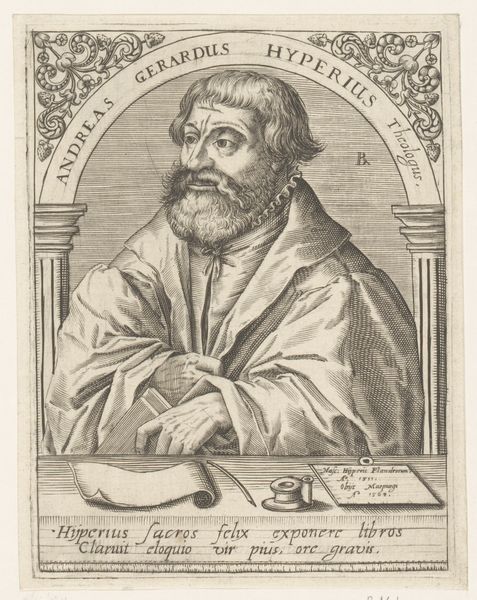
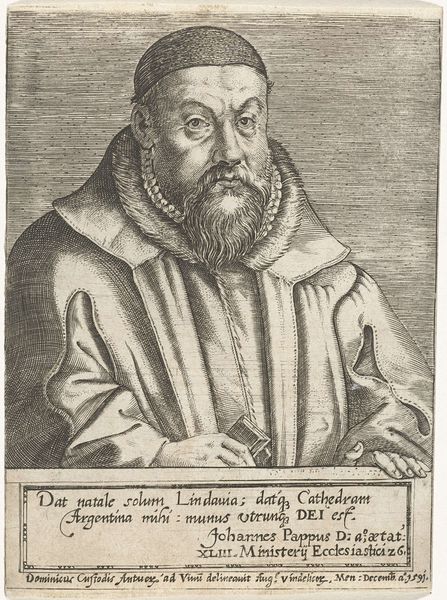
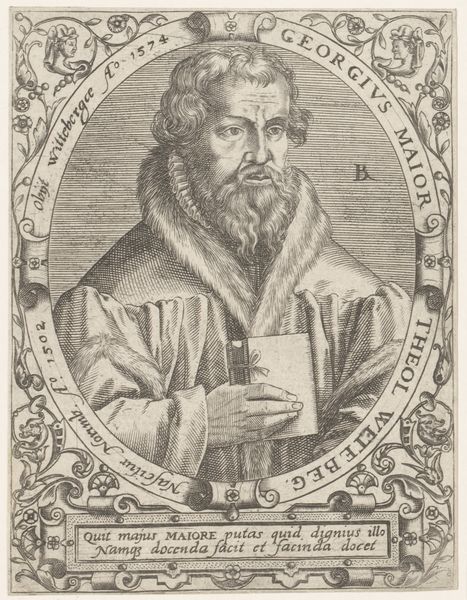
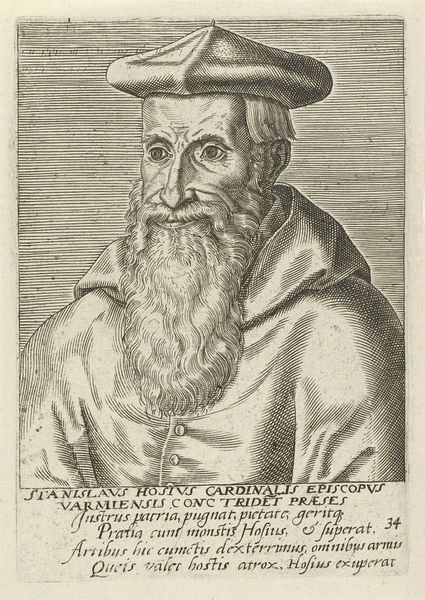
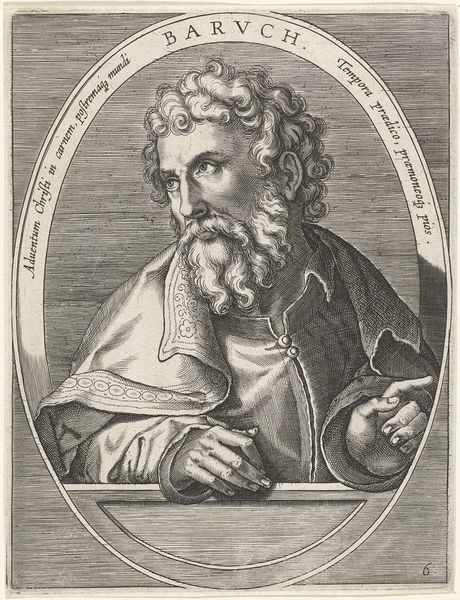
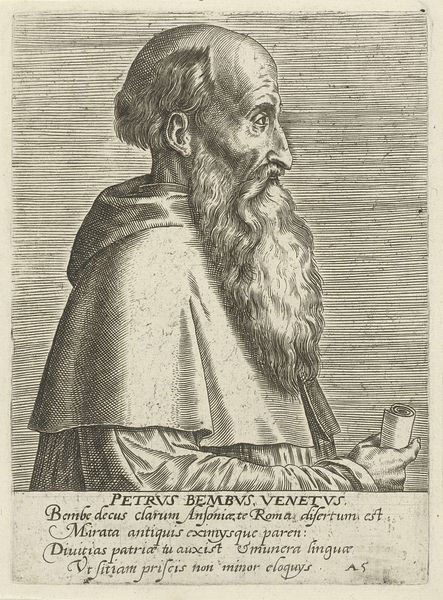
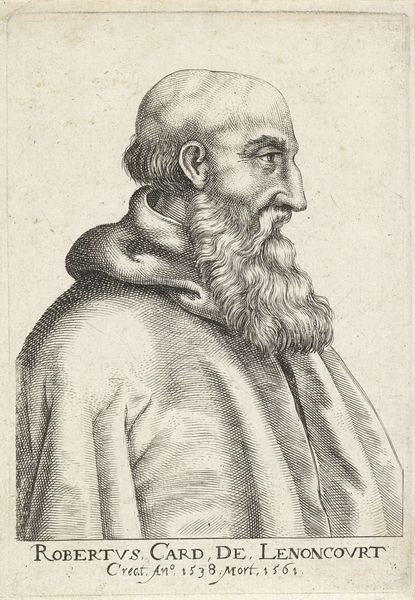
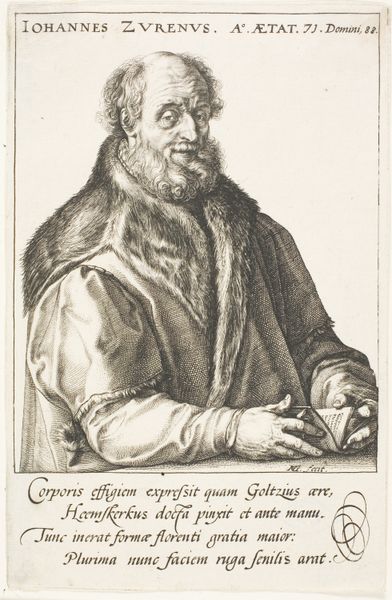
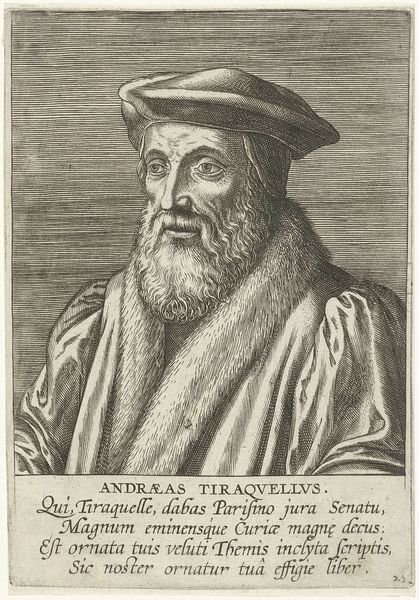
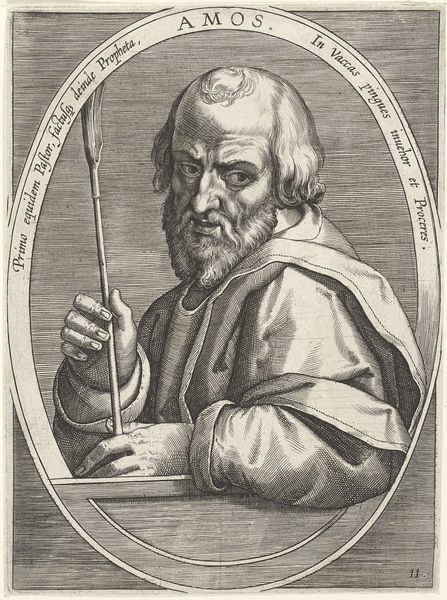
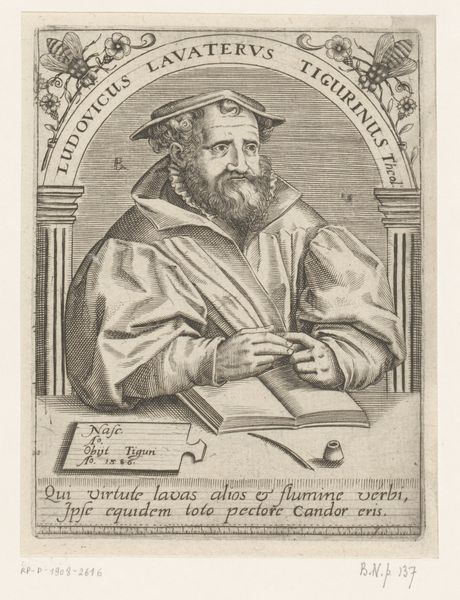
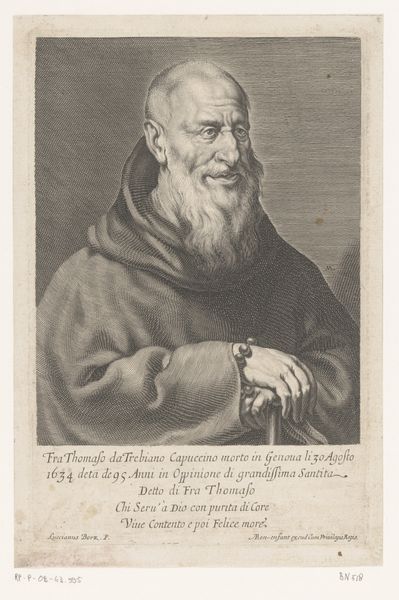
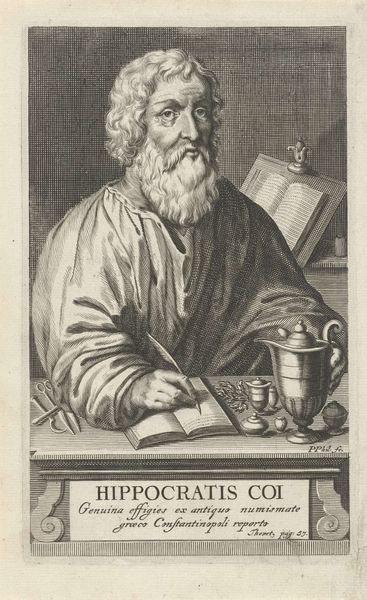
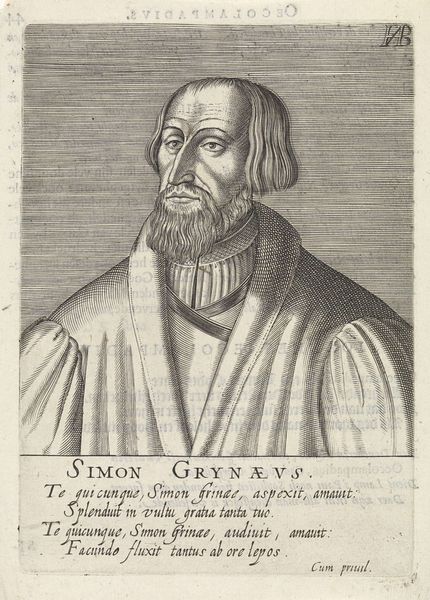
Curator: The engraving before us, "Portret van Johannes Sartorius," was crafted in 1572 by Philips Galle, and resides here at the Rijksmuseum. Editor: He certainly has an imposing presence, doesn’t he? It's hard to believe this stark black-and-white print could convey such gravitas. His gaze is so intense. Curator: Galle situated himself firmly within a burgeoning tradition of humanist portraiture at the time. The sitter, Johannes Sartorius, would have likely been a man of considerable learning, an intellectual perhaps? His clothing indicates someone affluent but relatively unconcerned with lavish display, or perhaps the artist chose to emphasize intellect over ornamentation. Editor: It feels very deliberate. The lettering, too, has to factor in. Looking at Sartorius' face, the set of his jaw… It's an era marked by political and religious tensions. I wonder about the role he played in these conflicts? Was he a dissident, a voice of reform? How does that tension find its way into this printed portrait that seems to celebrate his authority. Curator: The surrounding cultural context undeniably informs the interpretation. Printmaking at this time, particularly portraiture, functioned as a means of propagating ideas, establishing authority. So to have your portrait immortalized in this form implied you had significant social or political clout. There is always inherent political weight within the artistic creation and circulation of images. Editor: Indeed. What also intrigues me are the limitations of this kind of engraving. The lines must be precise to indicate character but within it, Galle uses softer lines and shading around the eyes to breathe some humanity into this otherwise severe representation. We cannot help but wonder: What was omitted and why? Curator: It's a complex interplay of power, representation, and the enduring legacy of imagery. Editor: A reminder that every portrait, regardless of medium, becomes an act of negotiation. The printing techniques create their own socio-political implications as the piece reaches the hands of those it concerns. Thank you for clarifying these issues.
Comments
No comments
Be the first to comment and join the conversation on the ultimate creative platform.
 Collect
 React
React Comment
More like this