500 BC
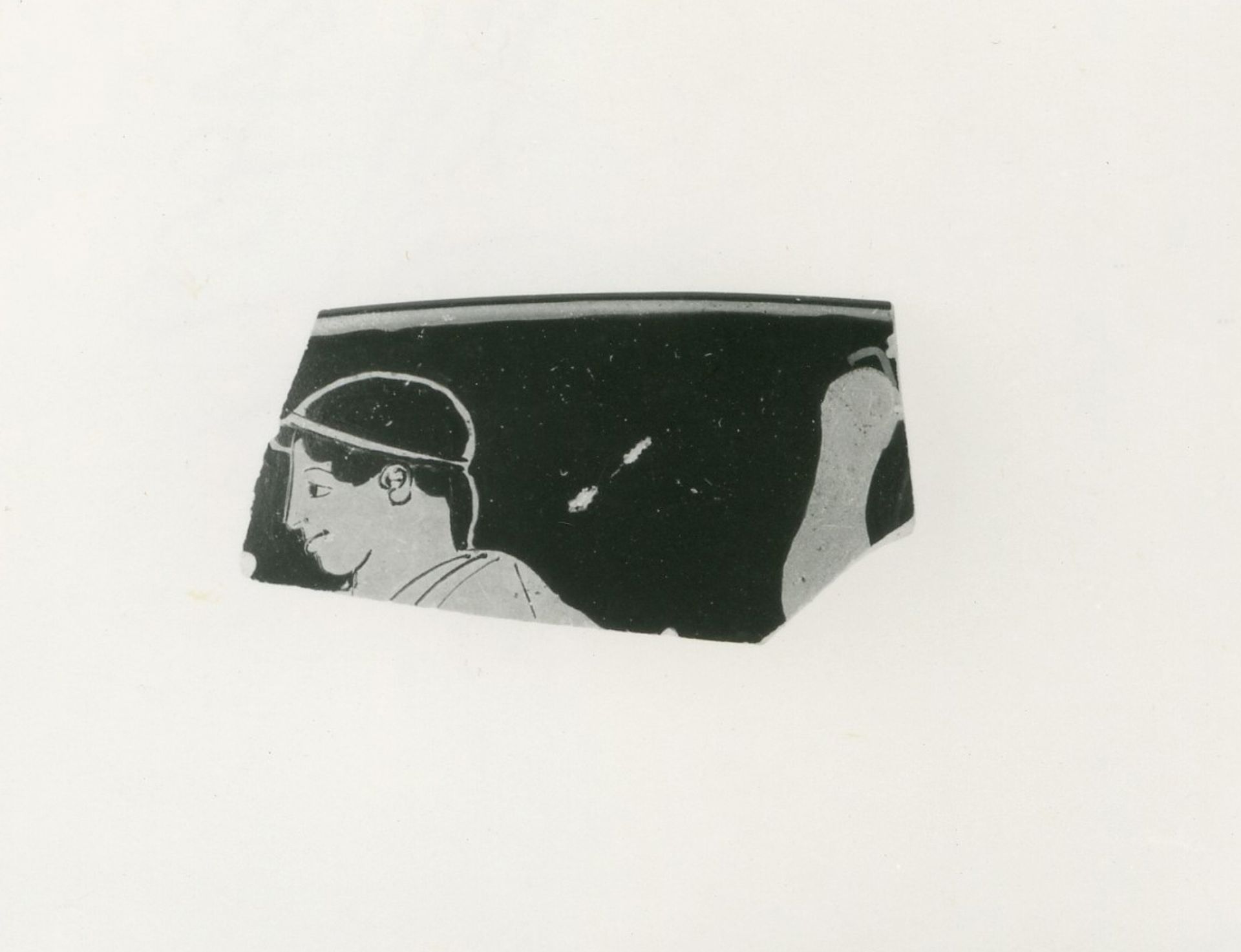
Kylix Fragment


Listen to curator's interpretation
Curatorial notes
Editor: So, this is a fragment of a Kylix, dating back to around 500 BC and attributed to Hermonax. It's ceramic, found at the Met. Looking at this shard, I'm struck by how delicate the remaining figure seems against the dark background. What’s particularly interesting or telling about this piece for you? Curator: I'm drawn to the physical process. Think about the potter's wheel, the skill involved in shaping the clay. Hermonax then meticulously painted this vessel, probably using a fine brush with slip—a refined clay suspension. Editor: That makes sense. It feels so intentional, particularly the stark contrast between the figure and ground. Curator: Exactly. And consider the social context. These kylixes were drinking cups, used often at symposia. It wasn’t just a drinking vessel but also a display of wealth, and artistry, demonstrating sophistication and status through its creation. The fragment challenges us to consider the life and labour surrounding this artwork's past use. Editor: I see, so it's also about the social act of consuming art and wine in ancient Greece. How the materiality shaped the consumption itself! Curator: Precisely! We think of ceramics today perhaps more within "craft," and not high art, but these were prized commodities. Even as a fragment, this object speaks to the broader economic and social currents of the time. Consider who mined and prepared the clay, who formed the shape, whose home this once was in? These traces help bring us closer to their lived experiences. Editor: I never considered how much the material reveals about social systems and economic activity in classical antiquity. It is a different, material lens into history. Thanks. Curator: And conversely, how an everyday utilitarian vessel like a drinking cup transcends to “high art”. Definitely food for thought!