drawing
#
drawing
#
conceptual-art
#
figuration
#
line
Dimensions: sheet: 22 x 15.8 cm (8 11/16 x 6 1/4 in.) support: 51.5 x 34.8 cm (20 1/4 x 13 11/16 in.)
Copyright: National Gallery of Art: CC0 1.0
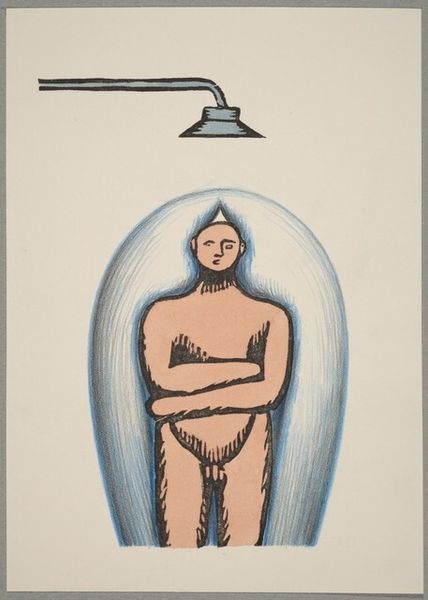
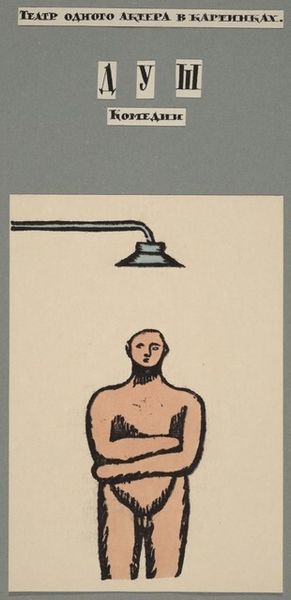
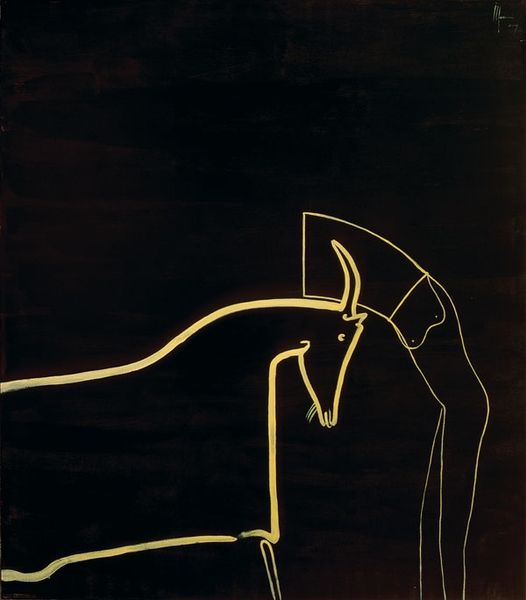
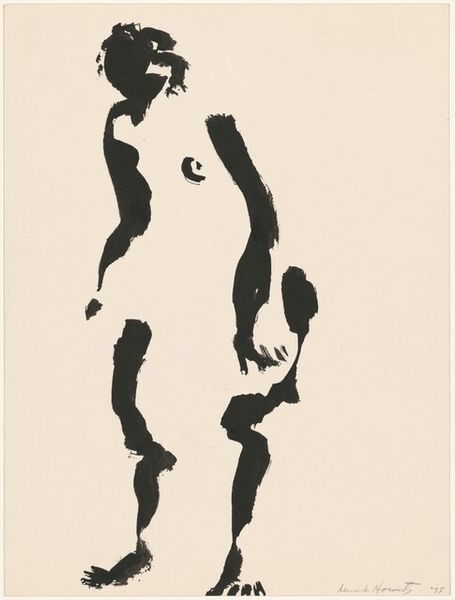
Curator: Welcome. Here we have Ilya Kabakov’s drawing, titled "Set," from around 1970. It’s a rather simple piece, consisting of lines depicting a figure standing under a showerhead. Editor: Simple, yes, but striking! I immediately get a sense of isolation. The starkness of the lines and the pale background give it a clinical feel, almost sterile. Is this person being cleansed, or are they simply trapped? Curator: That tension between cleansing and entrapment is really central to much of Kabakov’s work. The shower is interesting because, in Soviet apartment blocks, communal bathing experiences lacked privacy. The individual in this drawing seems very exposed. Showers themselves are symbols of purification and sometimes, shame. Consider the famous shower scene in Psycho. It echoes throughout our cultural consciousness. Editor: You're right. It feels heavy, and even though there's no face, it's incredibly vulnerable. And I find the deliberate lack of detail intriguing, too. The figure is generic. The scene is devoid of background noise, the specificities of character and identity. It becomes about an anonymous experience, a universal predicament, even. What are they setting the stage for in this setting? Curator: That anonymity really resonates with the conceptualist leanings in Kabakov’s art. Many people felt anonymized and alienated by the structures of power and collective living, though most state narratives at the time tried to conceal it. By stripping the figure of individual characteristics, Kabakov amplifies the symbol’s emotional impact. Editor: It's quite unnerving once you dig beneath that surface. The bare bones drawing speaks to bigger anxieties. Is it also fair to interpret a commentary on the human condition, about being washed away, made indistinct by time? Curator: Yes. The enduring themes of humanity as washed away from history, our purpose and place, were common motifs in philosophy. This is particularly true in Soviet and post-Soviet experience where individual stories are overshadowed or forgotten. Editor: I am struck by the sheer poetry with which he gets this existential meditation across, in its simplicity. Curator: Well, "Set" prompts reflection on what we keep from those experiences— and how we emerge. Editor: Precisely, offering a unique point of contemplation in the artist's visual vocabulary.
Comments
No comments
Be the first to comment and join the conversation on the ultimate creative platform.
 Collect
 React
React Comment
More like this