Copyright: Rijks Museum: Open Domain
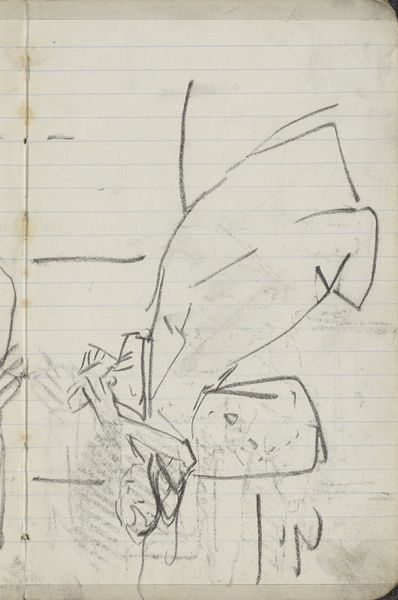
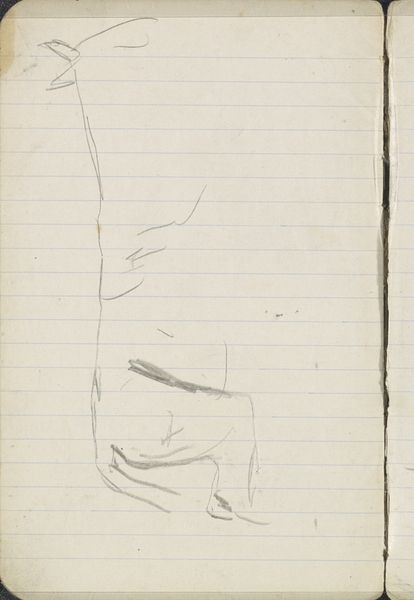
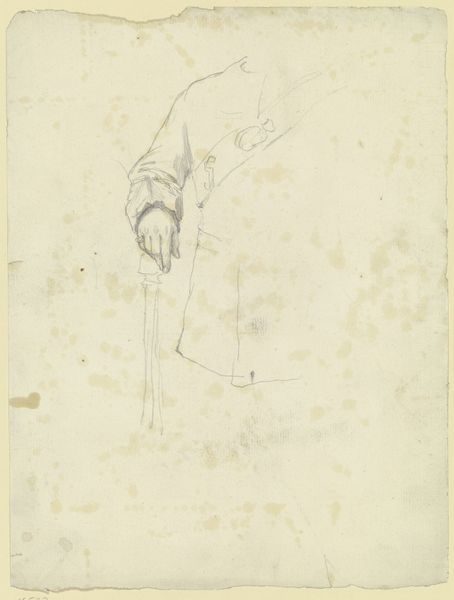
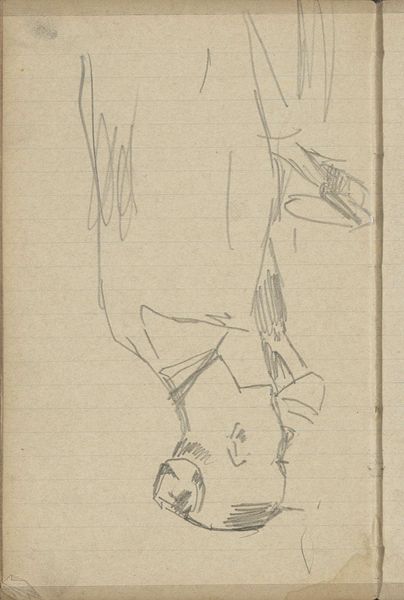
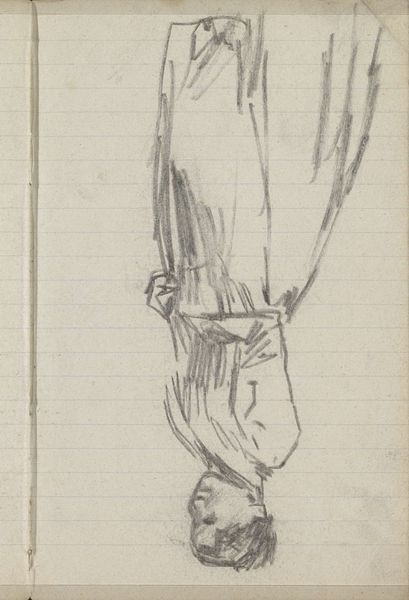
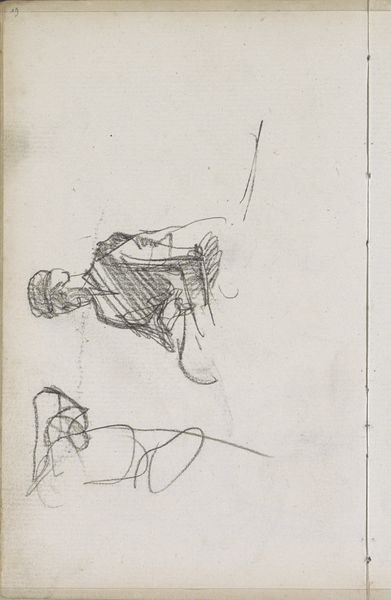
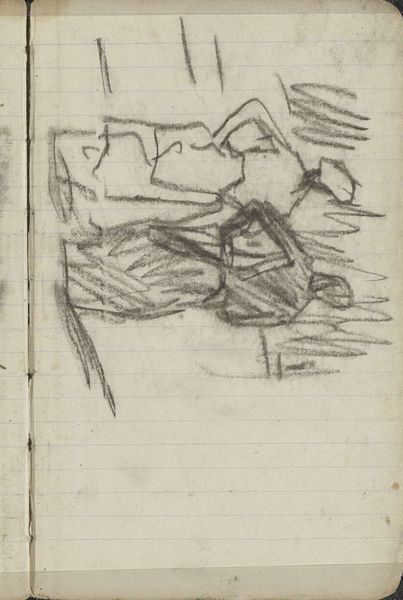
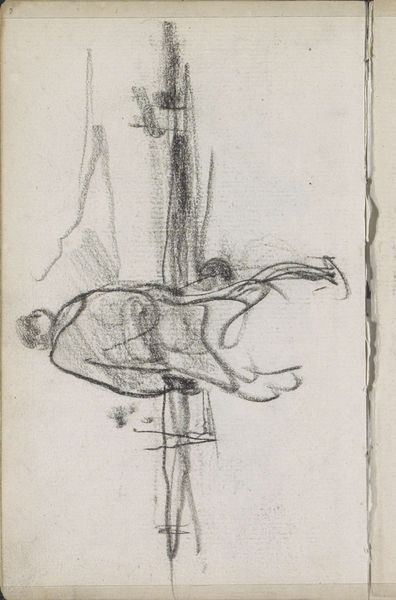
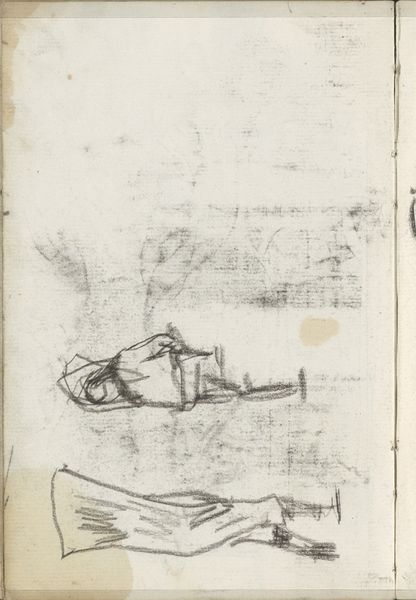
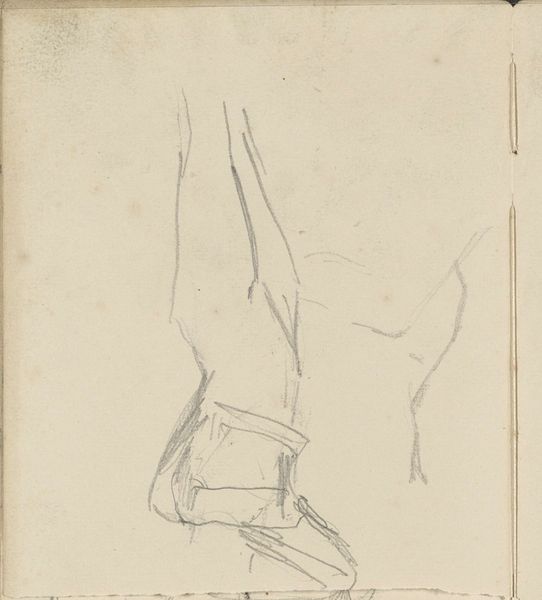
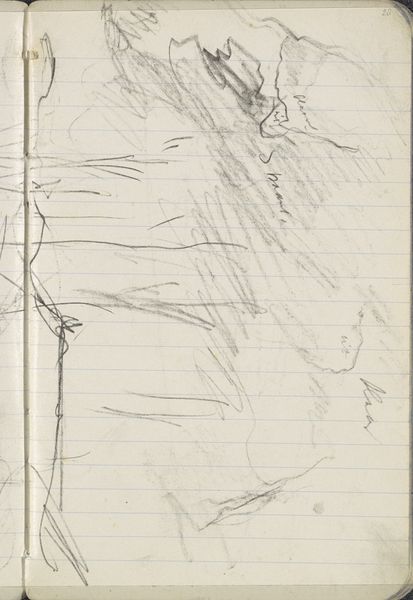
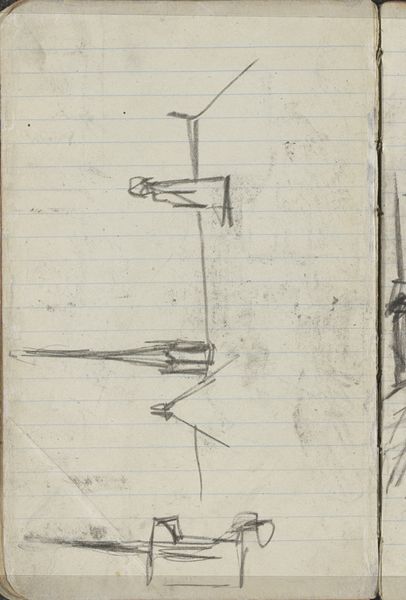
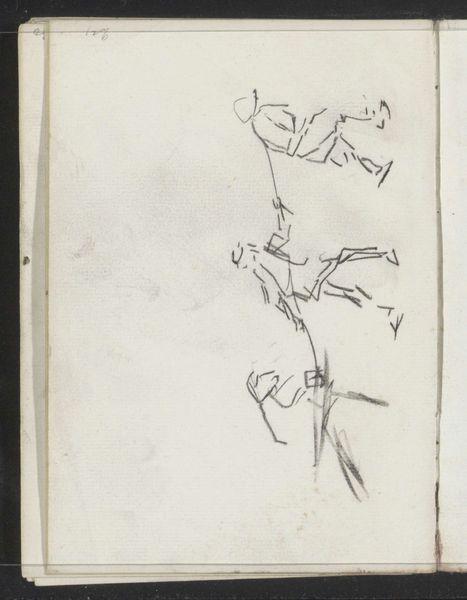
Editor: This pencil drawing, *Ploegend paard*, or "Plowing Horse," was created by George Hendrik Breitner sometime between 1896 and 1901. It looks like it’s done in a sketchbook. The sketch feels immediate, capturing a fleeting moment. What do you see in this work that resonates on a deeper level? Curator: I see echoes of the past, a visual echo of agrarian life deeply embedded in our cultural memory. The horse, straining, becomes a symbol of labor, resilience, and the profound connection between humans and the natural world. Consider the psychological weight of the horse throughout history – a beast of burden, a partner in survival. Breitner captures the essence of this relationship in a few simple lines. Editor: So, the drawing acts like a stand-in for the lived experience of agrarian society at the time? Curator: Precisely! And what do the sketch’s open lines mean? This immediacy speaks volumes, contrasting to academic paintings, evoking a raw and honest portrayal of rural life as it was vanishing because of urban expansion. What emotions are evoked when you contemplate the image? Does it trigger a collective remembrance? Editor: It makes me think of stories my grandfather told me about working on a farm when he was younger. The toil and perseverance resonate, definitely. Curator: See how a seemingly simple image unlocks a tapestry of personal and cultural connections. The cultural significance transcends its formal qualities to act as an icon representing both history and memory. Editor: I hadn’t thought about it that way, but that makes so much sense! It’s amazing how a simple sketch can contain so much history. Curator: Indeed. Visual language carries generations of meaning that are psychologically compelling and intellectually nourishing. It shifts the mundane into something incredibly potent!
Comments
No comments
Be the first to comment and join the conversation on the ultimate creative platform.
 Collect
 React
React Comment
More like this