drawing, print, etching
#
drawing
# print
#
etching
#
landscape
#
etching
#
romanticism
Dimensions: height 62 mm, width 84 mm
Copyright: Rijks Museum: Open Domain
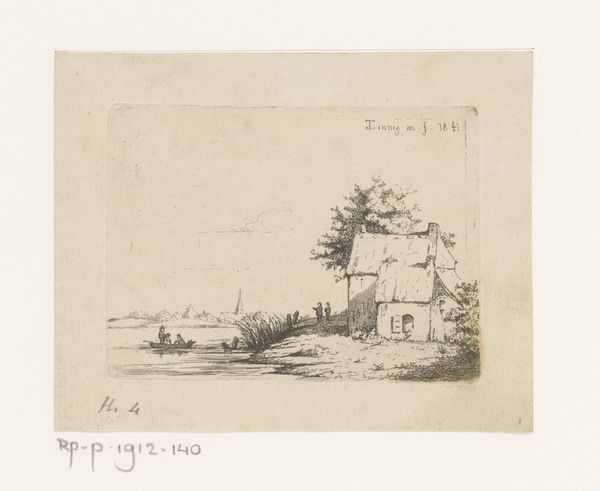
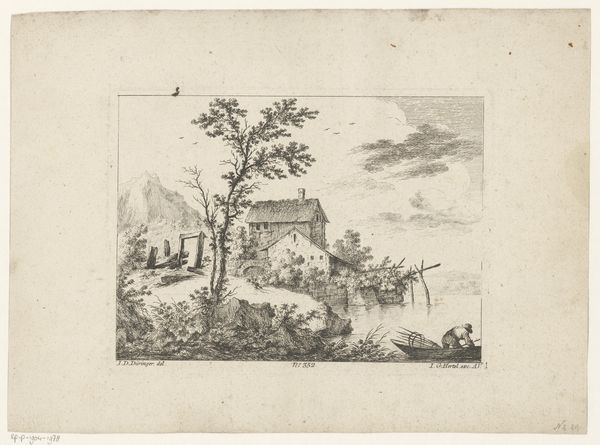
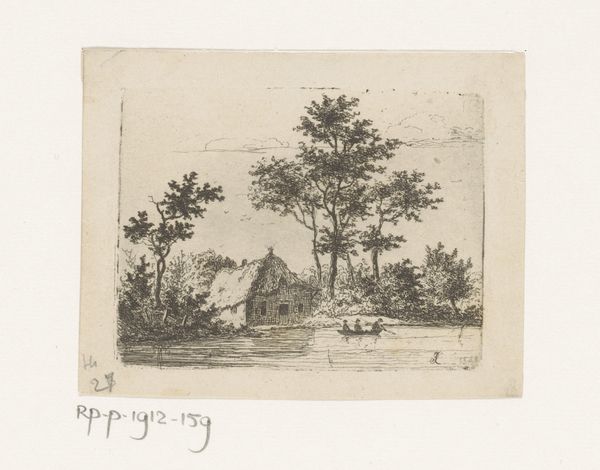
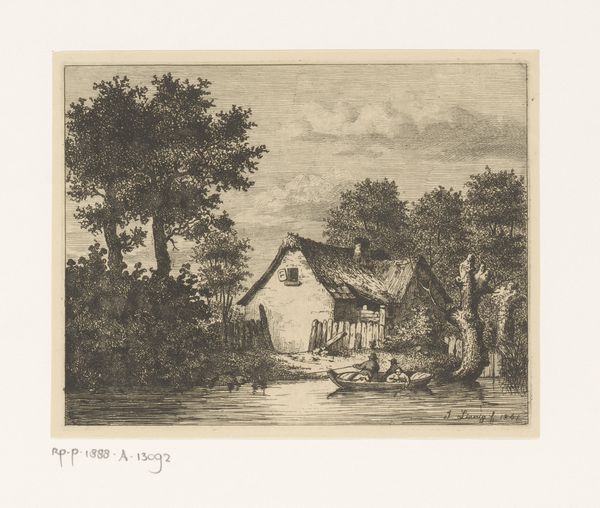
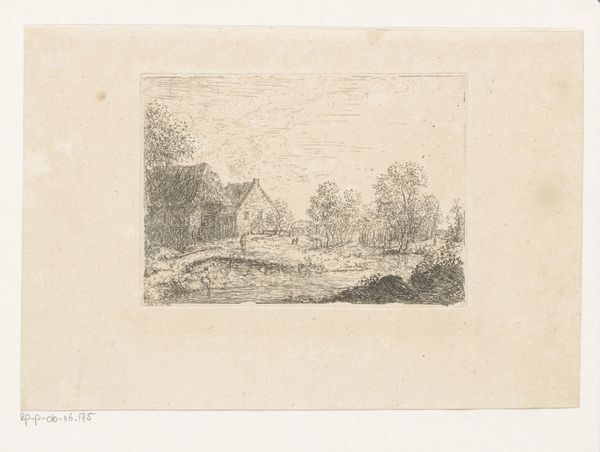
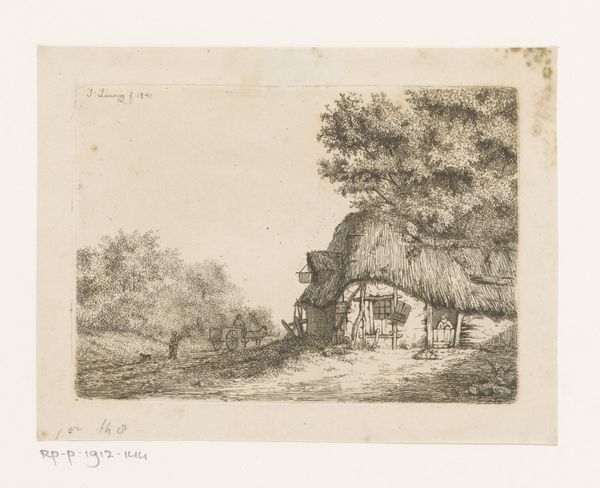
Jean Théodore Joseph Linnig created this etching of the river Schelde sometime in the mid-19th century. During this time, artistic depictions of waterways became symbolic of broader economic and political currents. Linnig, coming from a family of artists, would have been keenly aware of how landscape and genre painting served to reinforce ideas about national identity and class structure. In this small, unassuming print, we see figures in a rowboat on the river and a modest building alongside it. The presence of figures suggests the importance of labor and connection to the natural world. We also observe the depiction of a simple life, close to nature. The figures at the riverside seem to be engaged in a moment of leisure. In this way, Linnig’s print reflects both the societal values and realities of his time, offering a view into the relationship between people and the river Schelde.
Comments
No comments
Be the first to comment and join the conversation on the ultimate creative platform.
 Collect
 React
React Comment
More like this