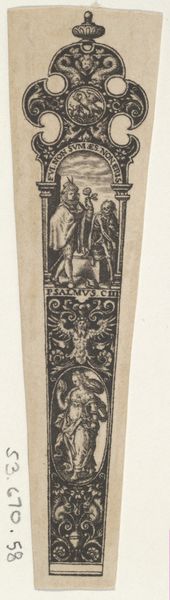
drawing, paper, ink, pen
#
drawing
#
neoclacissism
#
pen drawing
#
paper
#
ink
#
pen
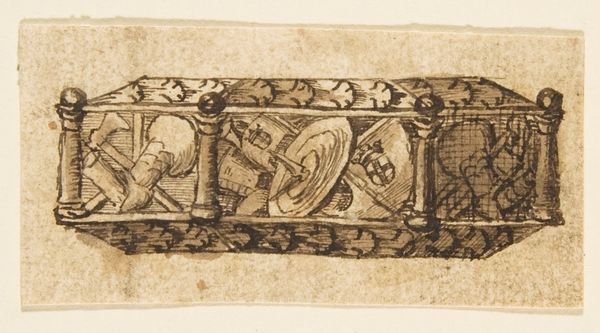
Dimensions: height 71 mm, width 187 mm
Copyright: Rijks Museum: Open Domain
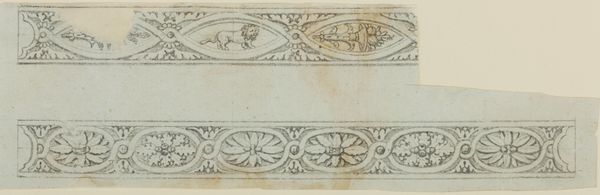
Etienne de Lavallée-Poussin created this fragment of an antique relief in brown ink. Note the bucranium, or ox skull, a frequent motif in ancient Roman art. These skulls, often adorned with garlands, were commonly used in architectural friezes and altars, particularly in temples dedicated to gods associated with agriculture and pastoral life. We see the bucranium echoed across time – from the skull imagery in ancient Mithraic cults, symbolizing sacrifice and rebirth, to its appearance in Renaissance and Baroque art, where it represents mortality and the transience of life. Though its original religious significance may fade, the bucranium persists, its emotional resonance undiminished. Each repetition of this symbol acts as a conduit, channeling ancestral emotion and experience. The image retains its power, engaging viewers on a subconscious level with themes of sacrifice, memory, and the cycle of life and death. This motif demonstrates how symbols resurface, evolve, and take on new meanings in different historical contexts.
Comments
No comments
Be the first to comment and join the conversation on the ultimate creative platform.
 Collect
 React
React Comment
More like this