1521
Saint Sebald


Listen to curator's interpretation
Curatorial notes
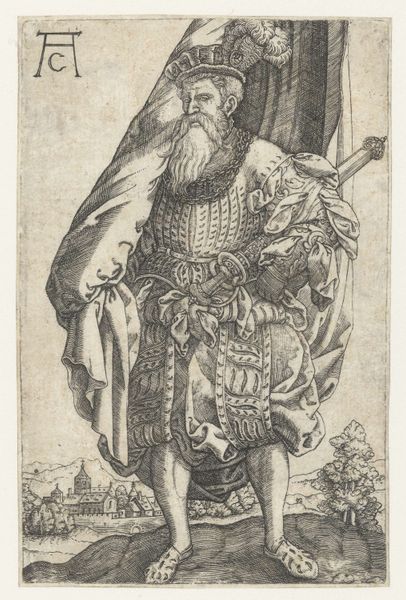
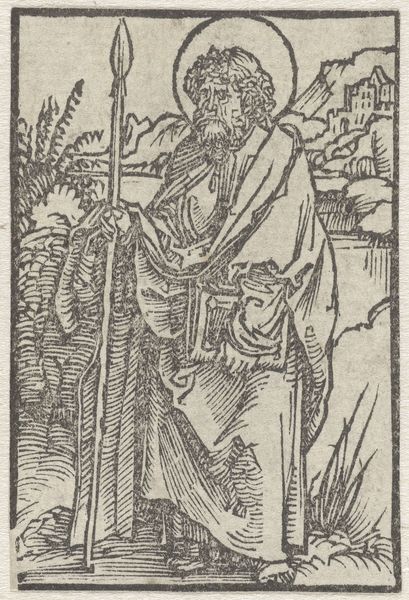
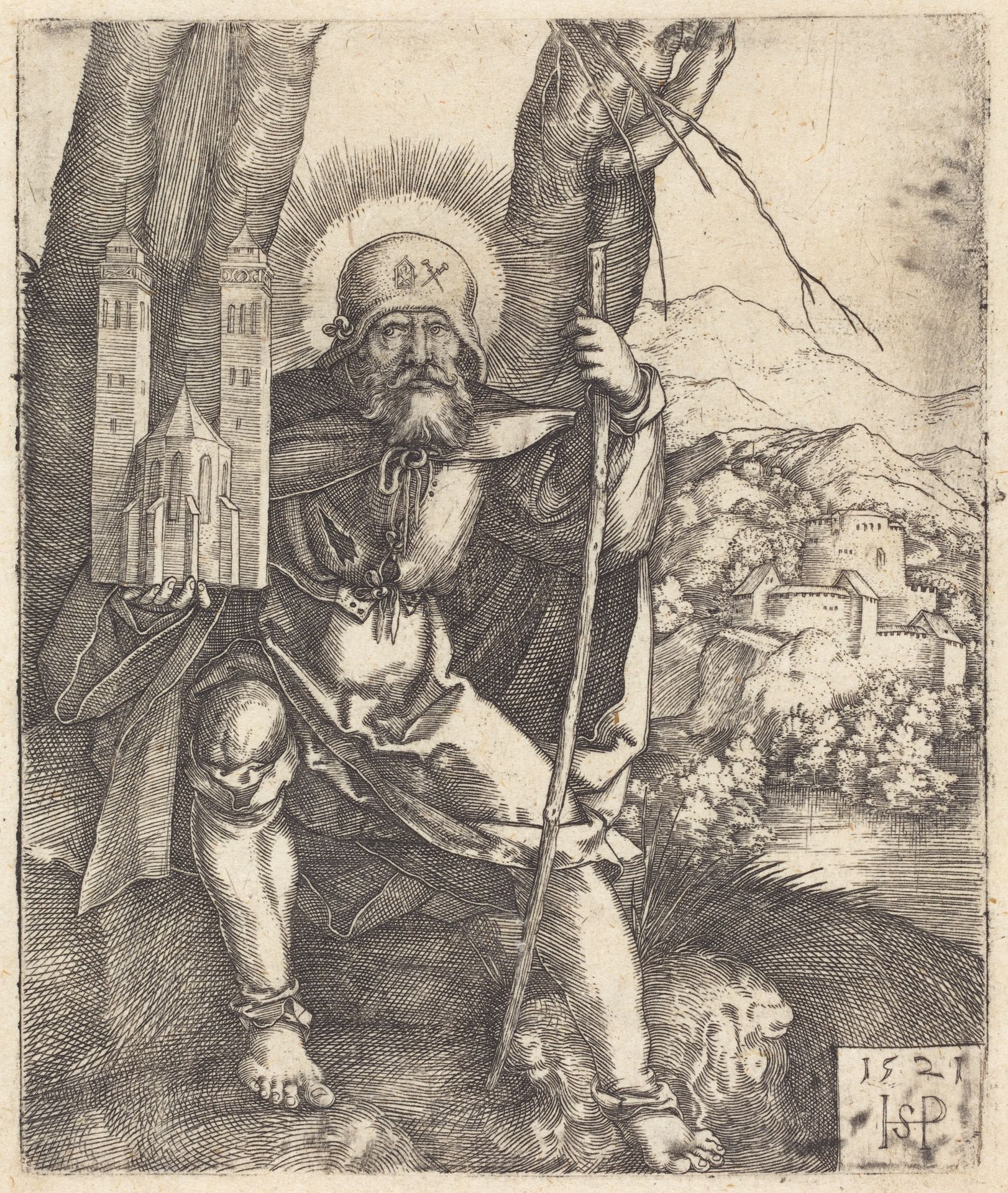
Editor: This is Sebald Beham's "Saint Sebald," an engraving from 1521. There's something serene yet imposing about this figure; he seems both worldly and ethereal. What jumps out at you? Curator: Well, immediately, the weight of symbols strikes me. Consider that miniature church he holds: not just a building, but the Sebalduskirche itself, the spiritual heart of Nuremberg, his city. The pickaxe on his hat anchors him to labor, a grounded holiness, yet the halo speaks of transcendence. Editor: So, the pickaxe isn't just random? I thought it was a peculiar detail. Curator: Nothing is random, especially not in such a carefully constructed image. Think of how visual symbols communicated across generations; this pickaxe wouldn’t have seemed odd to its contemporary viewers. Now look at the shackles around his ankles - a symbol of release. Editor: That's fascinating, I didn't notice the shackles initially, I was focused on his stern face. Curator: Faces can mislead, eh? Visual artists in that period are very intentional, particularly with iconographic images. He stands with bare feet on the stone - his connection to his physical surrounding; with that simple walking stick. It is at once staff of power but it points down to the world, to Nuremberg itself. Editor: I see how those visual elements add layers of meaning that you might miss at first glance. Thanks for opening my eyes to this; the shackles gave me a different context. Curator: Indeed, these aren't just images but encoded memories and belief. It will be interesting for you to spot these on your own from now on!