1811
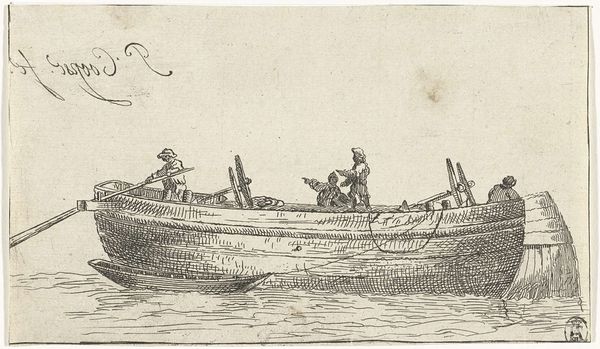
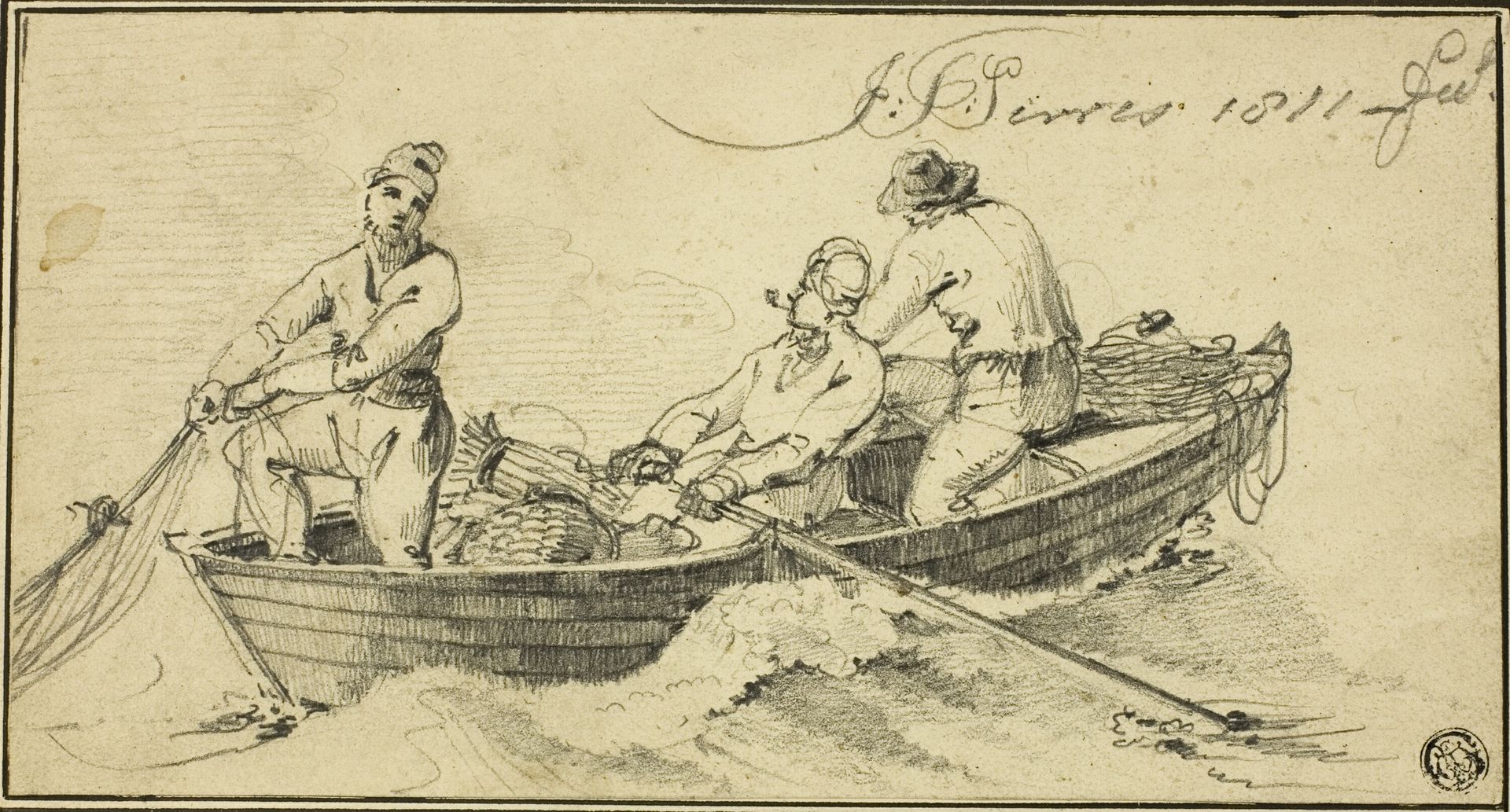
Three Fisherman in a Boat


Listen to curator's interpretation
Curatorial notes
Editor: Here we have "Three Fisherman in a Boat," a pen and ink drawing done in 1811 by John Thomas Serres. It’s at the Art Institute of Chicago. I’m immediately struck by how rough the seas look, and the fishermen seem so exposed. What do you see in this piece? Curator: This drawing offers us a glimpse into the often-overlooked lives of maritime laborers. Serres, as a marine painter, was deeply invested in depicting the realities of naval life, but I wonder, whose realities were being shown? Editor: What do you mean? Curator: Consider the broader social and political context of 19th-century Britain. Maritime power was inextricably linked to colonial expansion and global trade. What role did these fishermen play, not just in providing for their communities, but also in supporting this larger system? The image seems to romanticize their labor, yet omits a more complicated story about class and power. Editor: That’s interesting, I didn’t consider the connection between the fishermen's lives and Britain's broader colonial ambitions. It almost feels exploitative to view it that way. Curator: Well, exploitation can be subtle. Consider the romanticism, doesn't that help normalize their hardships? Art can perpetuate inequalities even when it intends otherwise. Do you see ways we might resist this perspective? Editor: Maybe by acknowledging the economic system that relied on their work and how these systems often failed the workers themselves. It changes the way I understand what Serres tried to capture. Curator: Precisely. It prompts us to engage in these critical conversations and seek out perspectives traditionally marginalized. That to me, is the power of art.