

after 1460
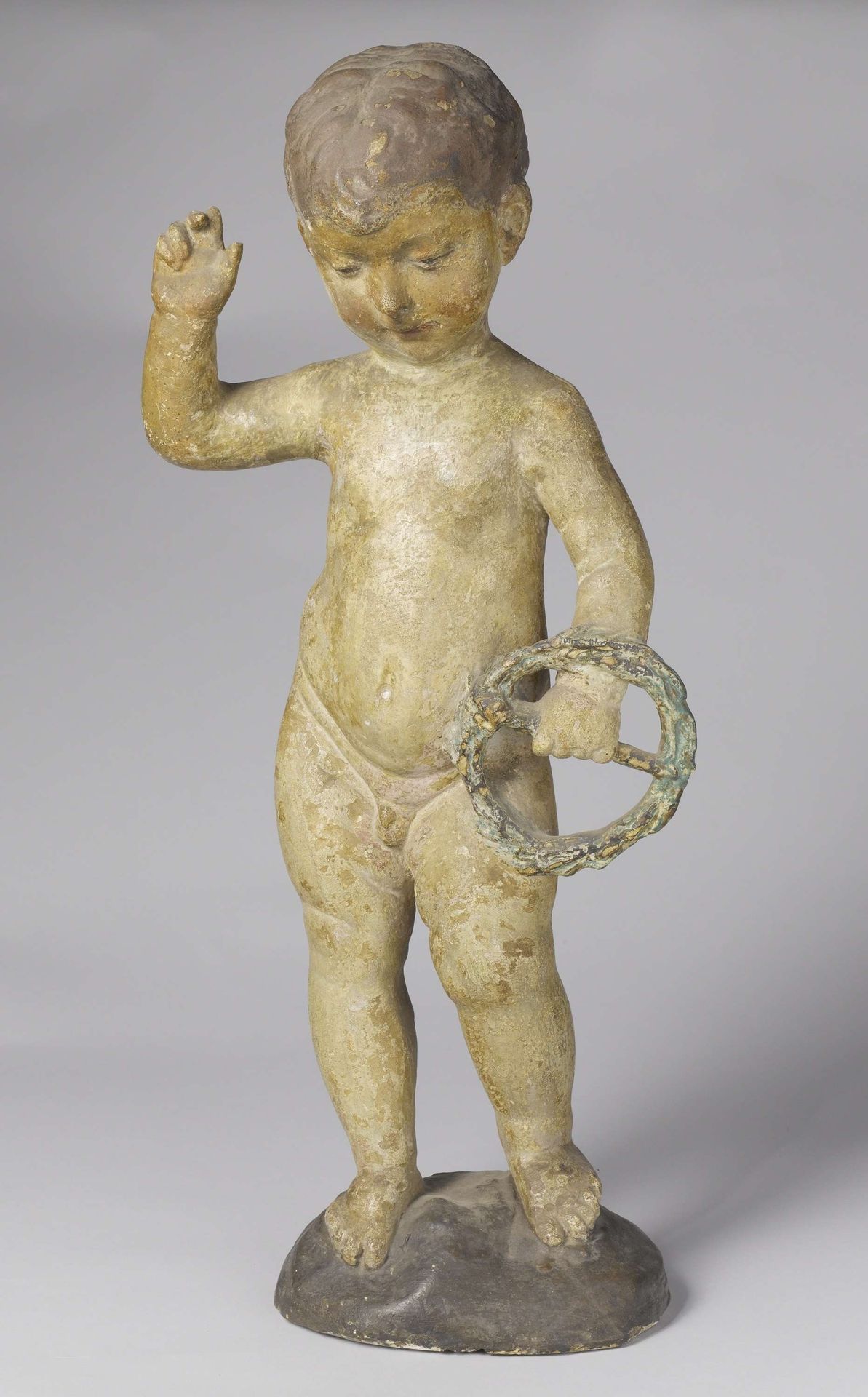
Zegenend Christuskind

Listen to curator's interpretation
Curatorial notes
Desiderio da Settignano sculpted this sculpture of the Blessing Christ Child in Florence during the Early Renaissance. Representations of the Christ Child in Renaissance sculpture were often commissioned by wealthy families as devotional objects, reflecting the religious and social values of the time. But here, Desiderio's sculpture offers us more than just religious symbolism; the delicate features and tender gaze of the child evoke a sense of vulnerability. The wreath held in the child's hand symbolizes victory and divinity, yet there's an inherent tension between the child's innocence and the weight of his future destiny. We’re reminded of the complex interplay between childhood, power, and faith. Instead of a traditional, formal depiction, Desiderio’s sculpture invites us to reflect on the human aspect of divinity. It bridges the gap between the sacred and the personal.