1719
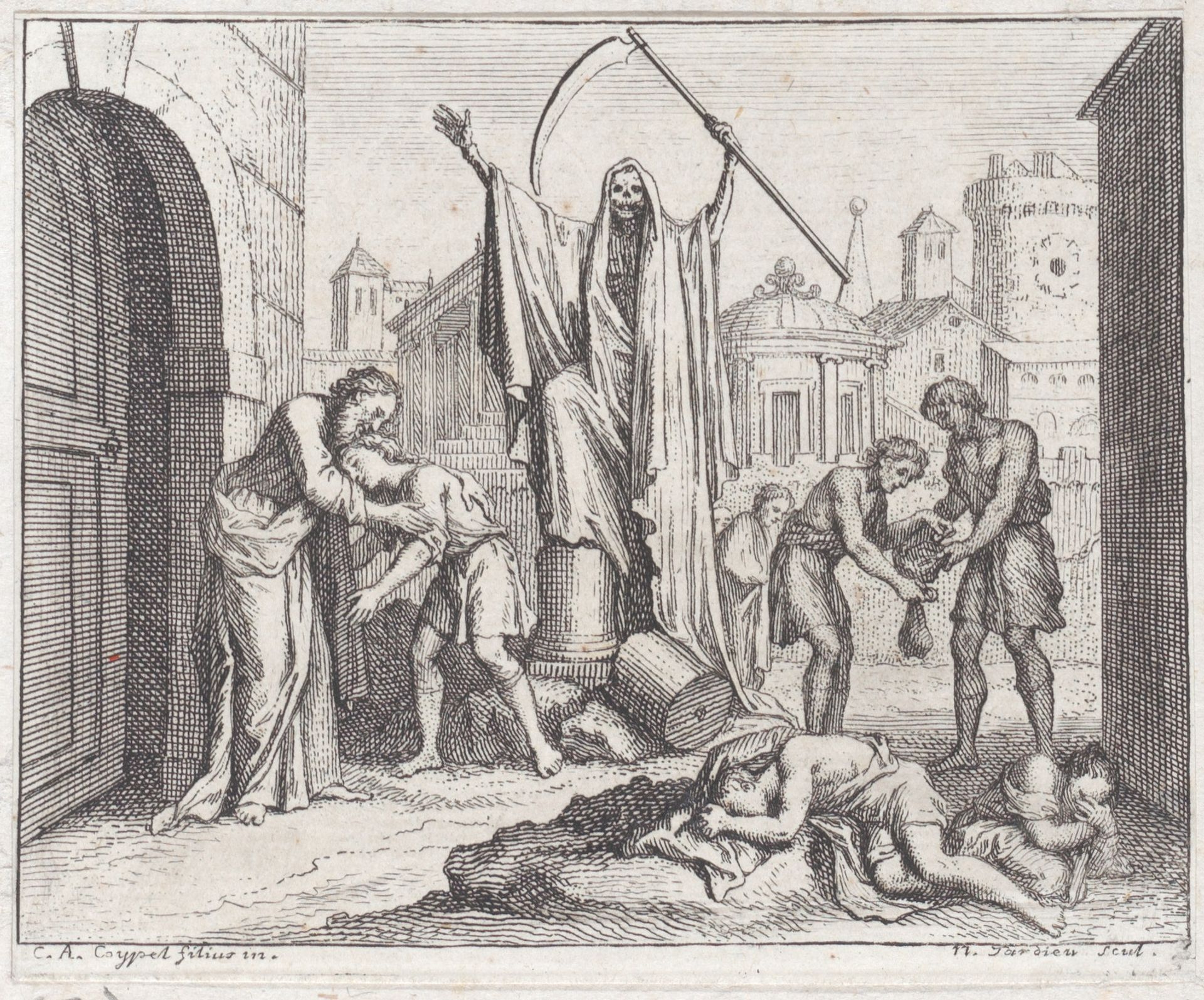
Book 2, Fable 20: Minos and death (Minos et la mort)

Nicolas Henry Tardieu
1674 - 1749
The Metropolitan Museum of Art
Metropolitan Museum of Art, New York, NYListen to curator's interpretation
Curatorial notes
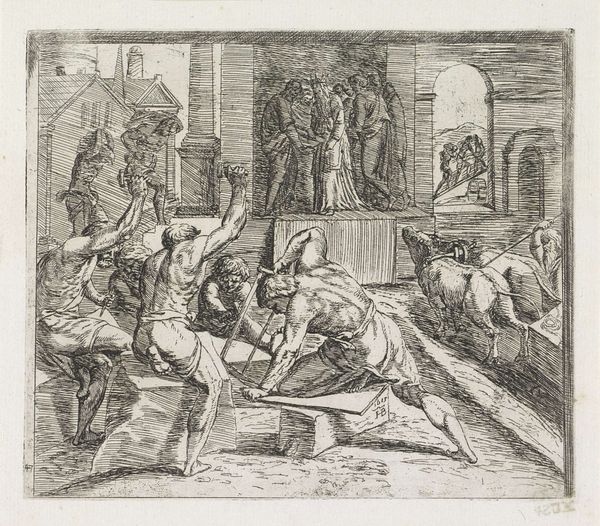
Nicolas Henry Tardieu created this print, "Minos and Death," sometime before his death in 1749, using etching and engraving. It illustrates a fable from La Fontaine’s second book of fables. Look closely and you'll see death personified, standing triumphantly on a plinth. This image was made in France, a country ruled by a powerful monarchy and aristocracy. The fable critiques unchecked power, as Minos, a tyrannical king from Greek mythology, is powerless against death. Prints like this circulated widely, allowing such critiques to reach a broad audience, bypassing the official institutions of art like the Royal Academy. This print's power lies in its ability to disseminate subversive ideas. To fully understand this image, we need to examine the history of printmaking, the social role of fables, and the political climate of 18th-century France. Only then can we grasp the full scope of its meaning and its challenge to social norms.