About this artwork
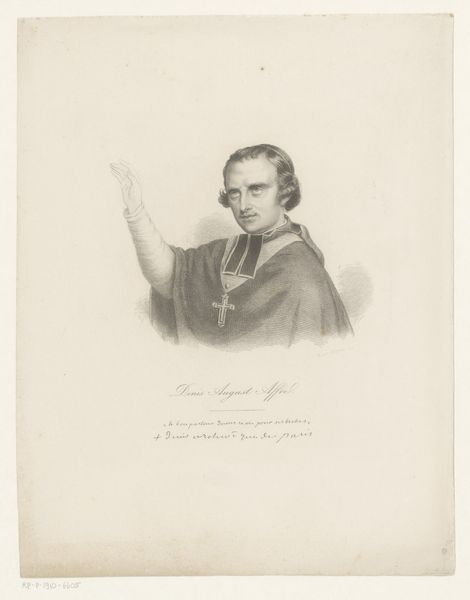
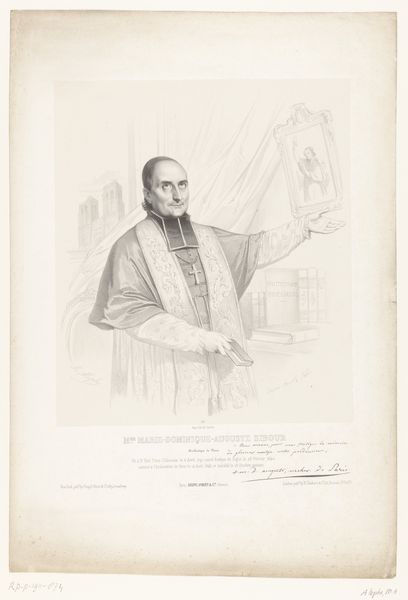
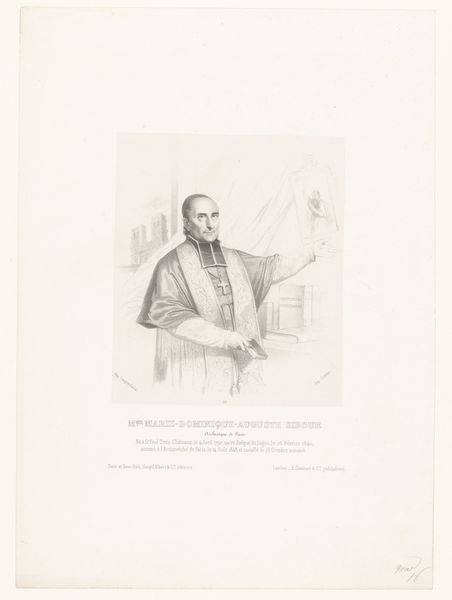
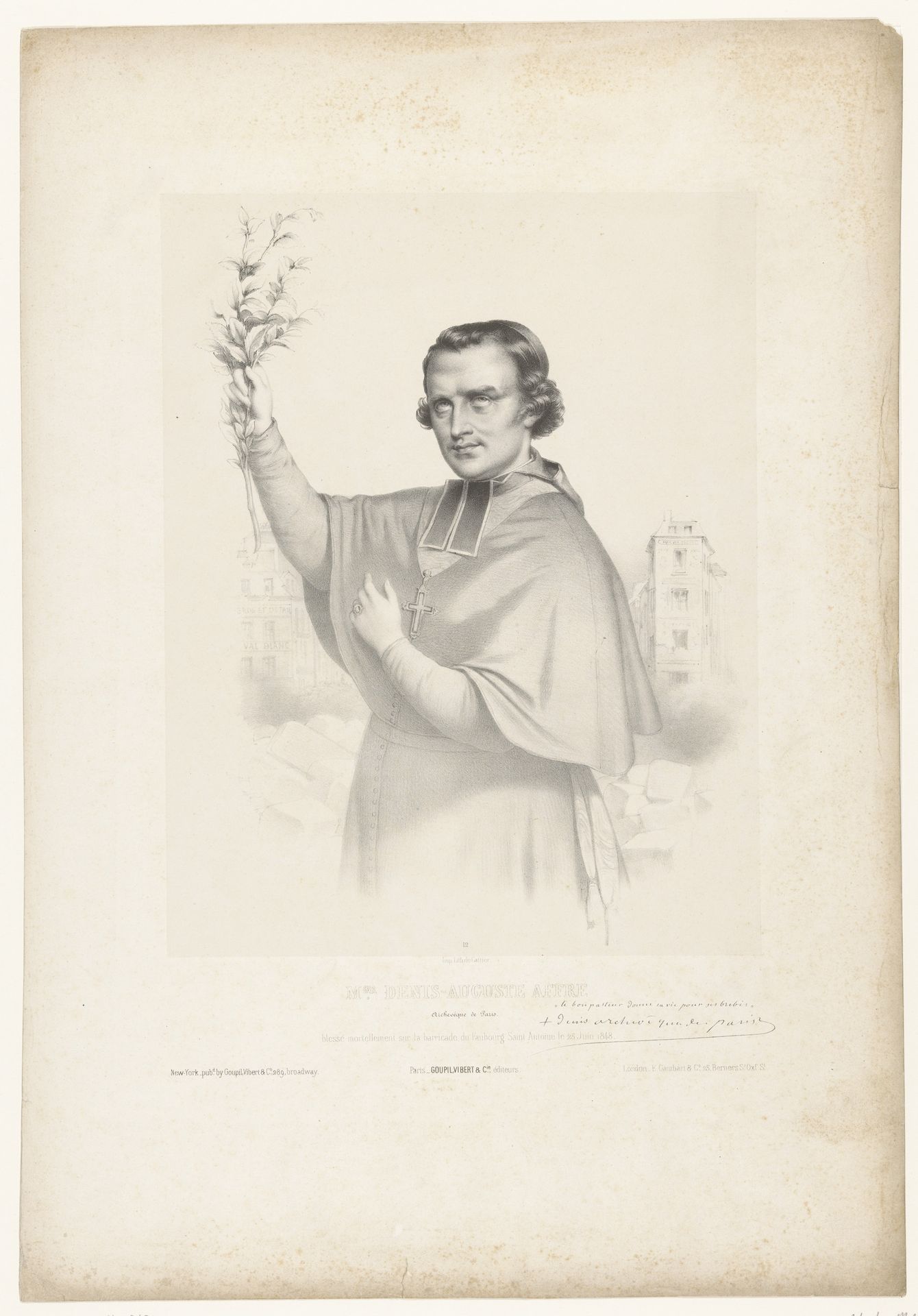
Marie-Alexandre Alophe made this lithograph of Denis Auguste Affre, Archbishop of Paris. It likely dates to the mid-19th century. Affre's stance with a branch held high recalls the visual language of martyrdom and sainthood. To understand this image, we must consider the complex political and religious landscape of France at the time. Affre served as Archbishop during the 1848 revolution. Seeking to mediate between the National Guard and the rioters, he was fatally shot. His death cemented his status as a symbol of sacrifice and reconciliation amidst social upheaval. Alophe's print then, is more than a simple portrait. It's a carefully constructed image that presents Affre as a martyr for peace. Historical archives, church records, and contemporary news reports could further illuminate the specific circumstances surrounding Affre's death and the subsequent construction of his public image. By examining these resources, we can better understand the complex interplay between art, politics, and religion in 19th-century France.
Portret van Denis Auguste Affre, aartsbisschop van Parijs
1848

Marie-Alexandre Alophe
1811 - 1883Location
RijksmuseumArtwork details
- Medium
- lithograph, print
- Dimensions
- height 489 mm, width 341 mm
- Location
- Rijksmuseum
- Copyright
- Rijks Museum: Open Domain
Tags
Comments
Share your thoughts
About this artwork
Marie-Alexandre Alophe made this lithograph of Denis Auguste Affre, Archbishop of Paris. It likely dates to the mid-19th century. Affre's stance with a branch held high recalls the visual language of martyrdom and sainthood. To understand this image, we must consider the complex political and religious landscape of France at the time. Affre served as Archbishop during the 1848 revolution. Seeking to mediate between the National Guard and the rioters, he was fatally shot. His death cemented his status as a symbol of sacrifice and reconciliation amidst social upheaval. Alophe's print then, is more than a simple portrait. It's a carefully constructed image that presents Affre as a martyr for peace. Historical archives, church records, and contemporary news reports could further illuminate the specific circumstances surrounding Affre's death and the subsequent construction of his public image. By examining these resources, we can better understand the complex interplay between art, politics, and religion in 19th-century France.
Comments
Share your thoughts