
Curatorial notes
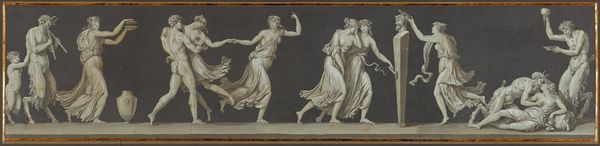
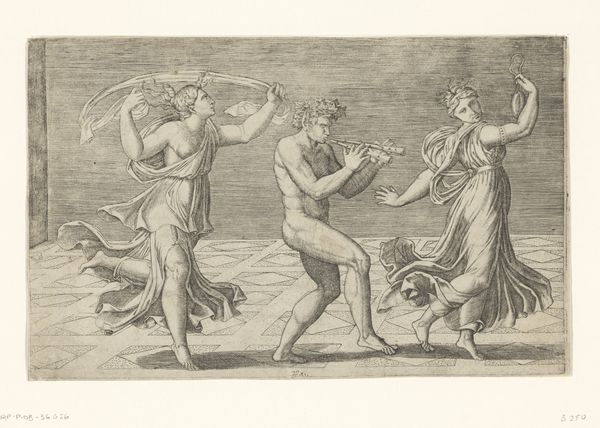
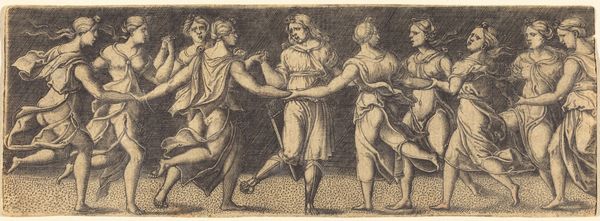
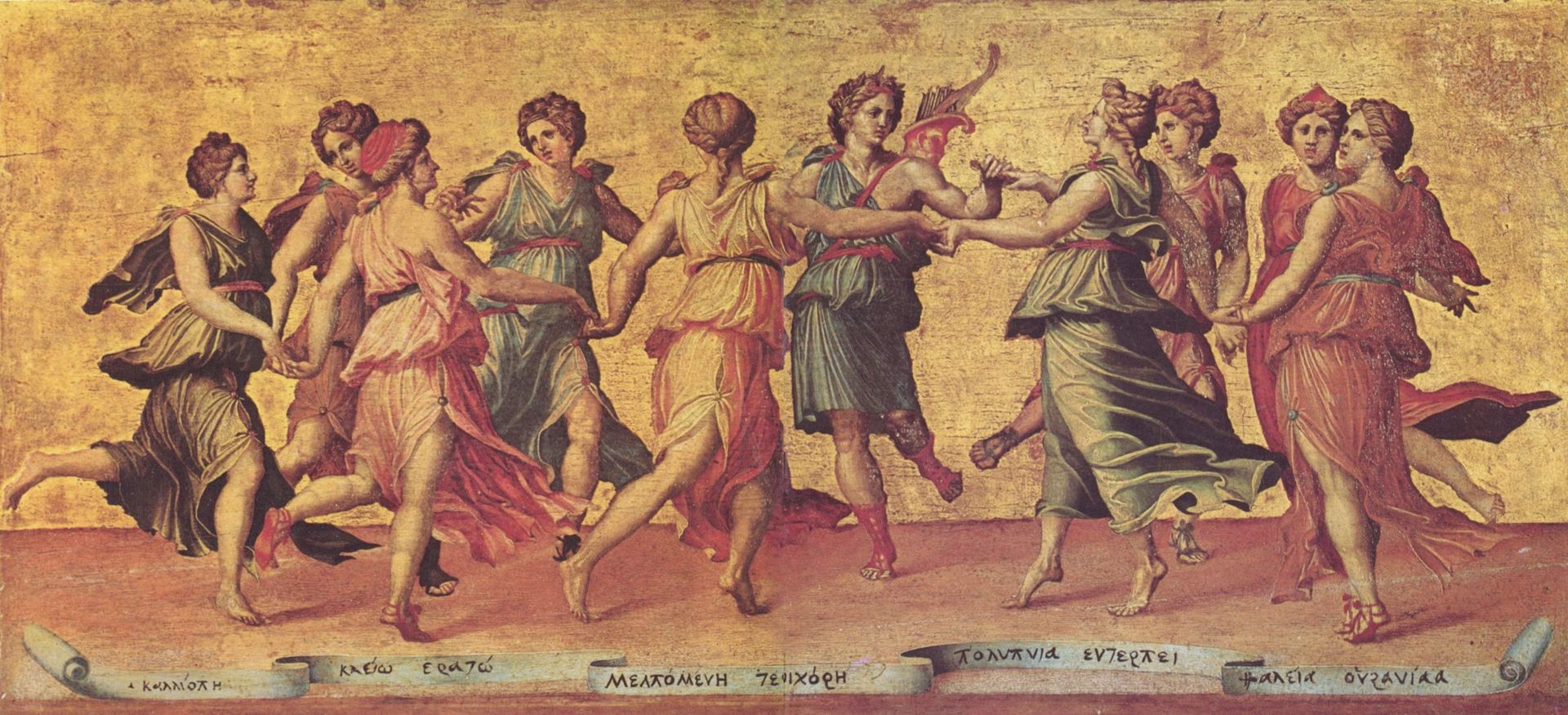
Giulio Romano painted this image of Apollon dancing with the Muses during the Renaissance. We see a ring dance, an ancient ritual. The circular form is powerful: it speaks of unity and cosmic harmony. Apollo, god of music and light, leads the Muses. They embody the arts and sciences. It’s not just a dance; it's an expression of creativity and knowledge. The Muses dance in various forms in antiquity, like the Horae and the Charites, all interconnected and passed down through time. This image evokes a sense of collective memory and a longing for harmony, a psychoanalytic interpretation perhaps, of the circular dance. The dance motif continues through the medieval ages, with a more macabre sensibility in the Danse Macabre. Death leads individuals from all social strata, reminding us of our shared destiny. In a way, the dance serves as a visualization of the human experience. Romano revives the classical ideals and, like a compass, redirects us back to that point of origin of Apollonian harmony. It’s a cyclical progression where forms resurface, evolve, and acquire new layers of meaning.