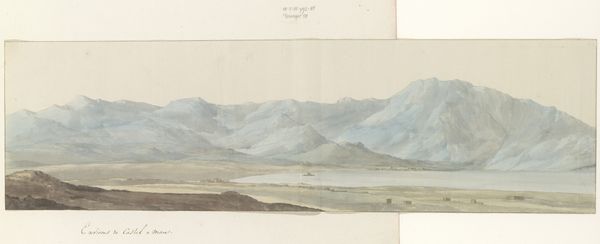
Dimensions: height 120 mm, width 528 mm
Copyright: Rijks Museum: Open Domain
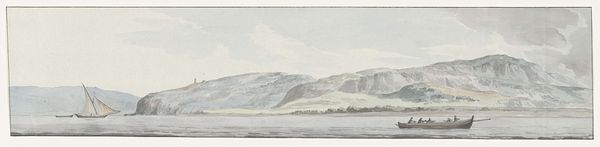
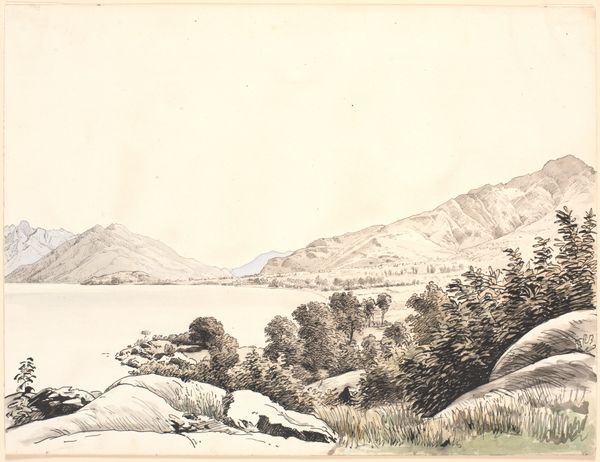
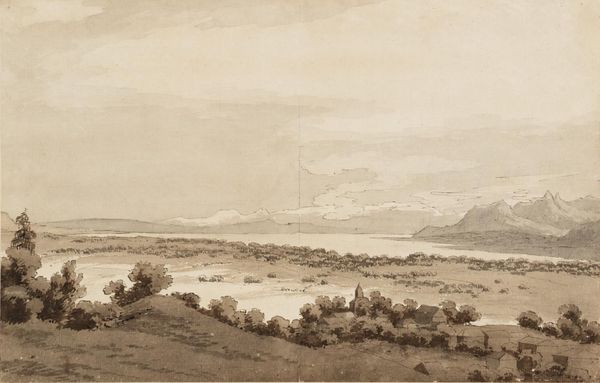
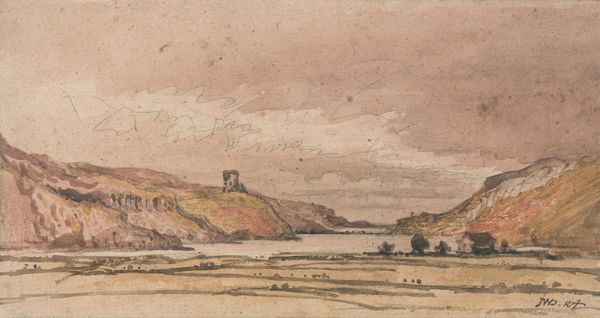
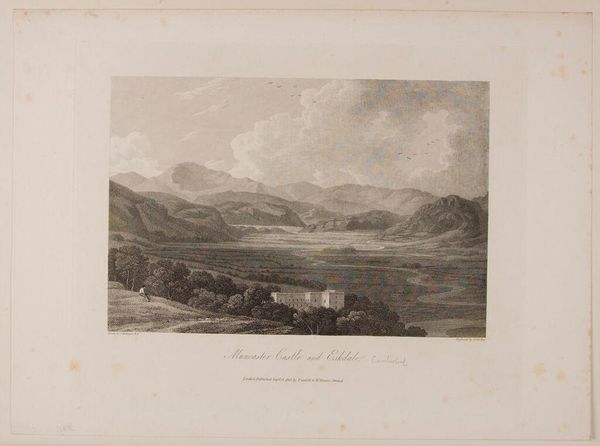
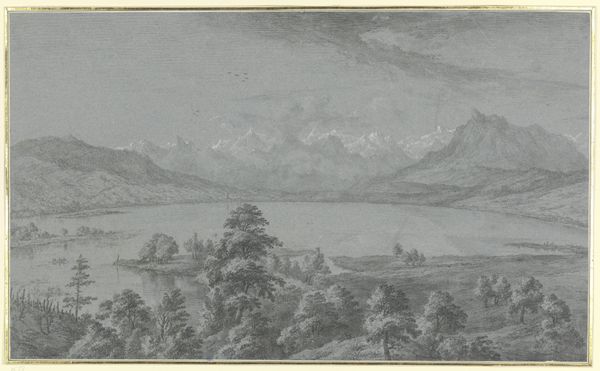
Curator: Gazing upon "Gezicht op de kaap van Stilo," painted in 1778 by Louis Ducros, I'm immediately struck by its wistful stillness. The mountains fading into the pale sky – it’s almost like a dream. Editor: The materiality of this work, a mixed medium combining pencil and watercolor on paper, offers an insight into 18th-century artistic practices. Look at the subtle variations achieved by the pencil sketch supporting the overlaid watercolors. Curator: Right, it’s all about the delicate balance. Ducros has captured something profound with so little, just this misty scene that could easily be overlooked, a momentary glance, but it makes me want to linger, to contemplate the quiet beauty of the cape. Editor: The "little" we see here, in terms of material, stands in stark contrast to the "much" Ducros manages to evoke. Paper, pigment, graphite: common commodities transformed through labor into an aesthetic experience. And if it's on display now, who owned the paper, the source of pigments, what about distribution routes to his clientele? Curator: It certainly hints at the Romantic sensibility that was beginning to bloom then. Nature as something immense and almost unknowable, against which the individual feels both insignificant and strangely connected. Isn’t it lovely? The way the pale blues of the water mirror the sky, so perfectly understated? It almost melts the heart. Editor: It is compelling but that mirroring also speaks volumes. Reflect on this mirroring in relationship to resource extraction for pigments to capture this scene, in an almost Colonial impulse of collection, display, and control. Curator: A fascinating angle! So, you see it less as a landscape and more as… an artifact? Editor: Both. Always both. And think about Ducros himself, traveling to these distant shores. His labor, skill, access to resources were all factors in crafting the work itself. Curator: Ultimately, “Gezicht op de kaap van Stilo” invites us to see the world anew, as Ducros saw it, rendered beautifully in humble materials, and reminding us that maybe, beauty lies precisely in such ephemeral, easily missed moments. Editor: Indeed, and also reminds us of art’s complex relationship to production, ownership, and seeing – things that persist through time, in tandem.
Comments
No comments
Be the first to comment and join the conversation on the ultimate creative platform.
 Collect
 React
React Comment
More like this