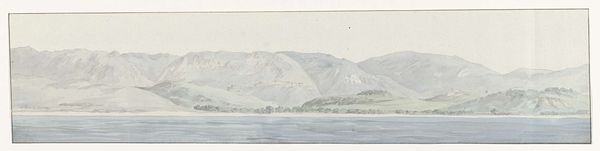
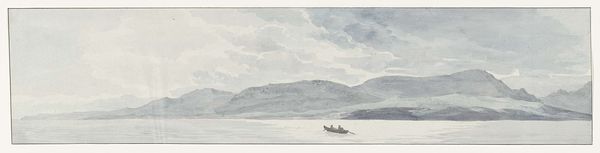
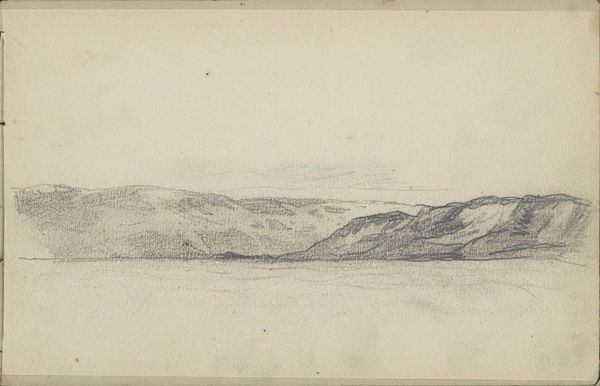
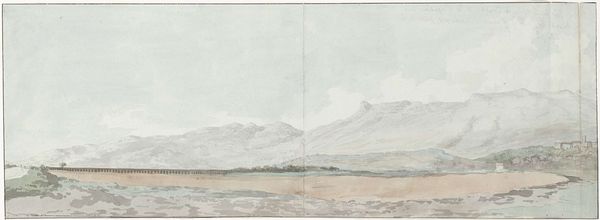
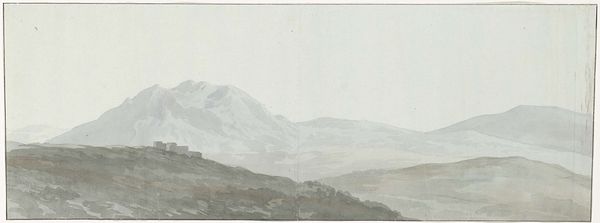
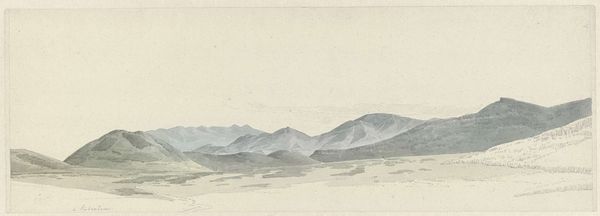
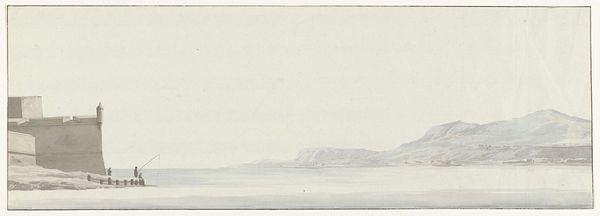
Gezicht op Capo dell'Armi in Calabrië en kust van Sicilië ter hoogte van Taormina 1778
0:00
0:00

louisducros
Rijksmuseum
#
landscape illustration sketch
#
amateur sketch
#
light pencil work
#
pencil sketch
#
incomplete sketchy
#
possibly oil pastel
#
pencil drawing
#
watercolour illustration
#
mixed medium
#
watercolor
Dimensions: height 118 mm, width 525 mm
Copyright: Rijks Museum: Open Domain
Curator: This lovely panoramic watercolor by Louis Ducros is titled "Gezicht op Capo dell'Armi in Calabrië en kust van Sicilië ter hoogte van Taormina," dating back to 1778. Editor: My first impression is tranquility, but also a certain detachment. The pale washes and simple composition give it an almost dreamlike quality. Curator: The imagery presented provides the viewers a window into the socio-political currents in Italy during the 18th century, notably the movement to capture "snapshots" of natural environments affected by colonial powers, thereby contributing to discourses around possession and dominion. How do you interpret the symbolic presence of the figures in this historical context? Editor: Well, water, and by extension ships, always symbolize journeys, transitions. The ships hint at human potential for discovery, yet, on the other hand, also to the transport of enslaved people, colonization, all tinged with human ambition and possible loss. What visual echoes do you hear across time when you examine a vista like this? Curator: I am reminded how landscape painting, even seemingly neutral depictions, became intrinsically linked to nascent national identities and served as powerful ideological tools. Look closely—this work on display at the Rijksmuseum employs delicate brushwork, especially apparent in how the artist delineates land and the sea. Editor: Notice how the mountains themselves become like archetypes of permanence? These landmarks bear silent witness to changing power structures, acting almost as mythical guardians of a geographical identity. The sky also seems charged, though lightly rendered. What emotions surface for you? Curator: I note how these picturesque scenes, produced primarily by and for affluent Europeans on the Grand Tour, mask inherent class divisions. I am more intrigued by the way this scene anticipates discourses about environmentalism and stewardship; also, I am led to think of land ownership as directly linked to social privilege. Editor: Indeed. It brings to mind themes of man's relationship to the environment and prompts deep questions regarding ecological consequences of historical actions, but I concede, with muted symbolism. Well, Ducros offers a rich vista ripe for continued analysis! Curator: Agreed; reflecting on these layers truly enriches the viewing experience, making one consider our modern world in conjunction to colonial worldviews. Editor: Absolutely! It has transformed my initial quiet enjoyment into a far deeper inquiry and for me that marks a journey completed.
Comments
No comments
Be the first to comment and join the conversation on the ultimate creative platform.
 Collect
 React
React Comment
More like this