1628 - 1670
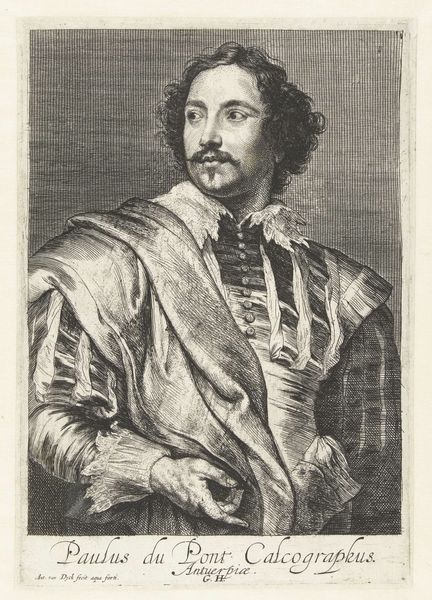
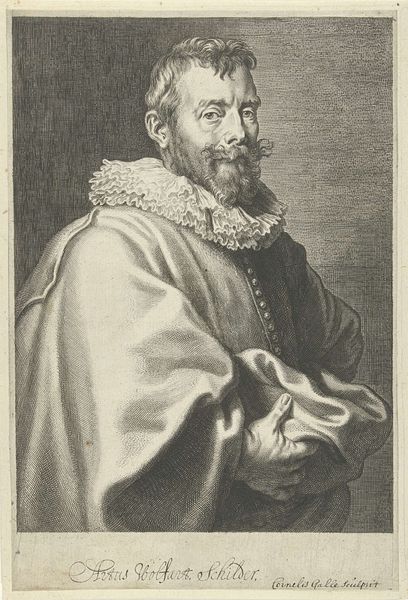
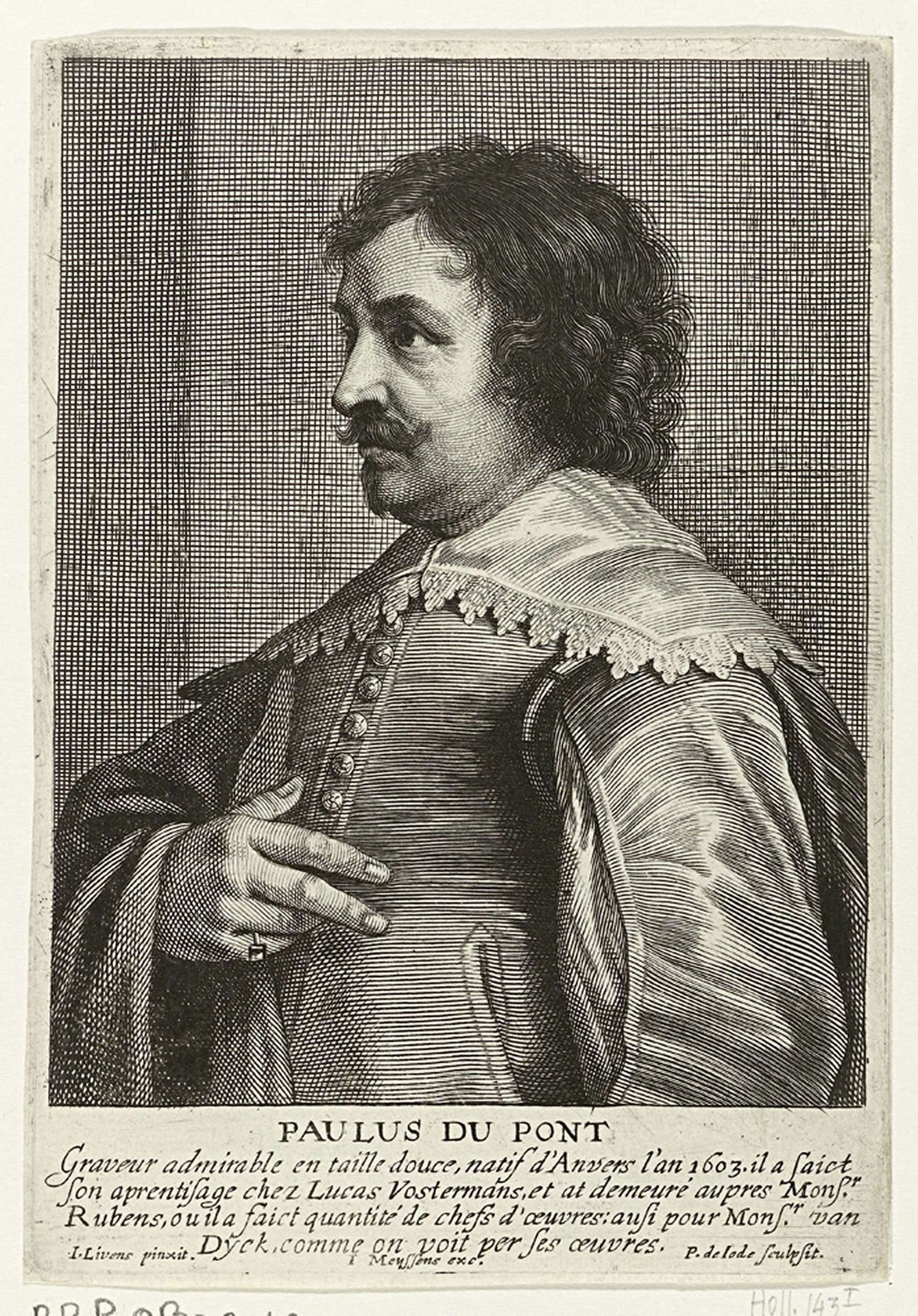
Portret van Paulus Pontius

Pieter de (II) Jode
1606 - 1674Location
RijksmuseumListen to curator's interpretation
Curatorial notes
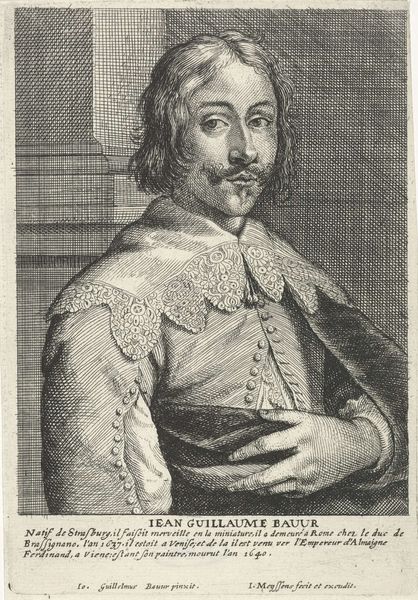
Pieter de Jode II etched this portrait of Paulus Pontius in the 17th century. The hand is a striking feature; its gesture and placement carry echoes through art history. Consider the "hand-in-cloak" motif, which has roots extending back to antiquity. It was notably employed to convey a sense of modesty, discretion, or hidden nobility. Think of the Roman statesman, his toga concealing a part of himself, and how the gesture reappears through the Renaissance, subtly shifting with each portrayal. Here, Pontius presents himself with a similar restraint, yet the exposed hand, adorned with a ring, hints at status and accomplishment. This act of concealing and revealing plays upon the viewer's subconscious, creating a tension between what is shown and what is hidden. The image evokes a complex interplay of power and personality, reflecting not just Pontius as an individual, but also the broader cultural values of his time. The symbol progresses, ever-changing yet eternally linked.