1821
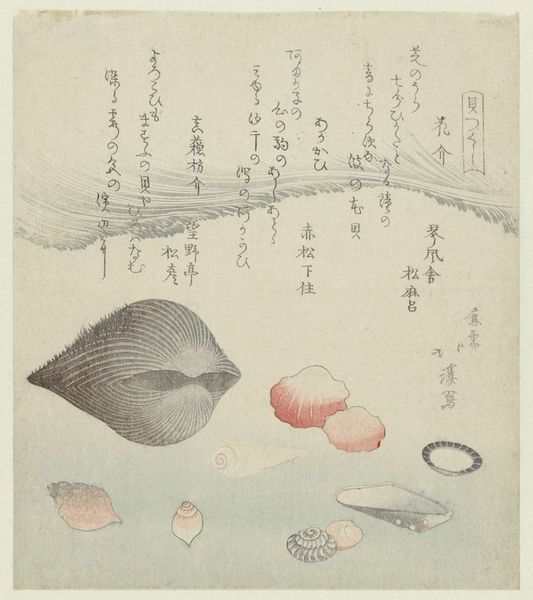
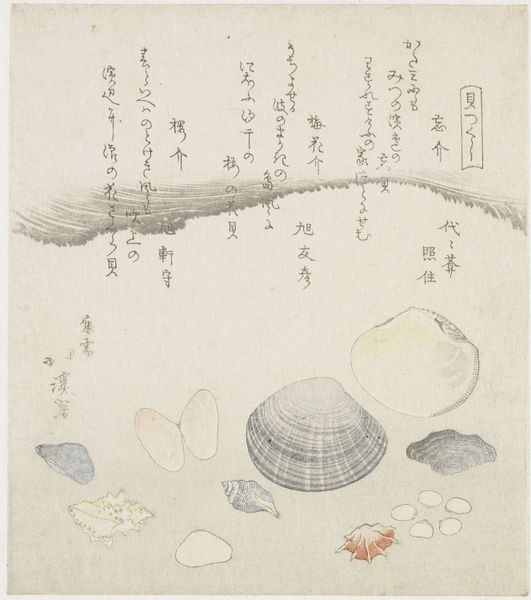
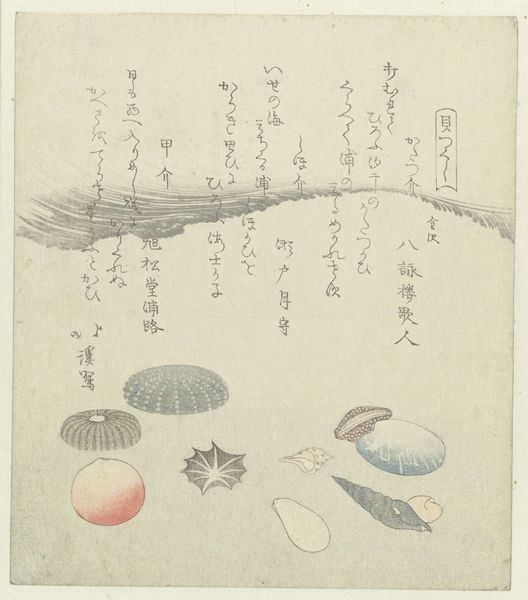
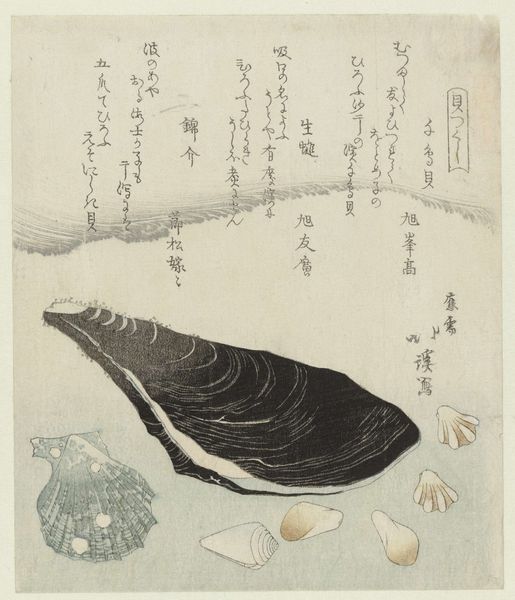
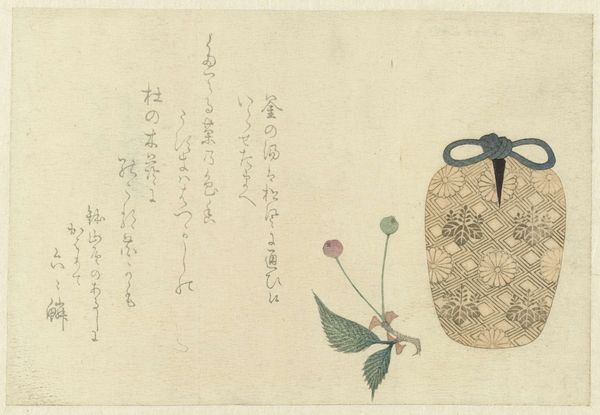
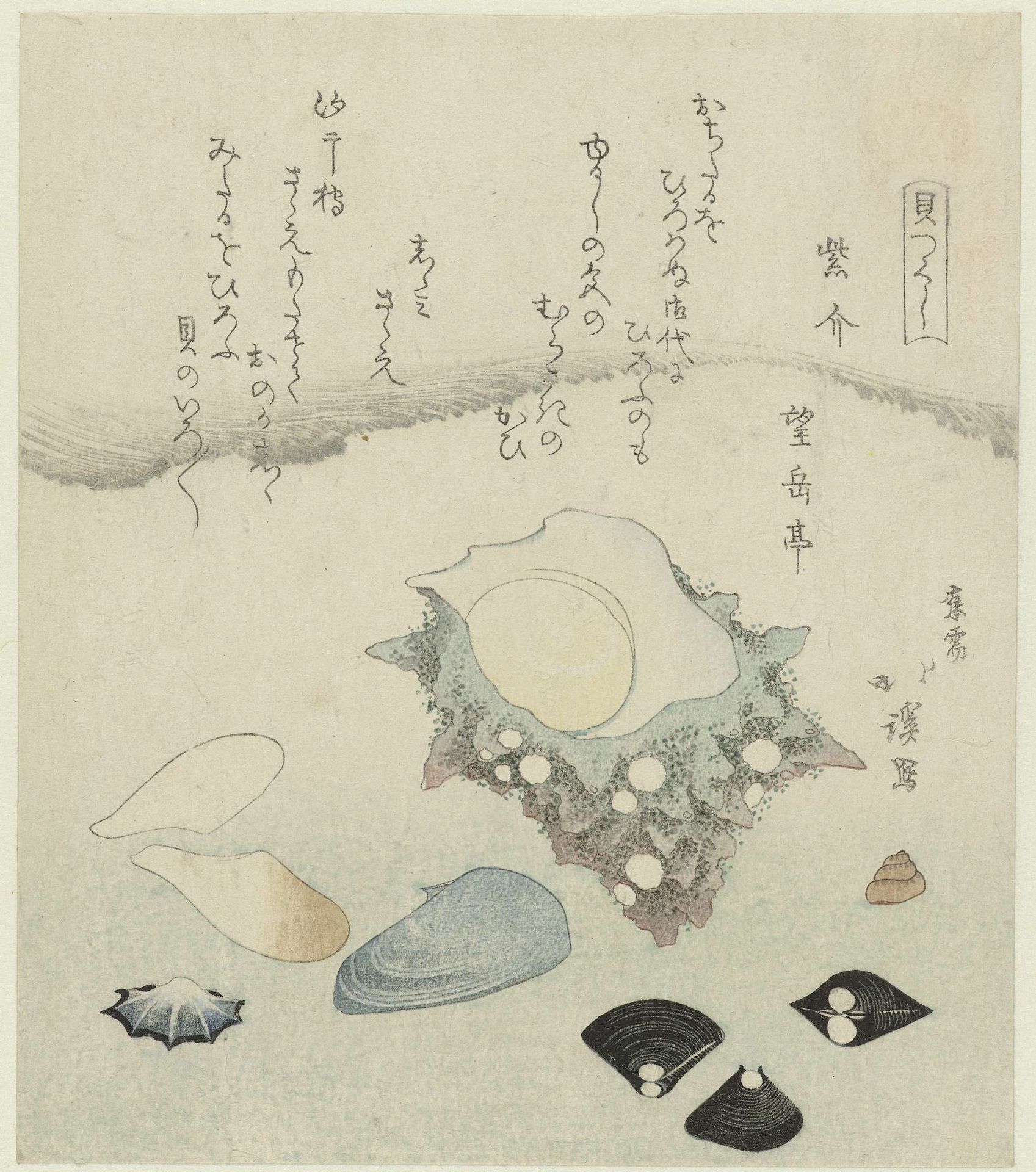
Paarse schelp, zoetwater venusschelpjes en een tulbandschelp

Totoya Hokkei
1790 - 1850Location
RijksmuseumListen to curator's interpretation
Curatorial notes
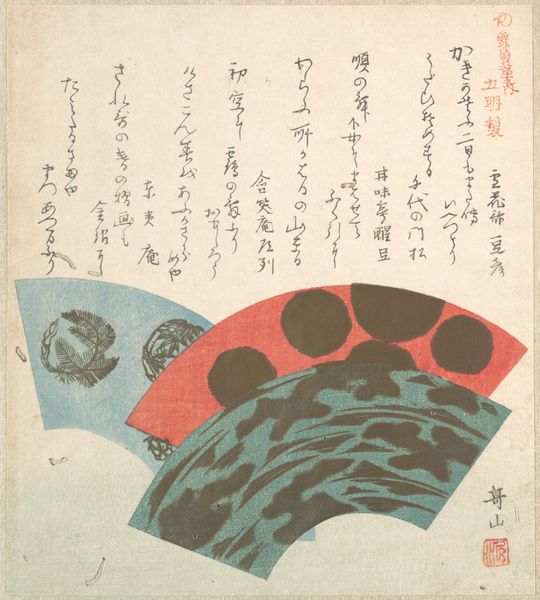
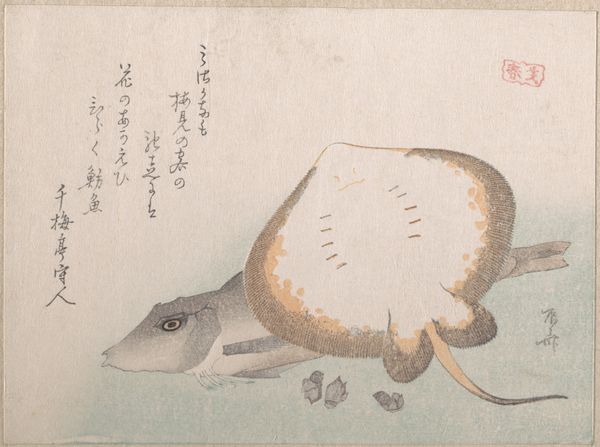
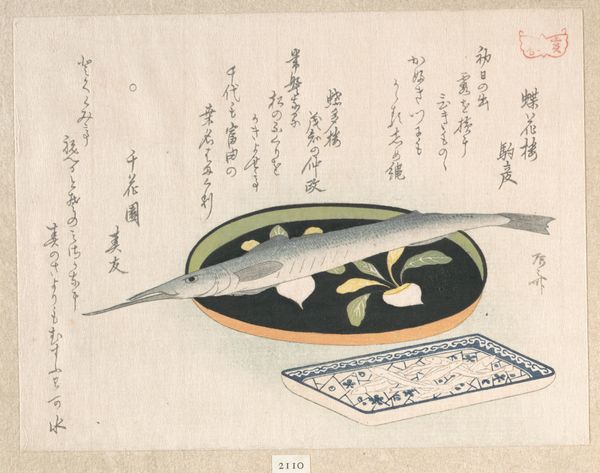
This print, made by Totoya Hokkei sometime before 1850, shows shells rendered with subtle gradations of color. It's a Japanese woodblock print, also known as ukiyo-e. The making of these prints involved a division of labor: an artist who made the original design, a block cutter who transferred the design to wood, and a printer who applied ink and pressed the block onto paper. The process necessitates incredible precision and coordination between the artisans. The success of ukiyo-e as a commercial art form was very much tied to the rise of a middle class in Japan, who had the income to buy these affordable artworks. They were thus both beautiful objects, and elements within a larger economy of production and consumption. The imagery – often of the natural world – also points to a culture that valued the simple things in life. Appreciating ukiyo-e means understanding not only its aesthetic qualities but also its place in the social and economic life of Japan.