1821
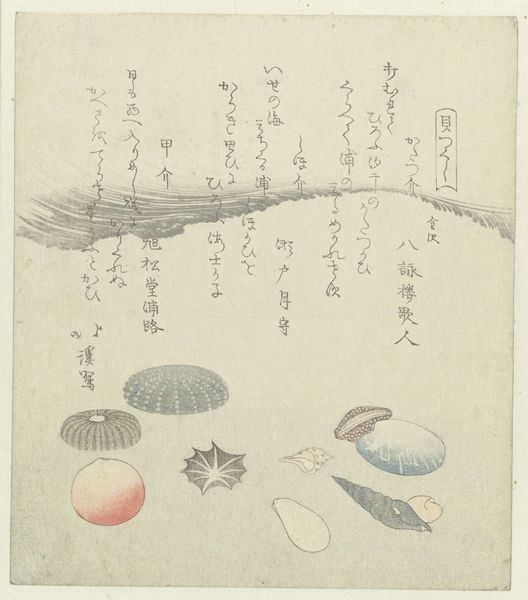
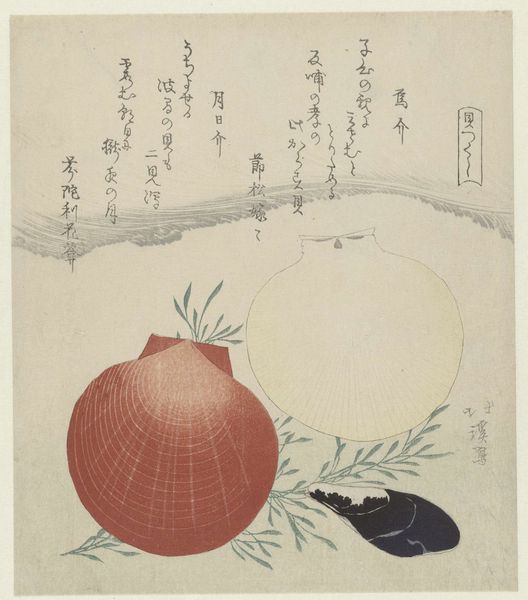
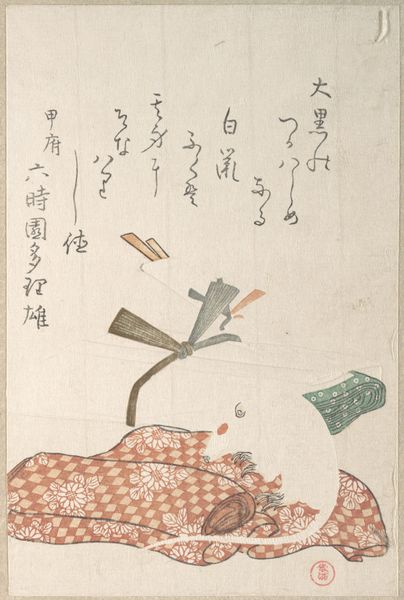
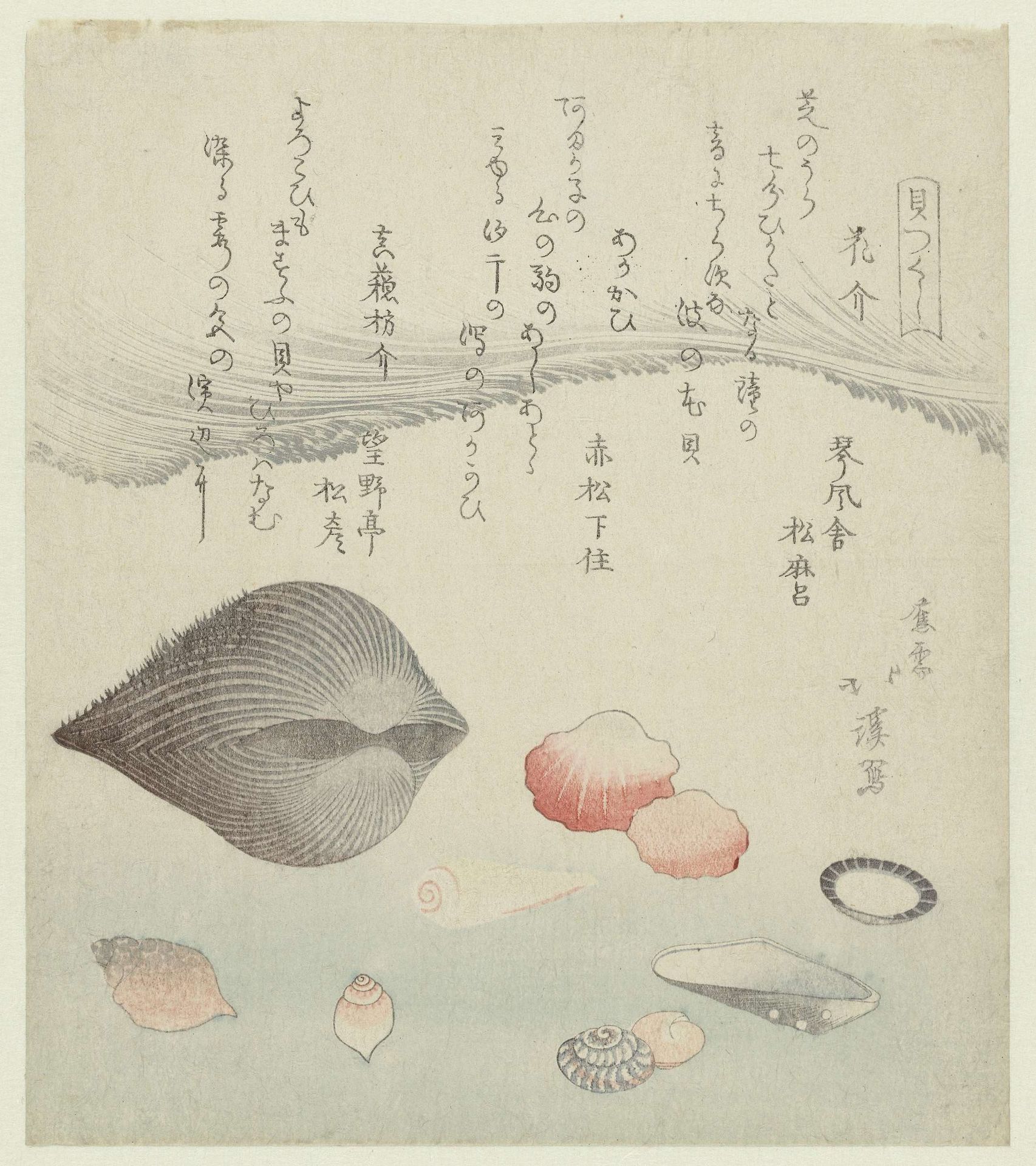
Bloemschelp, rode schelp en de puur rode schelp

Totoya Hokkei
1790 - 1850Location
RijksmuseumListen to curator's interpretation
Curatorial notes
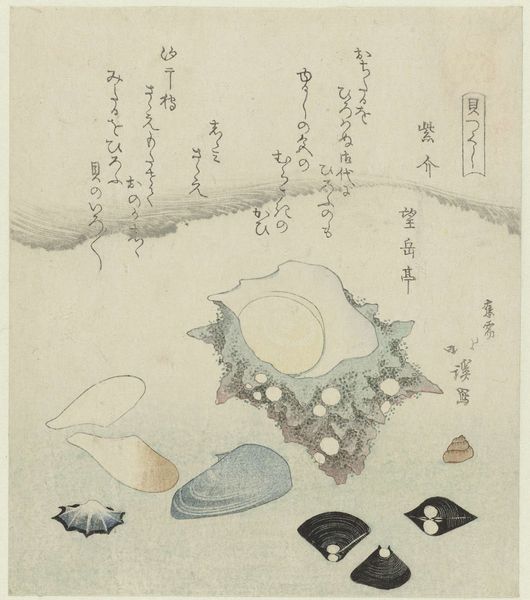
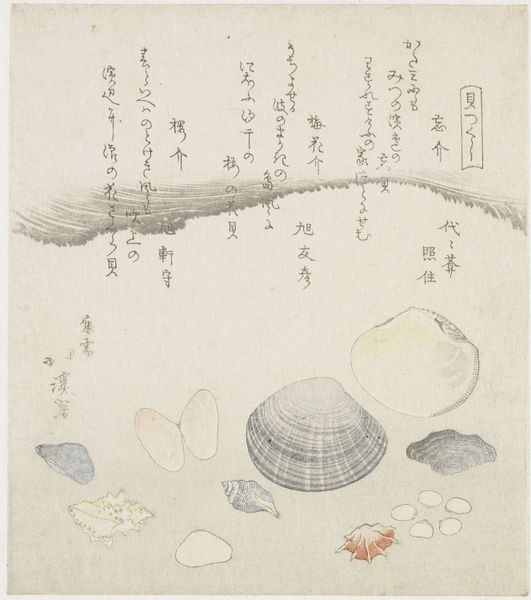
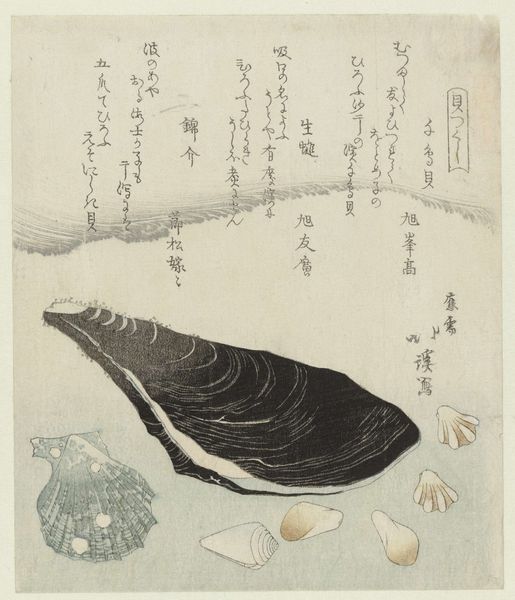
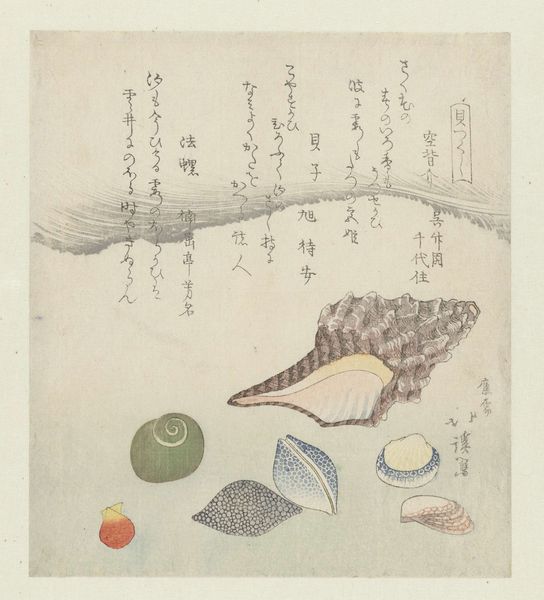
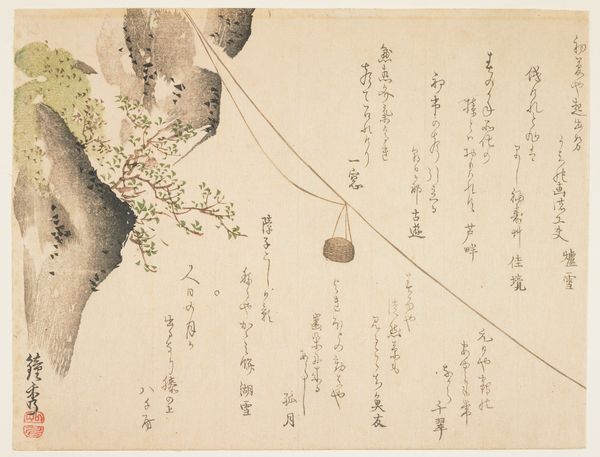
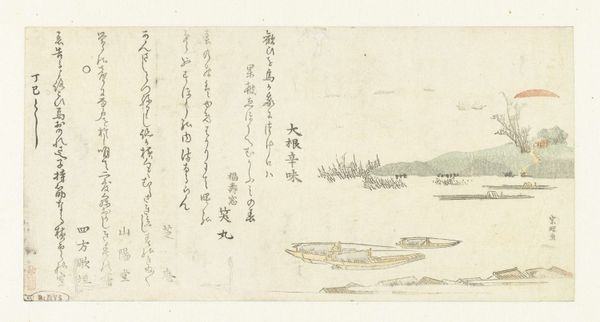
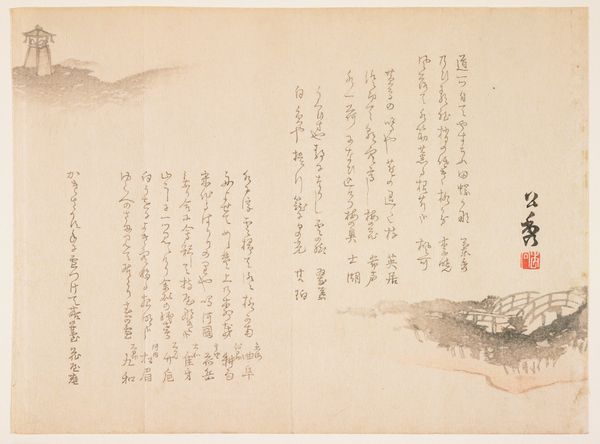
Totoya Hokkei made this woodblock print of various seashells in Japan, around the early 19th century. The seashells here aren't just pretty objects; they are cultural symbols, laden with meaning. During Hokkei's time, the art world in Japan was heavily influenced by social hierarchies and artistic schools. Ukiyo-e prints like this one were popular among the merchant class, a rising social group with newfound economic power. These prints often depicted scenes of everyday life, landscapes, or, like here, still lifes, catering to the tastes and interests of this demographic. However, the inclusion of calligraphy suggests that this print was made for an audience who valued the fusion of art and poetry, a traditional signifier of high culture. Hokkei may have been commenting on the blurring of social boundaries through art. To fully understand prints like this, we need to delve into the social history of Japan, exploring the dynamics between different social classes, artistic movements, and the evolving role of art institutions.