1836
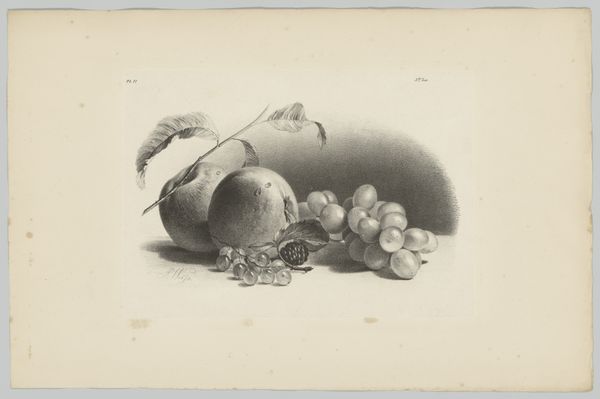
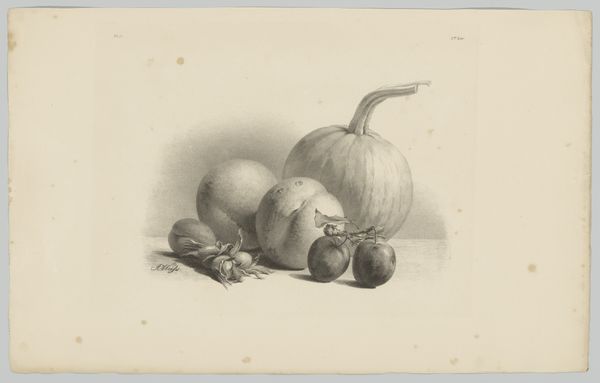
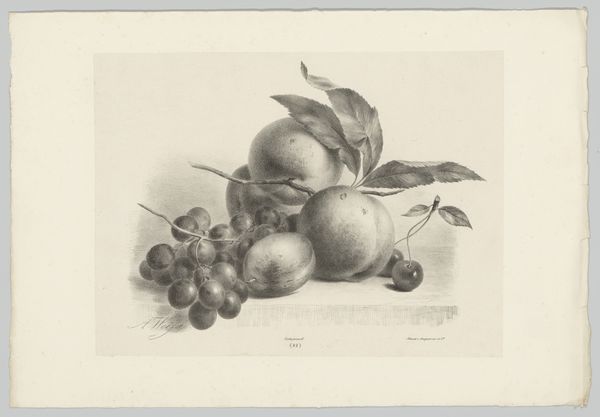
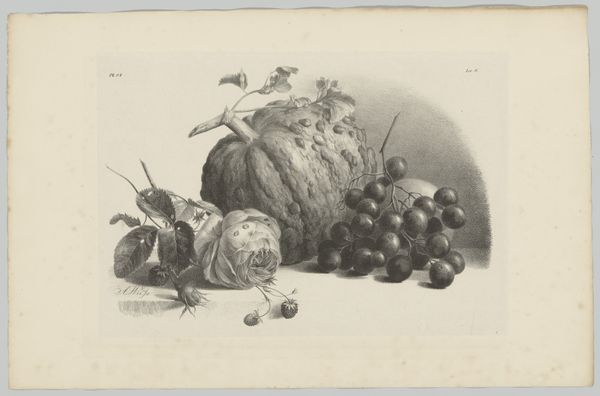
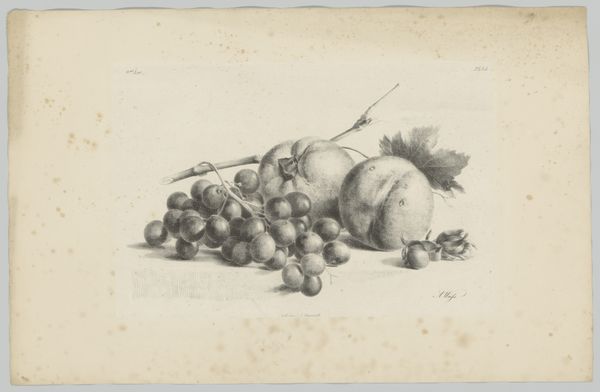
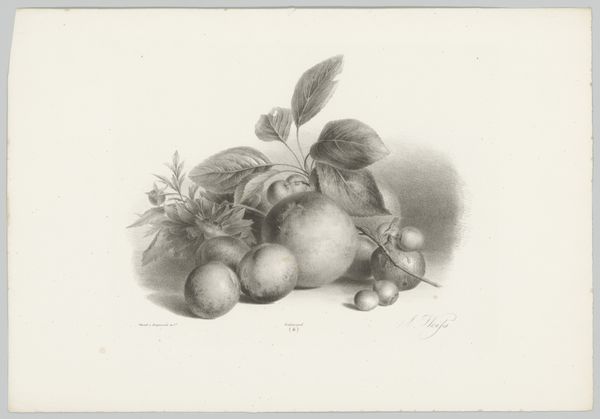
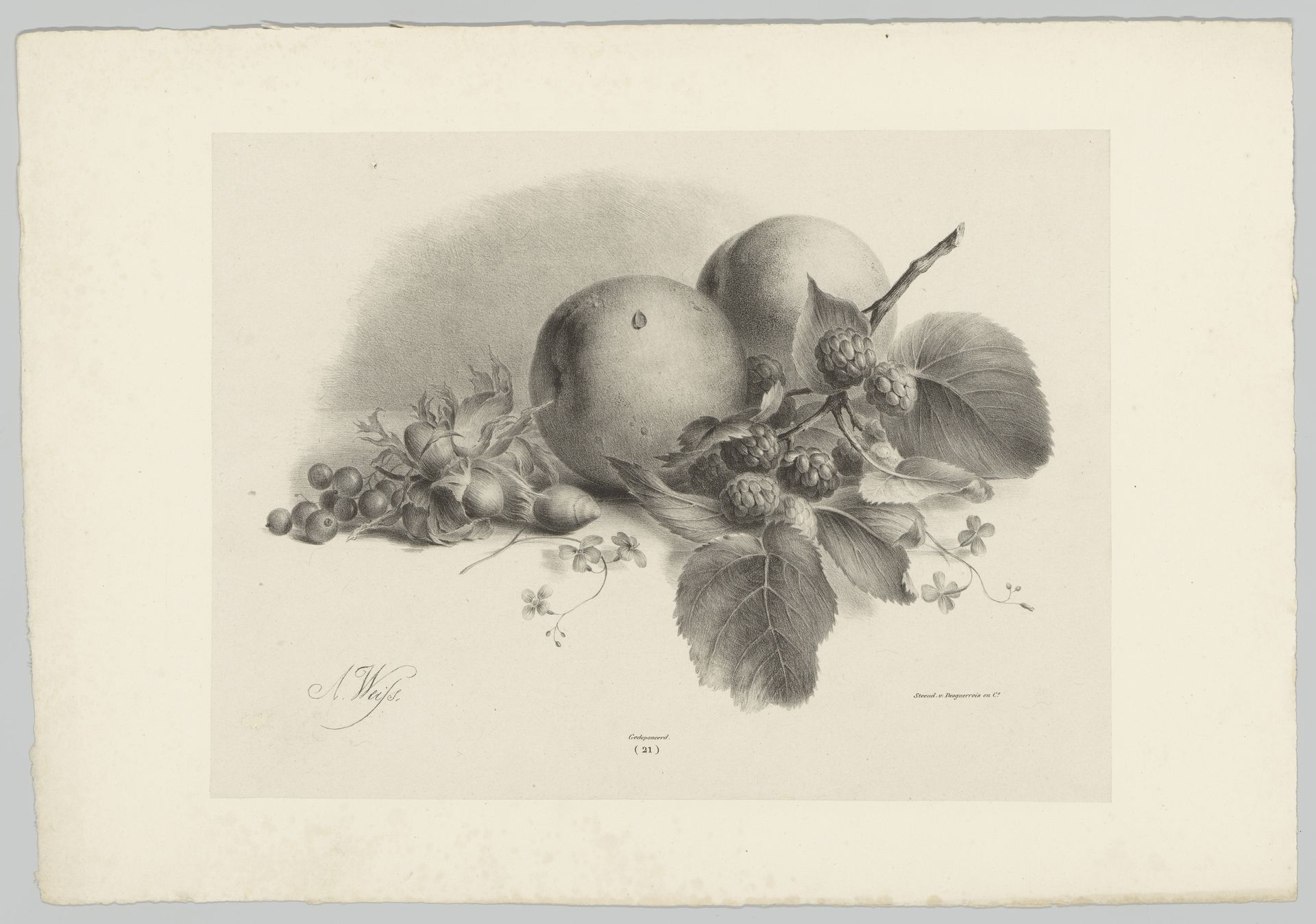
Perziken, bessen, hazelnoten en bramen

Anton Weiss
1801 - 1851Location
RijksmuseumListen to curator's interpretation
Curatorial notes
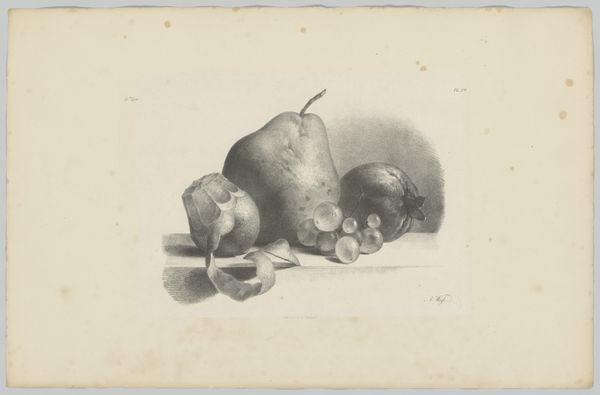
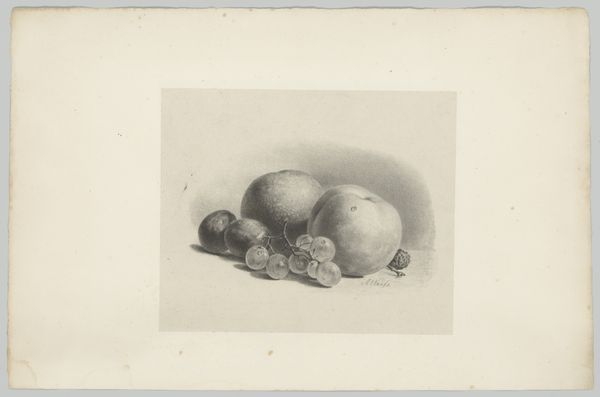
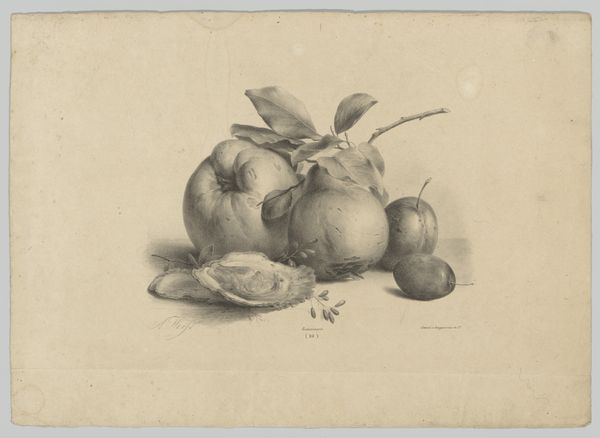
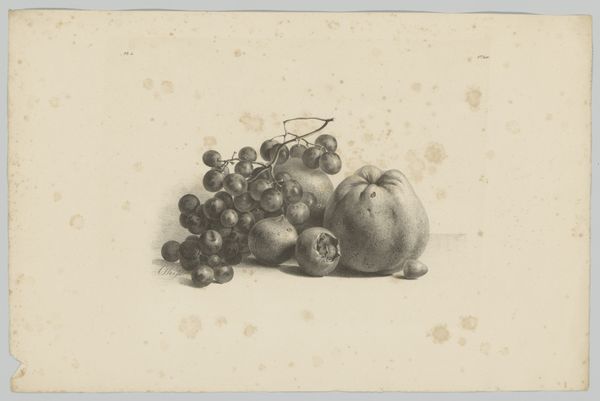
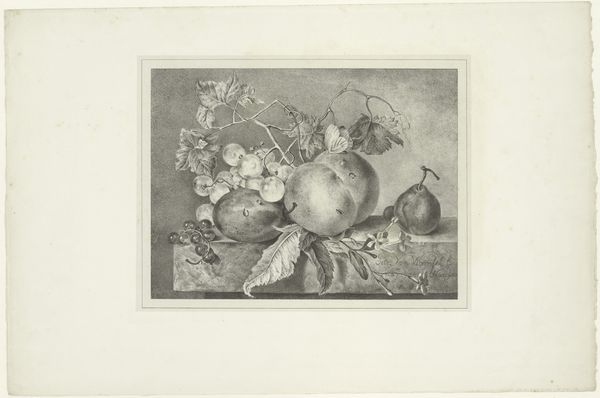
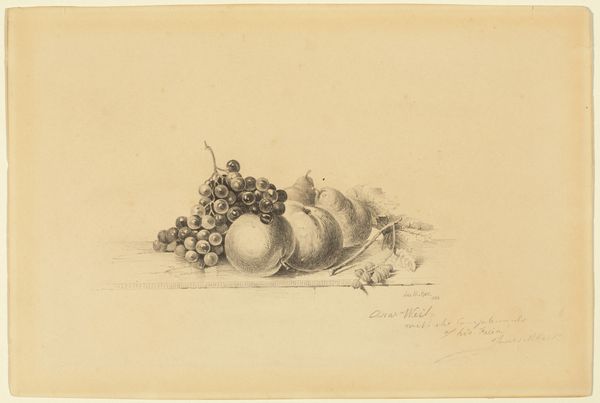
Anton Weiss created this still life of peaches, berries, hazelnuts, and brambles sometime in the first half of the 19th century using lithography. Lithography, unlike traditional printmaking, relies on the chemical repulsion of oil and water. The artist draws on a stone or metal plate with a greasy crayon, then applies water. The water adheres to the non-greasy areas, and printing ink sticks to the greasy drawing. This allows for subtle tonal variations and a soft, almost photographic quality, perfectly suited to capture the delicate textures of the fruit and foliage. The process is laborious, demanding skill in both drawing and chemistry. Weiss masterfully exploits lithography’s capacity for detail, carefully rendering the light on the peaches' skin and the intricate structure of the berries. The velvety blacks and luminous grays create a tangible sense of volume and texture. Considering the intense labor and skill required for lithography, appreciating this print involves recognizing the convergence of artistic vision, technical expertise, and material properties, blurring the boundaries between fine art and skilled craft.