1652
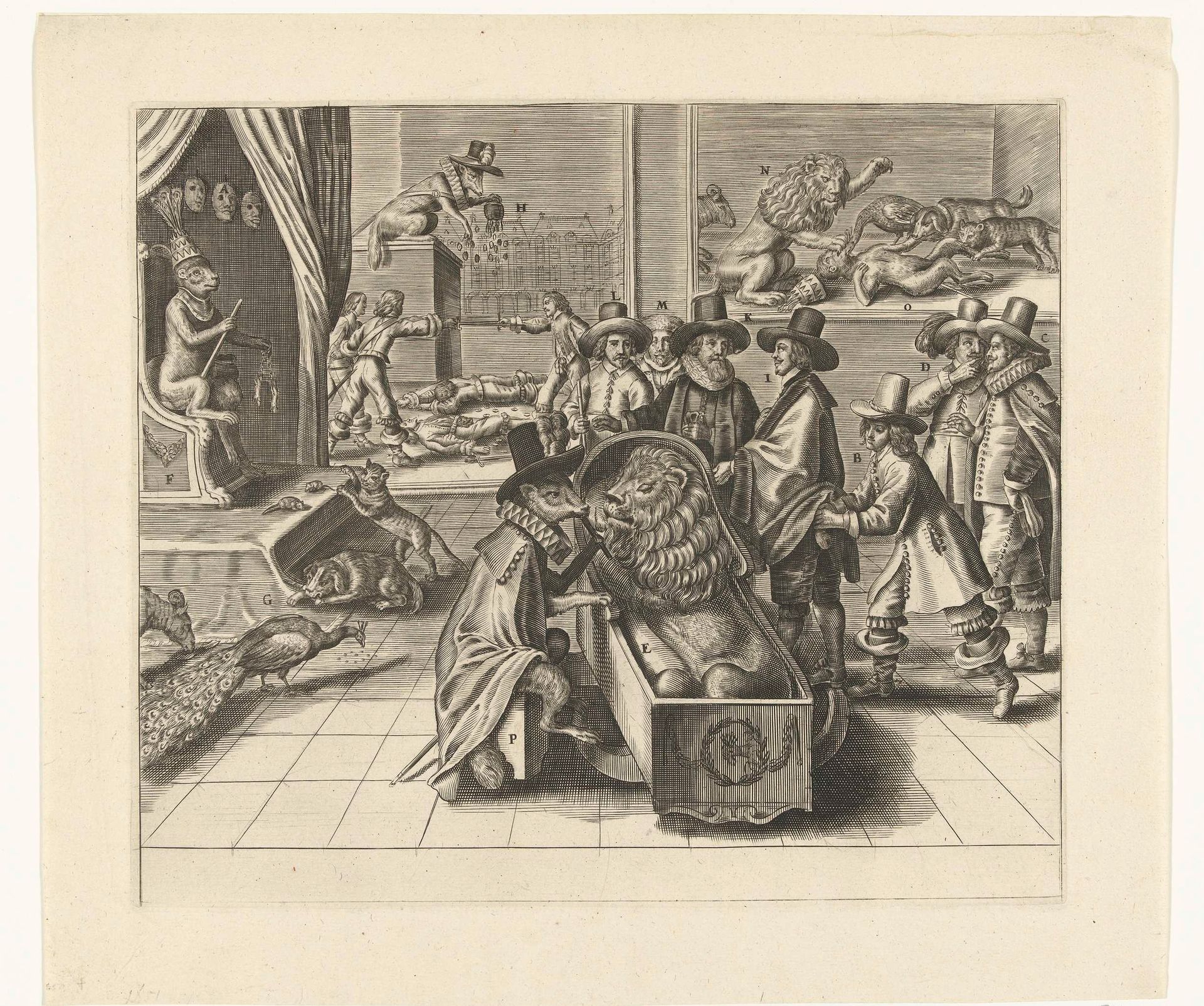
Het loze bedrog van Engeland, 1652

Crispijn van de (II) Passe
1597 - 1670Location
RijksmuseumListen to curator's interpretation
Curatorial notes
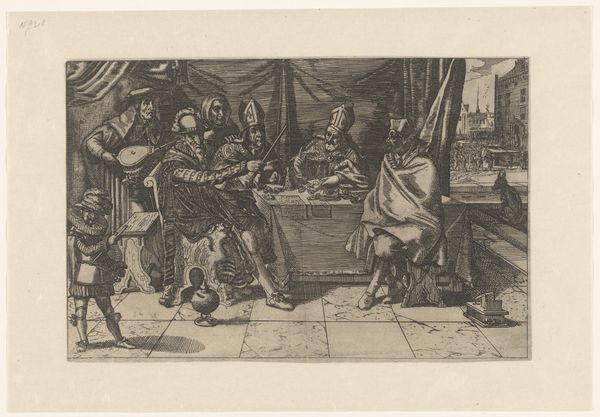
Crispijn van de Passe the Younger created this engraving, “Het loze bedrog van Engeland,” in 1652. The Dutch print functions as political propaganda, reflecting the fraught relationship between England and the Netherlands during the 17th century. At the heart of the image, we see a fox, representing the Dutch, deceiving a lion, the symbol of England. The lion is being wheeled into a trap, a commentary on Dutch perceptions of English duplicity. The print is filled with symbolic imagery: look to the monkey on the throne wearing masks, a commentary on the perceived instability and performance of English rule. This wasn't just politics, but also personal. Van de Passe, working in a family tradition of printmaking, used his art to express strong opinions and respond to the political climate. Think about how the artist uses accessible symbols to convey complex political ideas. How does this blend of personal expression and political critique resonate with you?