About this artwork
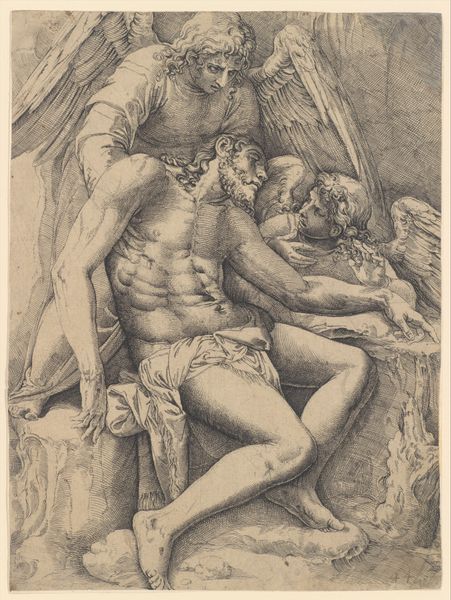
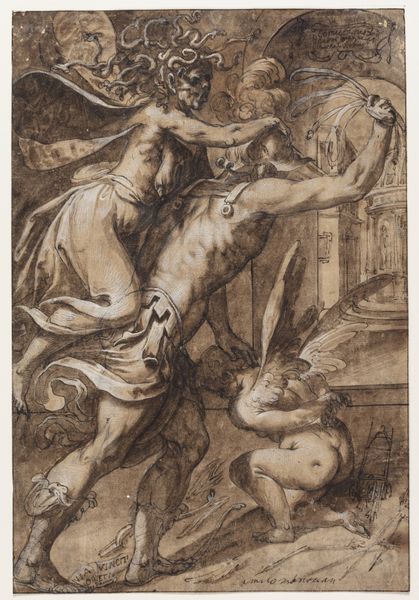
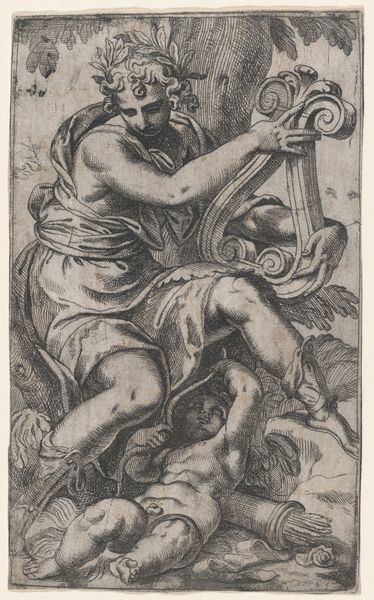
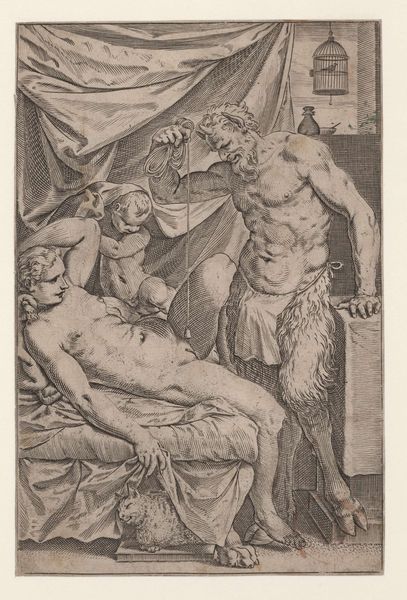
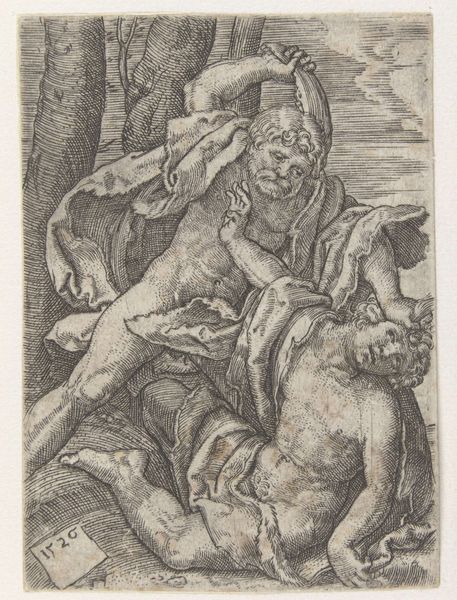
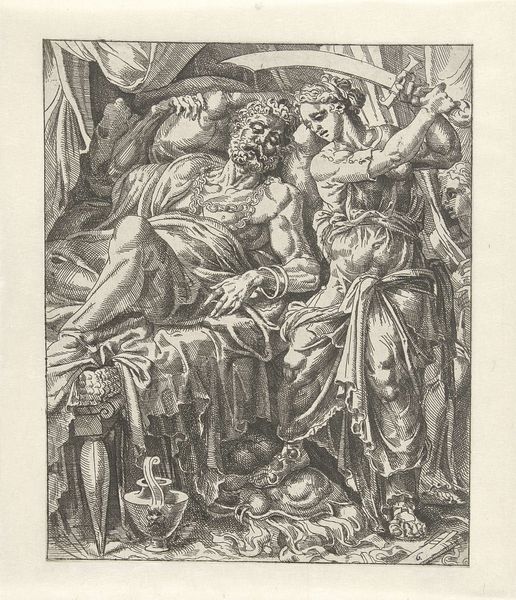
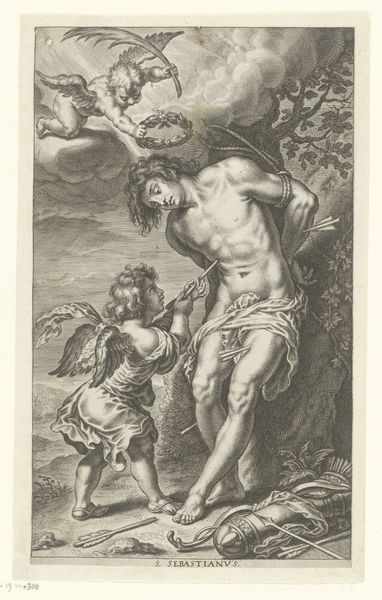
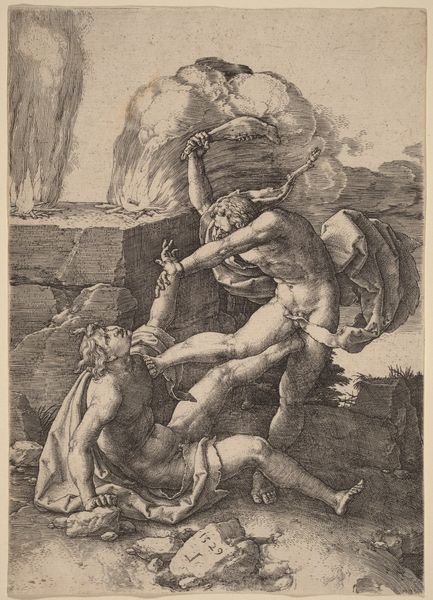
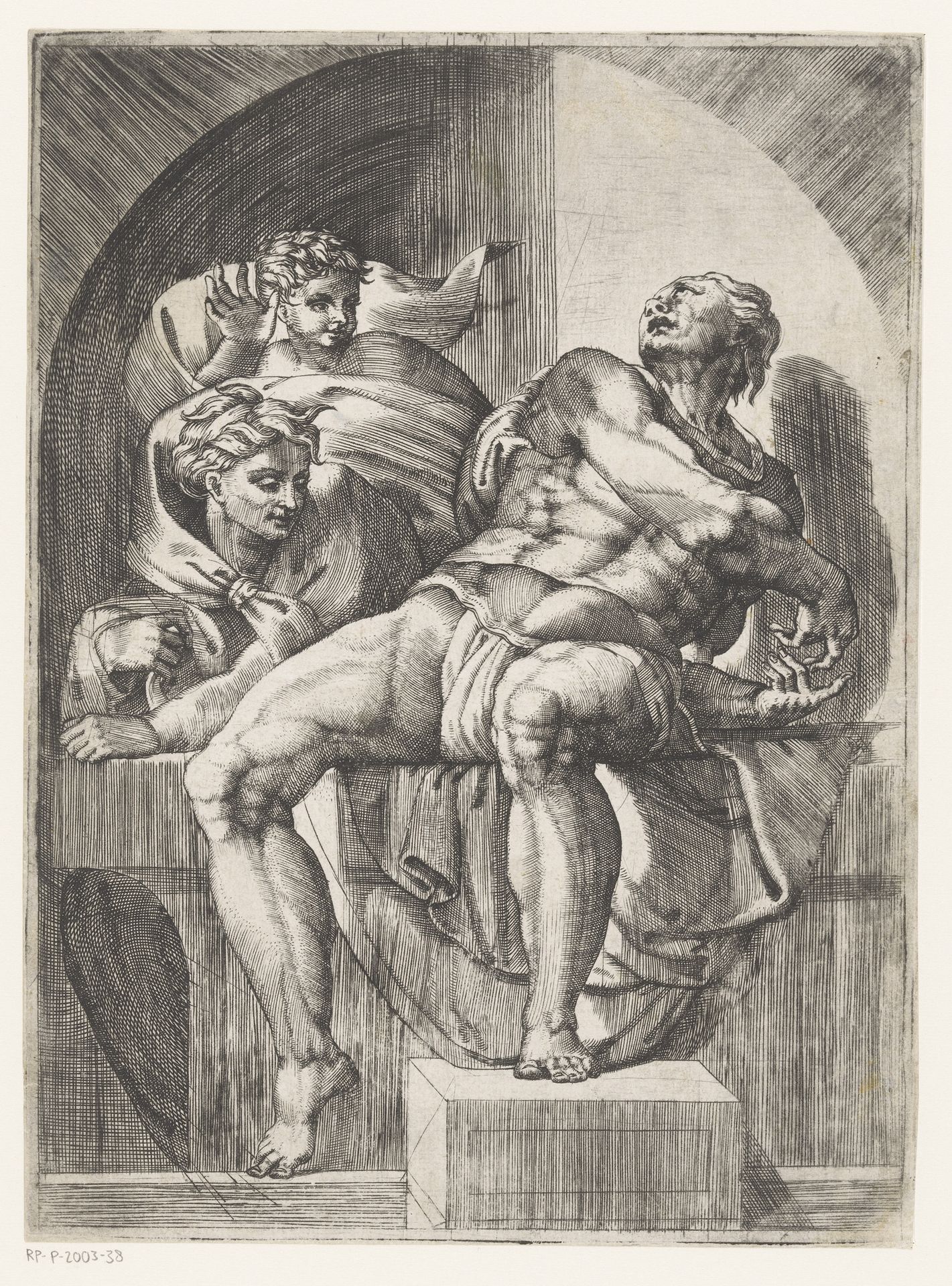
This print, "Profeet Jona," by an anonymous artist, employs engraving and etching to depict a biblical scene. These techniques involve using sharp tools to incise lines into a metal plate, which is then inked and pressed onto paper. The material quality of the print emphasizes line and texture, which in turn, define form. The engraved lines create a sense of depth and shadow, lending drama to the figure of Jonah and his celestial companions. Printmaking, in its essence, is a reproducible medium, democratizing art. Unlike unique paintings or sculptures, prints can be produced in multiples, making art accessible to a broader audience, regardless of class or status. Moreover, the skilled labor required for engraving and etching speaks to the socio-economic context of artistic production. It reflects the specialized skills and craftsmanship inherent in creating these images. Recognizing the labor and materials involved allows us to appreciate the cultural significance of this artwork, bridging the perceived gap between fine art and craft.

Artwork details
- Medium
- drawing, print, etching
- Dimensions
- height 278 mm, width 204 mm
- Location
- Rijksmuseum
- Copyright
- Rijks Museum: Open Domain
Tags
Comments
Share your thoughts
About this artwork
This print, "Profeet Jona," by an anonymous artist, employs engraving and etching to depict a biblical scene. These techniques involve using sharp tools to incise lines into a metal plate, which is then inked and pressed onto paper. The material quality of the print emphasizes line and texture, which in turn, define form. The engraved lines create a sense of depth and shadow, lending drama to the figure of Jonah and his celestial companions. Printmaking, in its essence, is a reproducible medium, democratizing art. Unlike unique paintings or sculptures, prints can be produced in multiples, making art accessible to a broader audience, regardless of class or status. Moreover, the skilled labor required for engraving and etching speaks to the socio-economic context of artistic production. It reflects the specialized skills and craftsmanship inherent in creating these images. Recognizing the labor and materials involved allows us to appreciate the cultural significance of this artwork, bridging the perceived gap between fine art and craft.
Comments
Share your thoughts