About this artwork
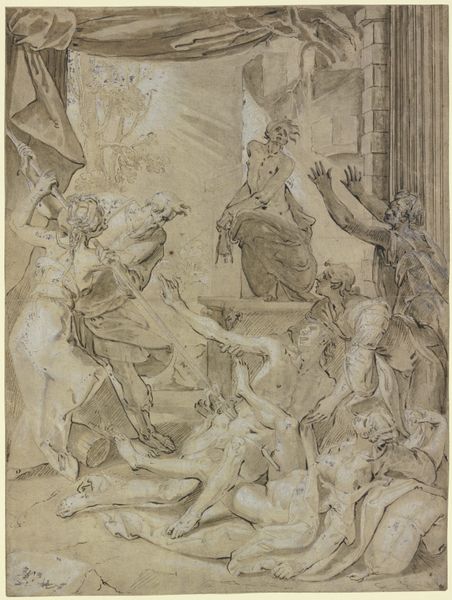
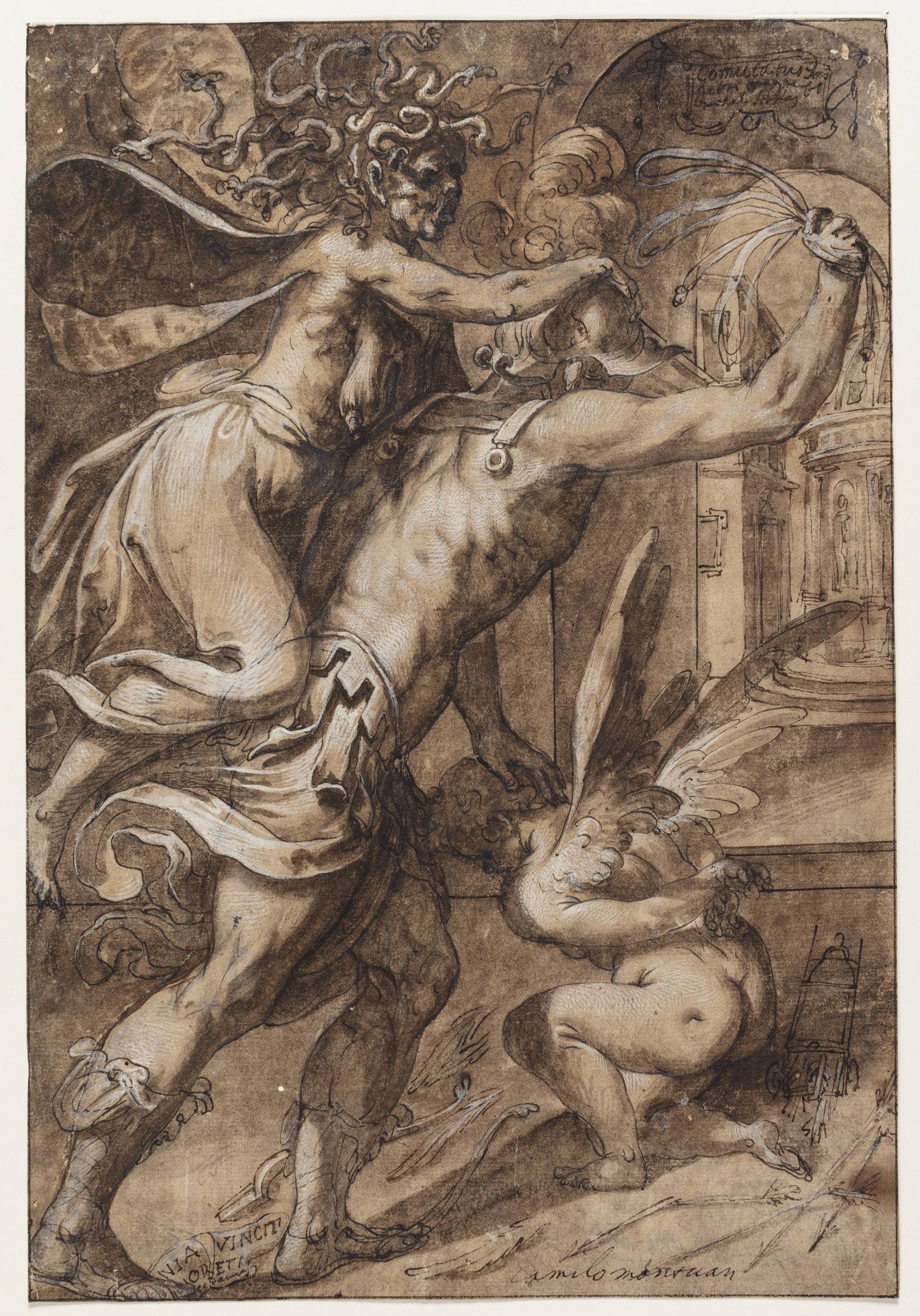
Camillo di Capelli created this drawing of ‘The Chastisement of Love’ sometime in the mid-16th century. It's a whirlwind of bodies, emotions, and classical references, reflecting the artist's world, steeped in Renaissance humanism and its complex relationship with mythology. Capelli presents us with a muscular Mars, god of war, whipping a cowering Cupid, while a furious female figure looms over them both. This is an allegory, a visual representation of abstract ideas through personified figures, a popular method at the time. The artwork invites us to consider how societal structures impact even our most intimate emotions. What does it mean to discipline love, and who has the right to do so? Is it Mars, representing masculine aggression, or the vengeful figure, perhaps embodying societal expectations? Capelli, rather than upholding tradition, dares to question these power dynamics, revealing the tensions inherent in love, desire, and the social forces that shape them. It is an invitation to confront uncomfortable truths about power, punishment, and the vulnerabilities of love.
Kærlighedens tugtelse (Mars pisker Amor forfulgt af vreden)
1514 - 1568


Artwork details
- Medium
- drawing, charcoal
- Dimensions
- 309 mm (height) x 210 mm (width) (billedmaal)
- Location
- SMK - Statens Museum for Kunst
Tags
Comments
Share your thoughts
About this artwork
Camillo di Capelli created this drawing of ‘The Chastisement of Love’ sometime in the mid-16th century. It's a whirlwind of bodies, emotions, and classical references, reflecting the artist's world, steeped in Renaissance humanism and its complex relationship with mythology. Capelli presents us with a muscular Mars, god of war, whipping a cowering Cupid, while a furious female figure looms over them both. This is an allegory, a visual representation of abstract ideas through personified figures, a popular method at the time. The artwork invites us to consider how societal structures impact even our most intimate emotions. What does it mean to discipline love, and who has the right to do so? Is it Mars, representing masculine aggression, or the vengeful figure, perhaps embodying societal expectations? Capelli, rather than upholding tradition, dares to question these power dynamics, revealing the tensions inherent in love, desire, and the social forces that shape them. It is an invitation to confront uncomfortable truths about power, punishment, and the vulnerabilities of love.
Comments
Share your thoughts