About this artwork
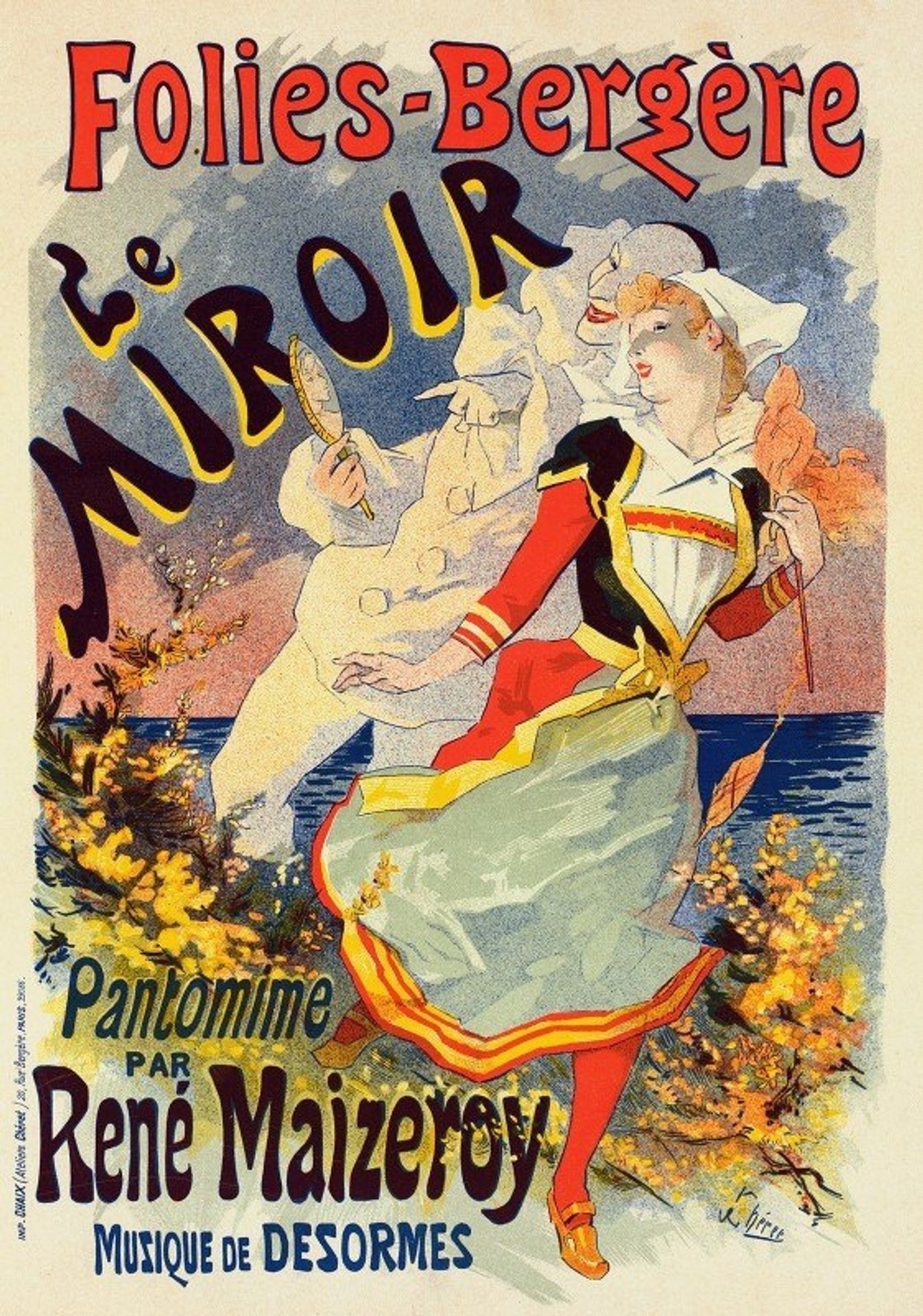
Jules Chéret created this poster for the Folies-Bergère, and in it, the mirror is not merely a reflective surface. Observe how the harlequin emerges from it, a figure of ambiguity and transformation, holding his own mirror. Mirrors have long been associated with vanity, self-awareness, and the ephemeral nature of identity. In classical mythology, Narcissus wasted away staring at his reflection, and here, the harlequin beckons us to question what is real. The harlequin is an archetype that transcends time, echoing figures in commedia dell'arte and even earlier Dionysian rituals. This character shape-shifts, mirroring society's desires and anxieties. The mirror motif provokes a deep, subconscious response, challenging our perception of self. It is a powerful symbol that continues to resurface, evolving and adapting across centuries of cultural expression.

Artwork details
- Copyright
- Public Domain: Artvee
Comments
Share your thoughts
About this artwork
Jules Chéret created this poster for the Folies-Bergère, and in it, the mirror is not merely a reflective surface. Observe how the harlequin emerges from it, a figure of ambiguity and transformation, holding his own mirror. Mirrors have long been associated with vanity, self-awareness, and the ephemeral nature of identity. In classical mythology, Narcissus wasted away staring at his reflection, and here, the harlequin beckons us to question what is real. The harlequin is an archetype that transcends time, echoing figures in commedia dell'arte and even earlier Dionysian rituals. This character shape-shifts, mirroring society's desires and anxieties. The mirror motif provokes a deep, subconscious response, challenging our perception of self. It is a powerful symbol that continues to resurface, evolving and adapting across centuries of cultural expression.
Comments
Share your thoughts