1860 - 1890
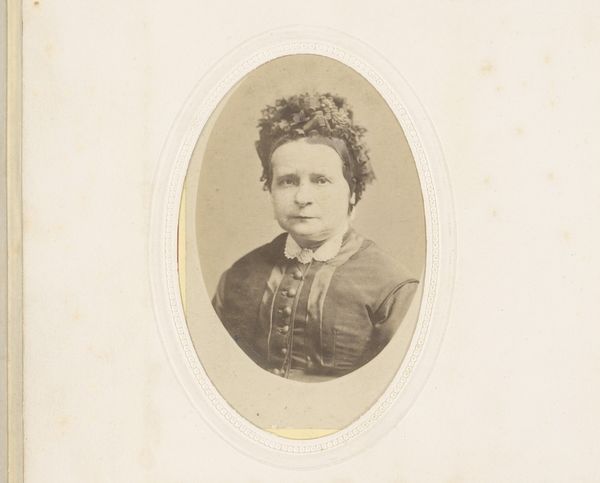
Portret van een vrouw

Listen to curator's interpretation
Curatorial notes
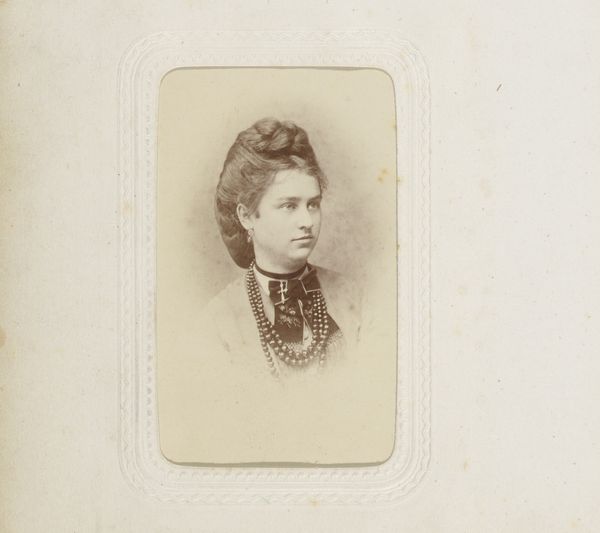
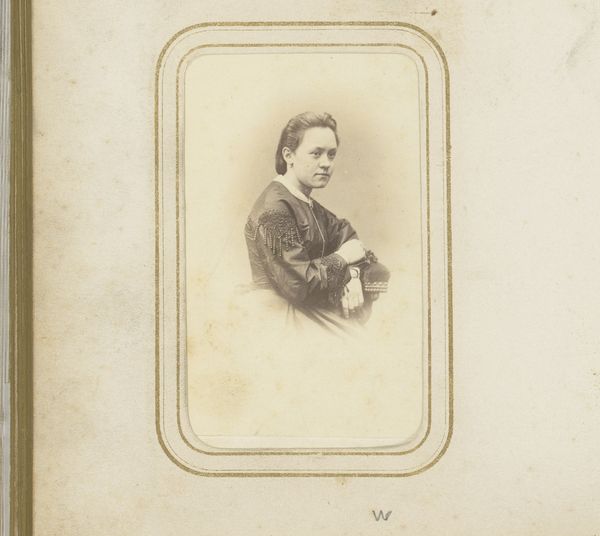
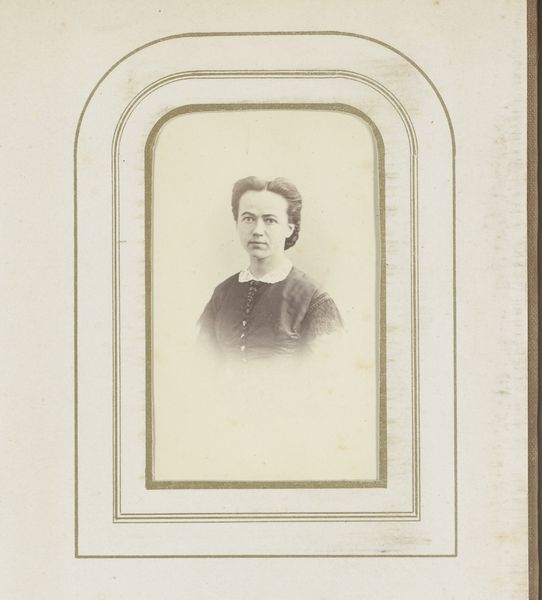
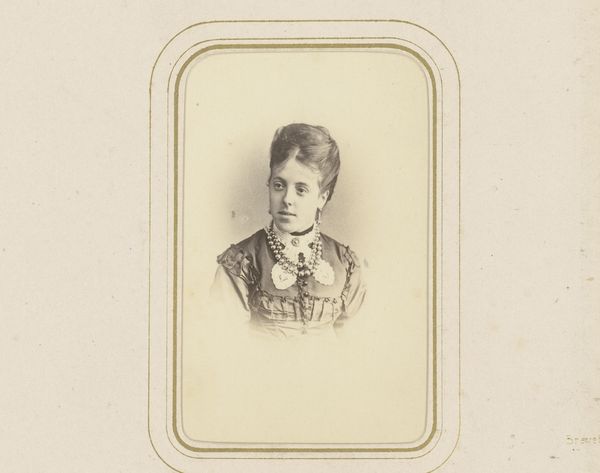
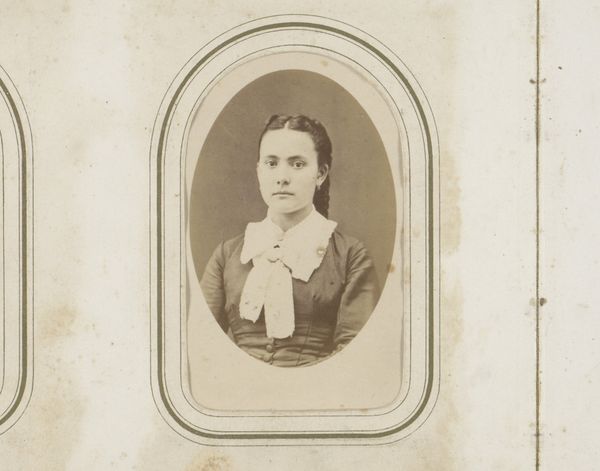
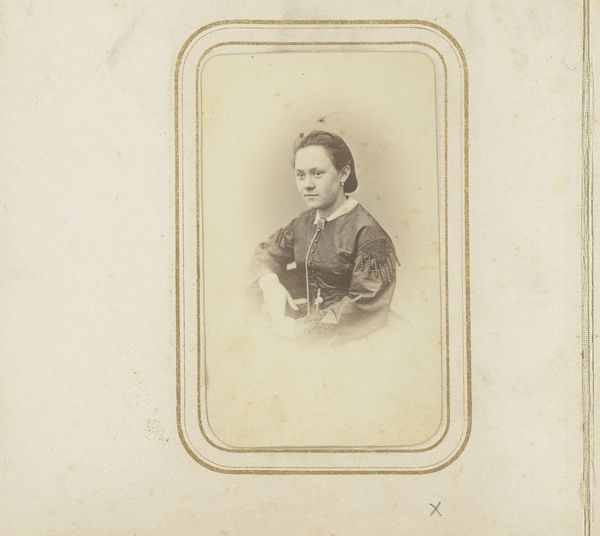
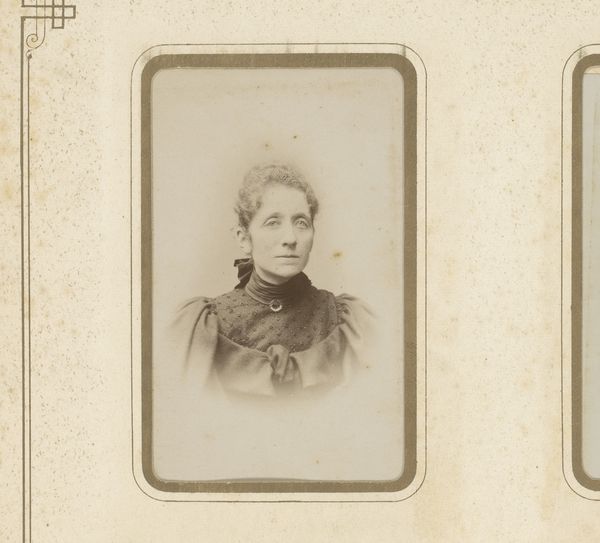
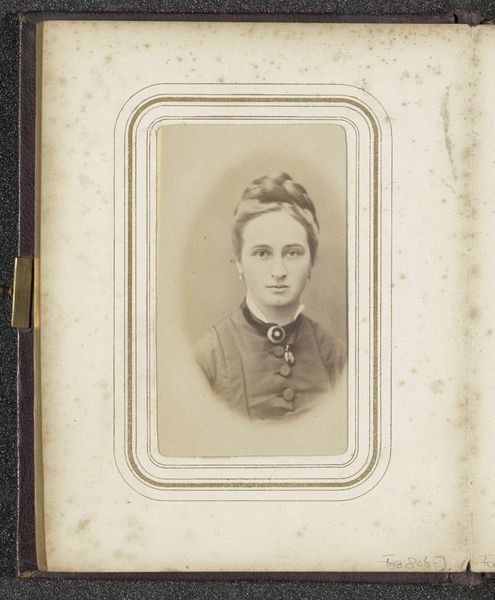
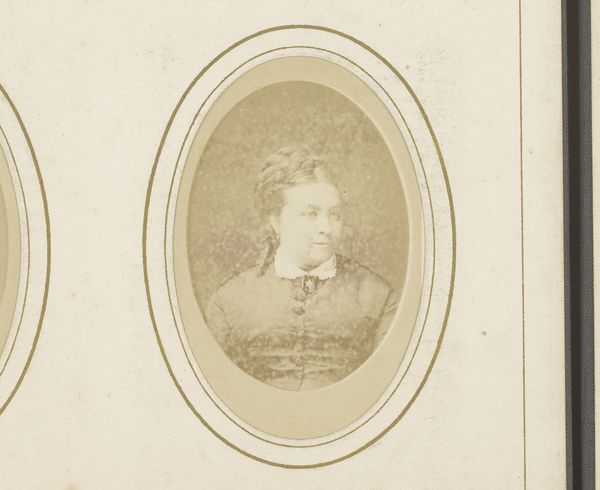
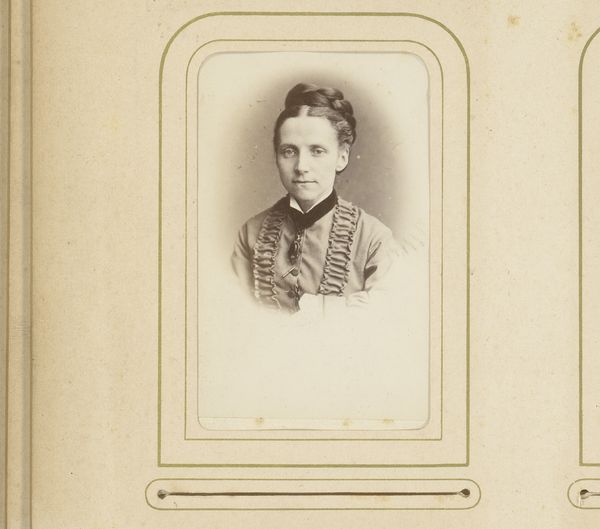
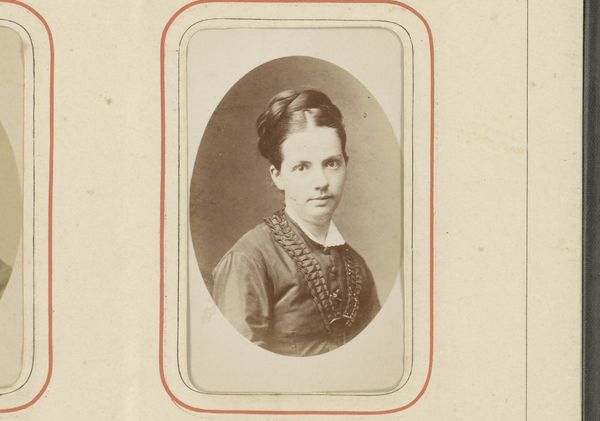
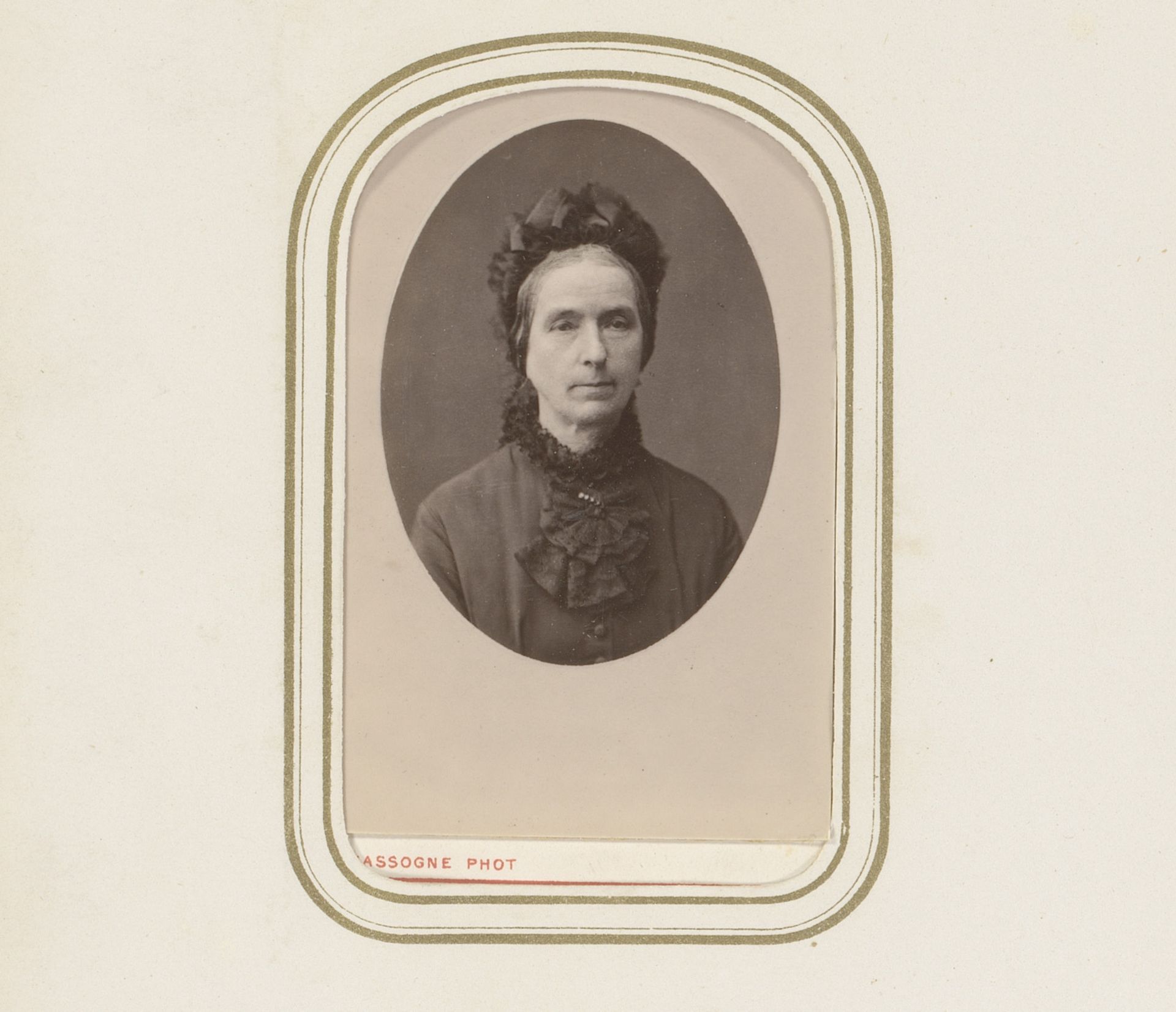
Editor: Here we have "Portret van een vrouw," a gelatin-silver print, created sometime between 1860 and 1890 by Louis Eugène Vassogne. The woman's dark clothing against the neutral backdrop gives it such a somber, almost haunting, quality. What do you see when you look at it? Curator: What strikes me immediately is the careful arrangement of tonal values within a restricted range. Observe how the ovoid of her face, framed by darker hair and dress, sits within a secondary, decorative oval. The composition utilizes a subtle play of geometric forms. Editor: It's true; the framing really accentuates the face. Are you drawn to that level of framing and composition specifically? Curator: Precisely. The subdued palette focuses attention on the textures – the lace at her neck, the fabric of her dress, the soft blurring of the photographic image itself. Consider how each textural element contributes to the overall visual structure; none is merely decorative. Each is purposefully constructed. Editor: So, the arrangement is purposeful? Not simply a result of the time? Curator: Time certainly provides the context, yet the artist’s careful choice of medium and focus demonstrate intention. Ask yourself how a sharper, more modern image might alter the viewing experience, might shift the focus from composition to realism. Editor: I suppose it would change quite a lot. It's like the blurring gives it an artistic, timeless quality rather than simply a document of its time. I hadn't considered that. Curator: Indeed. By deconstructing the formal elements, we move beyond historical record into the realm of artistic intent. And by reducing detail, the image allows room for interpretation by the viewer. Editor: That's a very helpful way to look at it! I’ll keep this analytical method in mind for the next work, too.