About this artwork
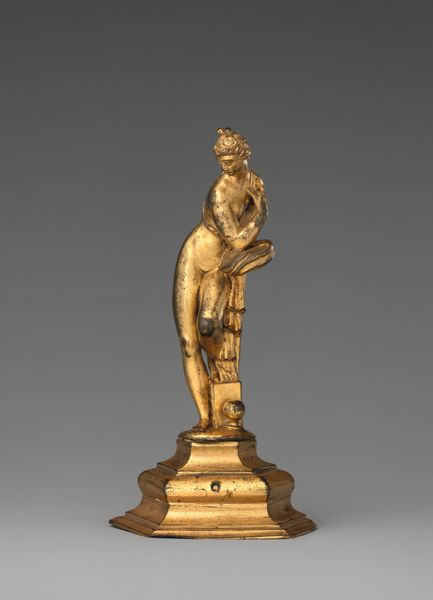
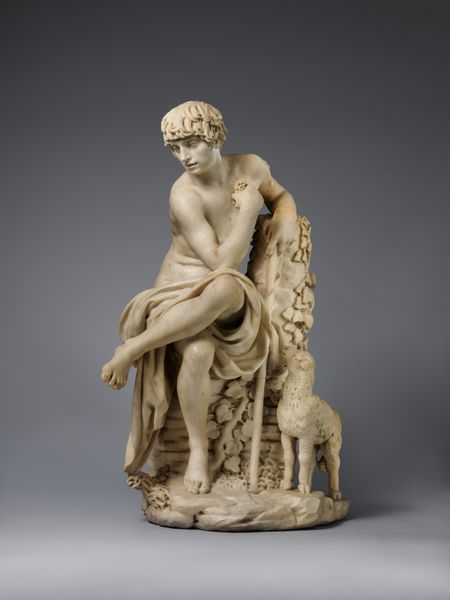
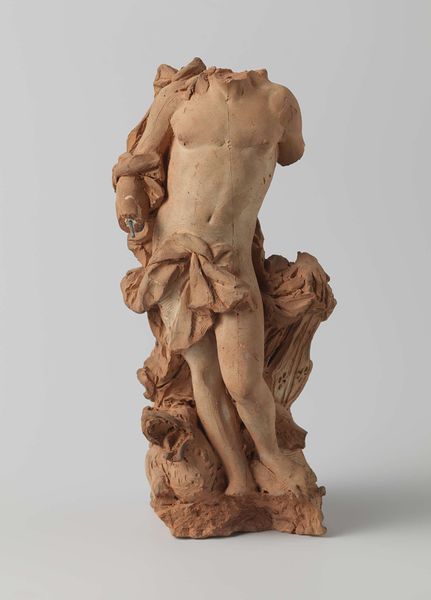
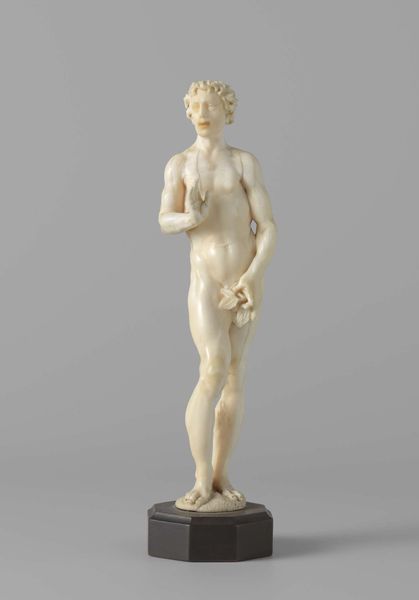
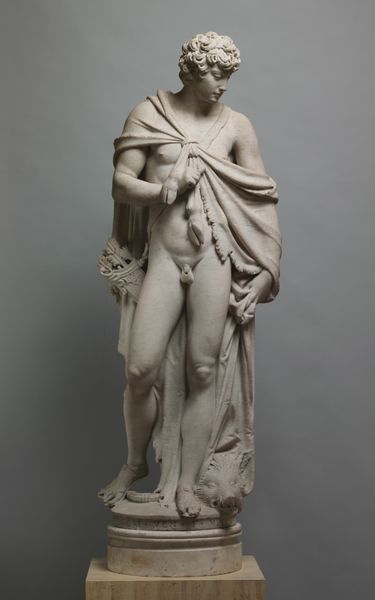
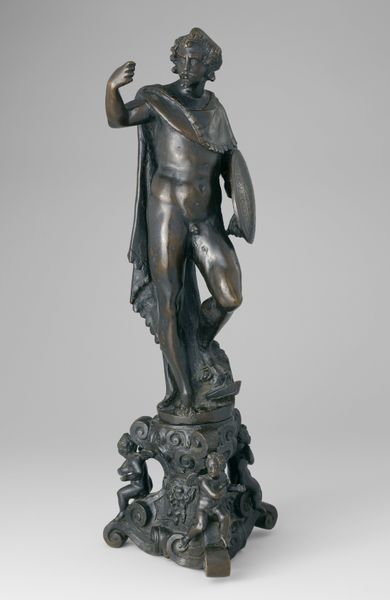
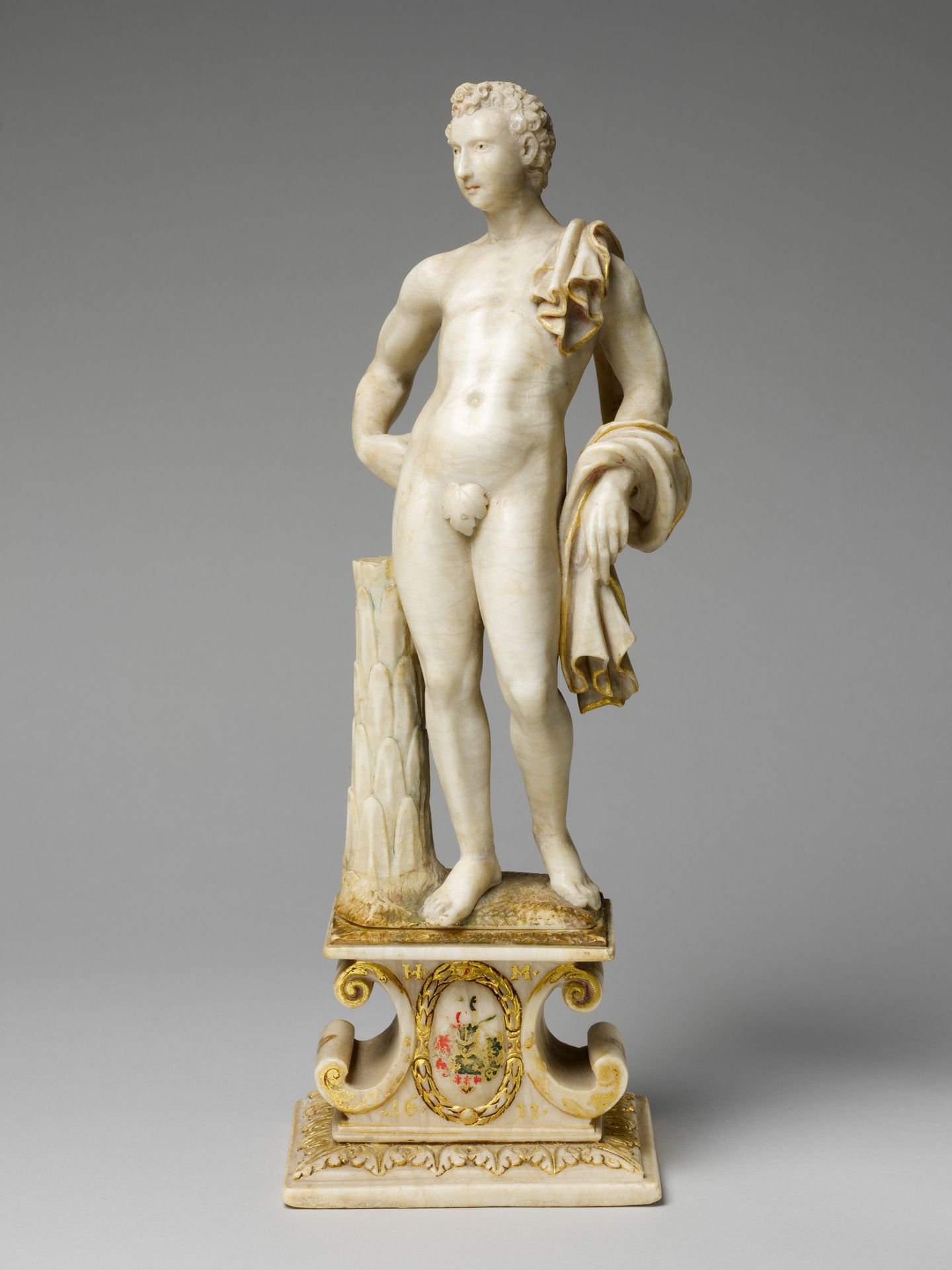
Gert van Egen created this limewood sculpture of Mercury sometime in the 16th century. During the Renaissance, mythological figures served as powerful symbols, reflecting the era's renewed interest in classical antiquity and the human form. Here, Mercury, the Roman messenger god, is depicted nude, a deliberate artistic choice that celebrates the beauty and potential of the human body. But what does it mean to represent the male form in such a way? The male nude has often been associated with power, heroism, and ideal beauty, but also with vulnerability. Notice how the sculpture invites us to consider how such representations both reflect and shape cultural values. What does it mean for an artist to represent the male body in this way, and for viewers to gaze upon it? Consider the stories we tell ourselves through art, and how these stories shape our understanding of ourselves and others.
Mercury
1611


Artwork details
- Medium
- sculpture, marble
- Dimensions
- Overall on base (confirmed): H. 13 x W. 4 11/16 x D. 3 9/16 in. (33 x 11.9 x 9 cm); Overall figure only: H. 9 7/8 x W. 4 1/16 x D. 3 3/8 in. (25.1 x 10.3 x 8.6 cm)
- Location
- Metropolitan Museum of Art, New York, NY
- Copyright
- Public Domain
Tags
Comments
Share your thoughts
About this artwork
Gert van Egen created this limewood sculpture of Mercury sometime in the 16th century. During the Renaissance, mythological figures served as powerful symbols, reflecting the era's renewed interest in classical antiquity and the human form. Here, Mercury, the Roman messenger god, is depicted nude, a deliberate artistic choice that celebrates the beauty and potential of the human body. But what does it mean to represent the male form in such a way? The male nude has often been associated with power, heroism, and ideal beauty, but also with vulnerability. Notice how the sculpture invites us to consider how such representations both reflect and shape cultural values. What does it mean for an artist to represent the male body in this way, and for viewers to gaze upon it? Consider the stories we tell ourselves through art, and how these stories shape our understanding of ourselves and others.
Comments
Share your thoughts