carving, metal
#
portrait
#
medieval
#
carving
#
metal
#
figuration
#
form
#
line
#
history-painting
Dimensions: length 190.6 cm, length 137 cm, width 4.4 cm
Copyright: Rijks Museum: Open Domain
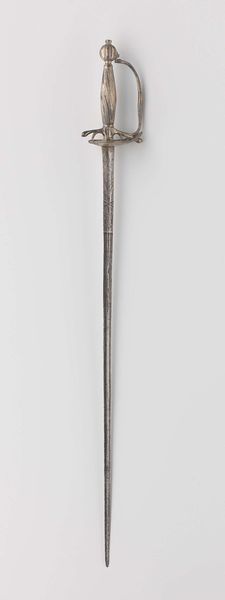
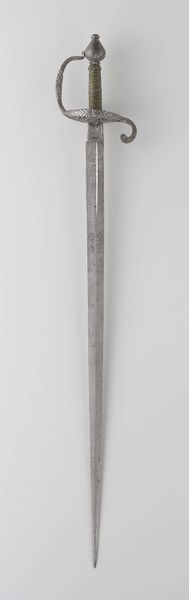
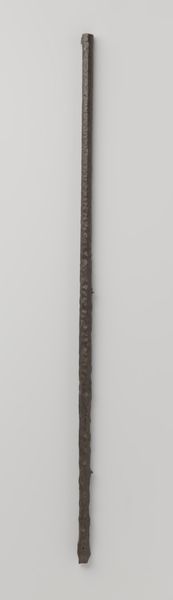
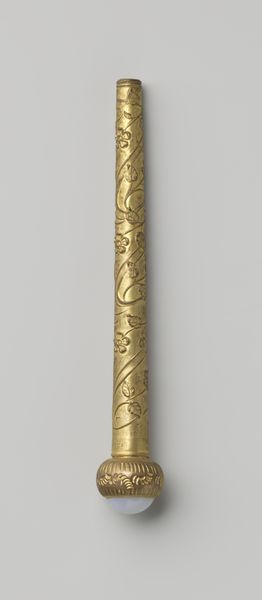
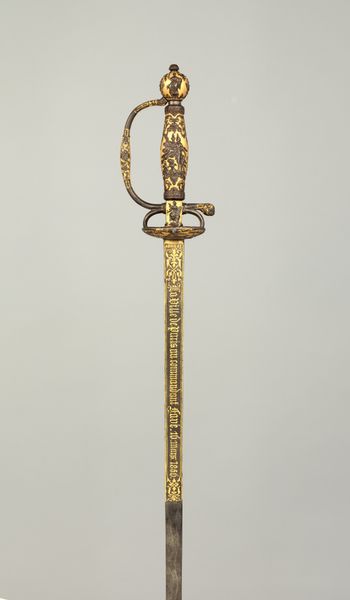
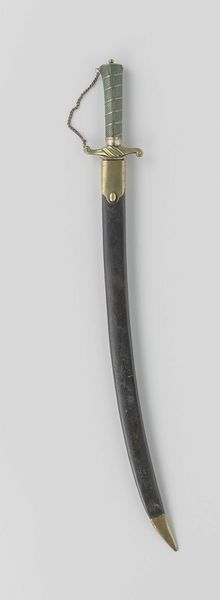
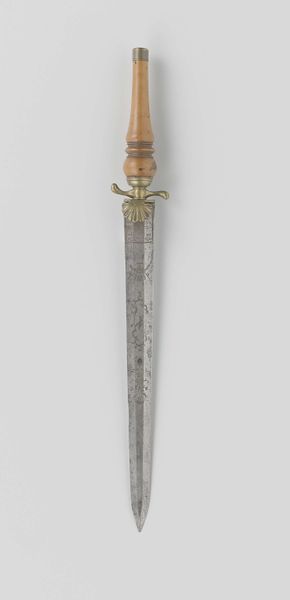
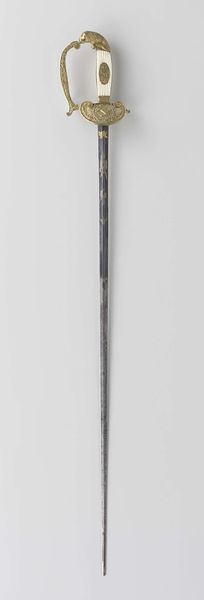
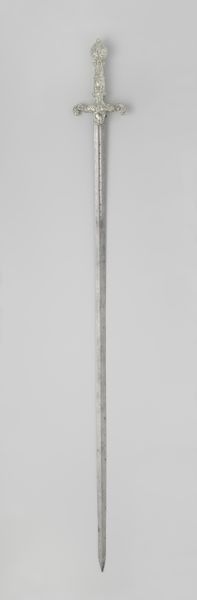
Editor: Here we have the "Sword of Jacob Cabeljauw," dating from before 1573. It's an impressive piece, mostly metal, and housed here at the Rijksmuseum. The inscription is fascinating and detailed, though I can't quite read the old script. What can you tell us about its story? Curator: Well, let's unpack that story together. The sword, beyond its function as a weapon, speaks volumes about power, status, and historical memory. What do you notice about the inscription and its placement? Editor: That it covers most of the blade, almost like a tapestry. Curator: Exactly! And who do you think Jacob Cabeljauw was, and why would they commission something like this? The inscription states that he was governor in year 1573. It’s unlikely just a personal adornment. It could act as a form of visual propaganda. By having his achievements etched onto the sword itself, he is quite literally imbuing the instrument of power with his own narrative. A very powerful action during his time! Editor: So it's a symbol of his authority? Curator: Absolutely. And consider the history around 1573 - wars of religion, political upheavals... A sword like this carries layers of meaning far beyond the battlefield. Also note it's about remembering! A memento that also serves to tell others a particular story, from a particular view point. Who exactly was that being honored here and who was deliberately excluded or supressed. Editor: It’s like the sword is telling a story, more than being just a weapon. Now I'm really seeing the impact that symbols and narratives have! Curator: Precisely. Analyzing an artwork like this invites us to critically assess the power structures and cultural contexts in which it existed and still operates within.
Comments

rijksmuseum over 2 years ago
⋮
In 1573 the town of Alkmaar was besieged by Spanish troops. The Dutch commander Cabeljauw led the forces that defeated this attack and forced the Spanish to retreat. He was promoted to military governor of Alkmaar and was probably presented with this sword as a token of honour. The text on the blade was presumably added in the 18th century to record the sword’s historical significance.


Join the conversation
Join millions of artists and users on Artera today and experience the ultimate creative platform.
 Collect
More like this