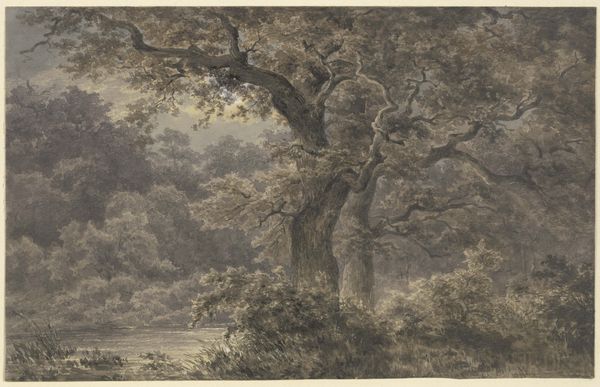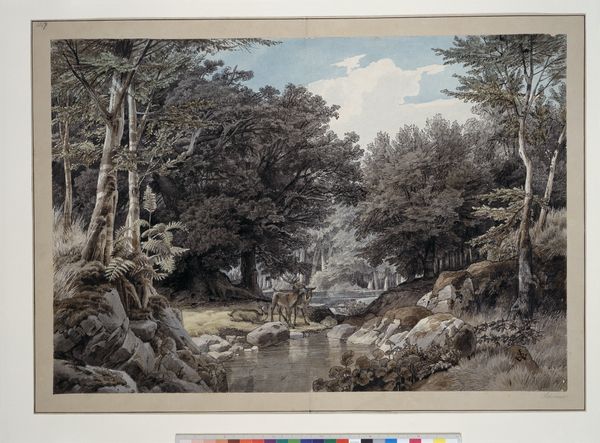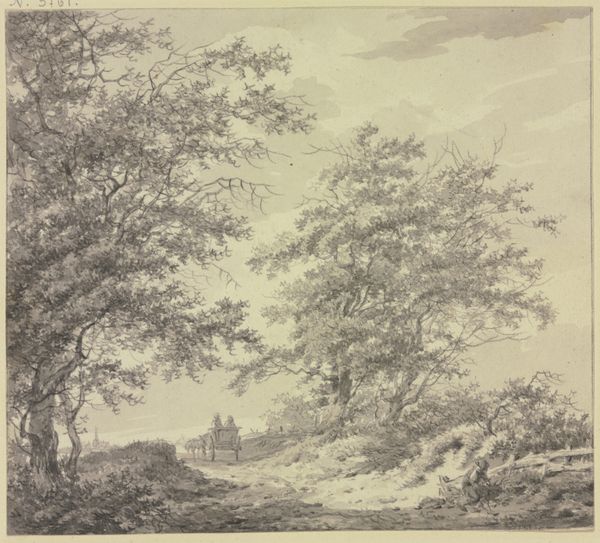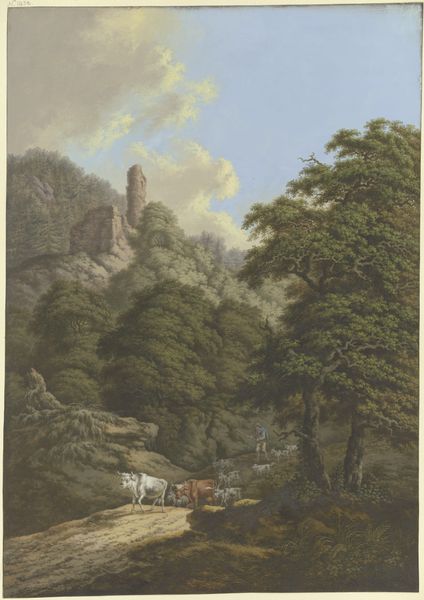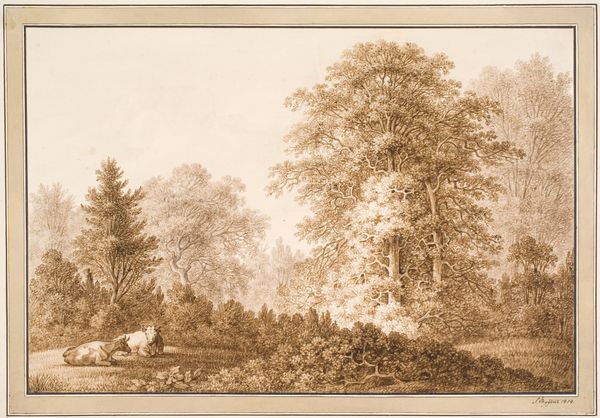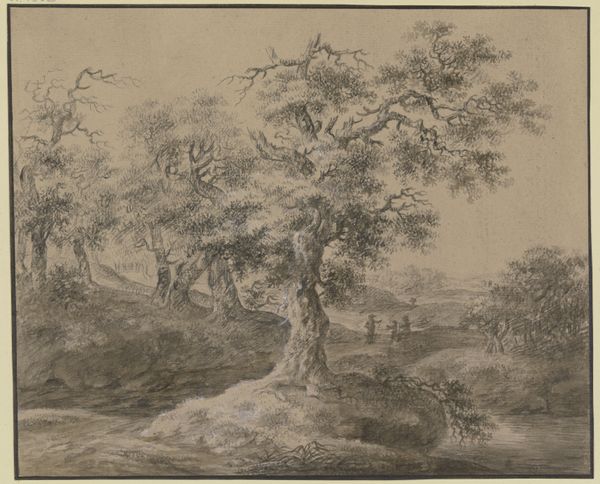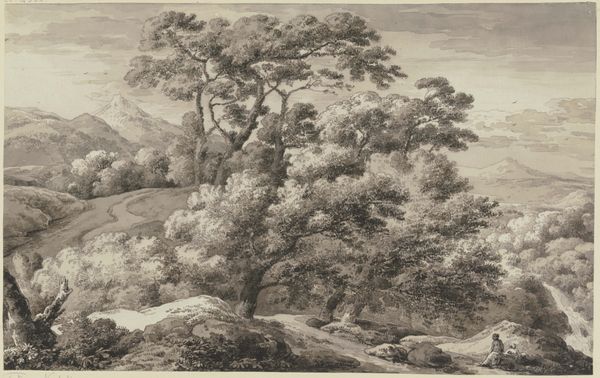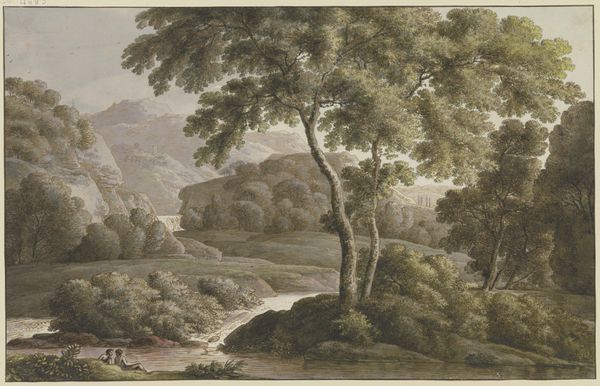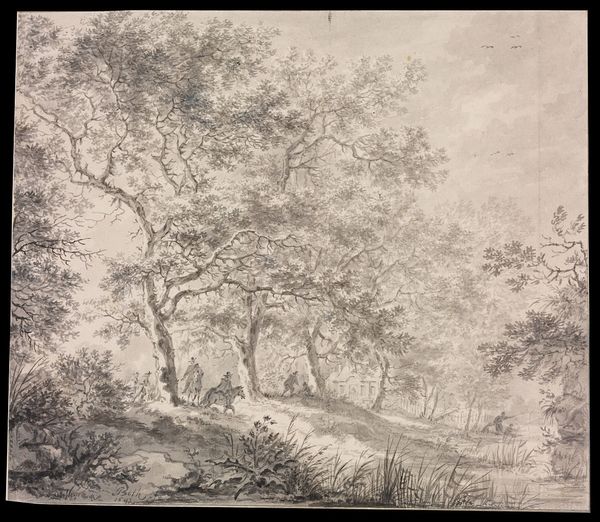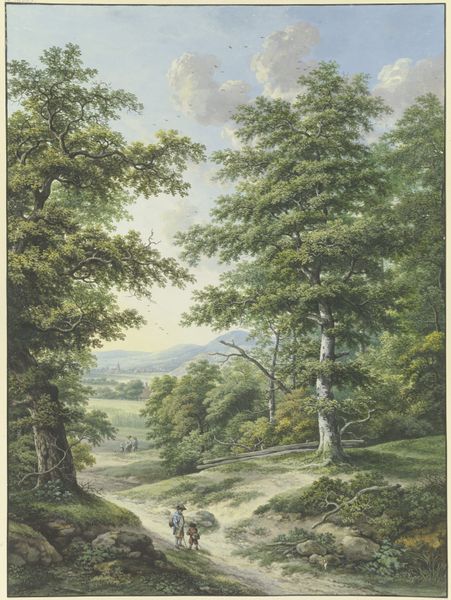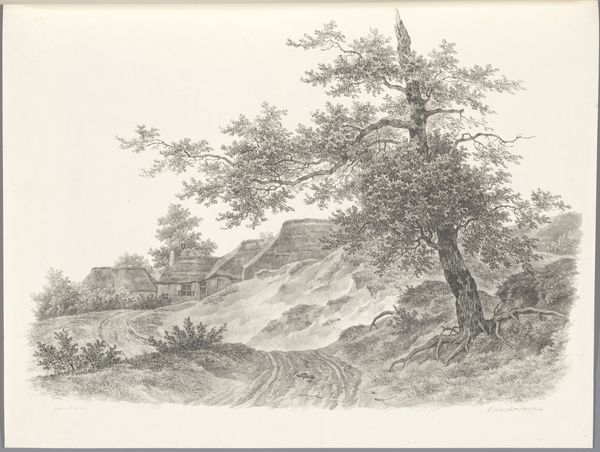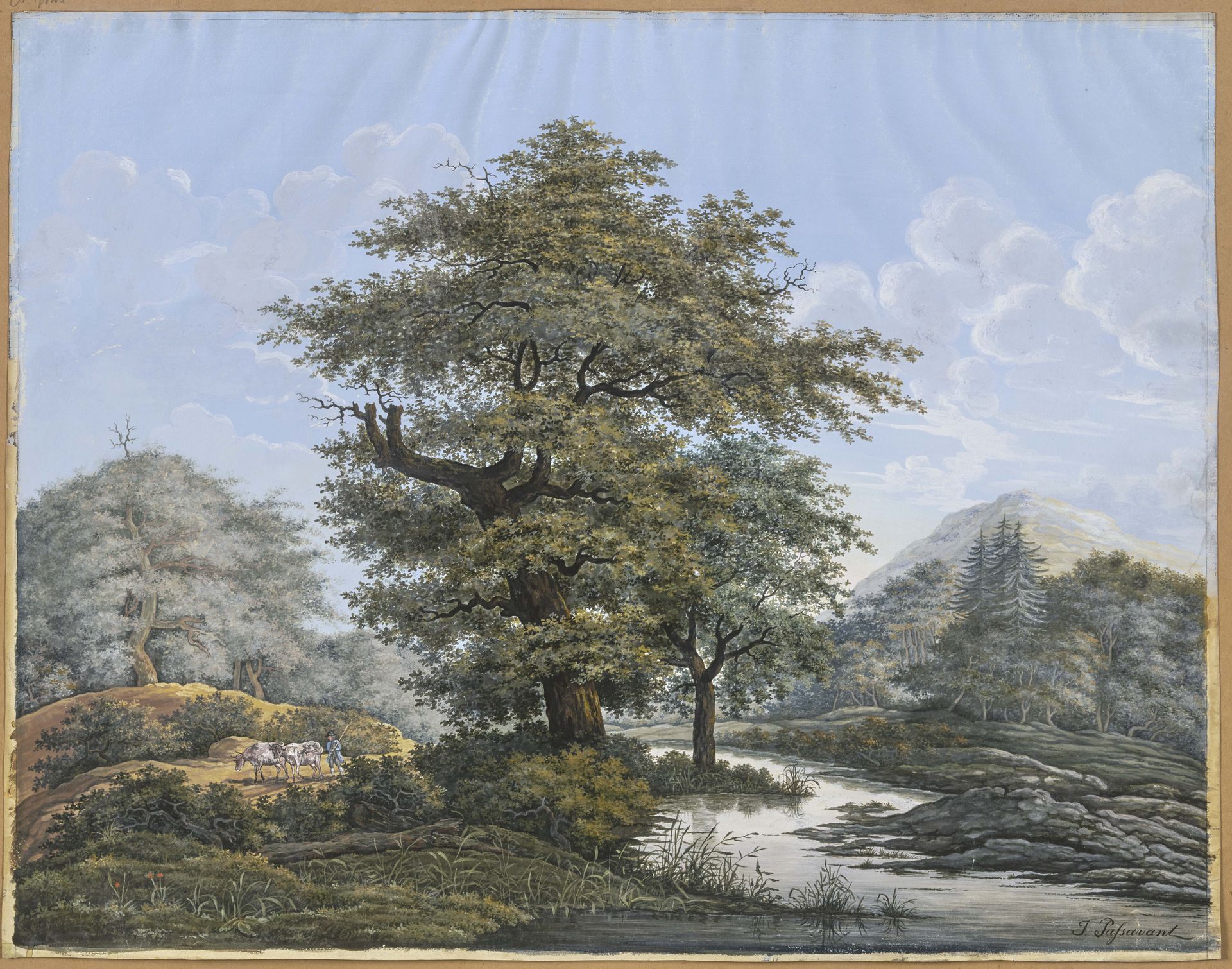
Baumreiche Landschaft, in der Mitte eine Eiche am Ufer eines Flusses


Listen to curator's interpretation
Curatorial notes
Curator: Johann David Passavant's "Baumreiche Landschaft, in der Mitte eine Eiche am Ufer eines Flusses" invites us to consider the intersection of art and nature in 19th century Germany. Editor: It's peaceful, almost idyllic, isn't it? A towering oak reflected in the gentle river… it evokes a sense of calm, but also a certain quiet grandeur. Curator: The artist employed watercolor and colored pencil on paper. It is remarkable how these relatively modest materials are worked to communicate the sublime. This plein-air work exemplifies the increasing importance of directly studying the natural world. This practice, supported through emerging pigment technologies and portable material inventions such as pochade boxes, was also essential to elevating landscape drawing into a popular mode of independent artwork. Editor: The choice of watercolor is crucial, wouldn’t you say? It lends itself to capturing transient effects – the light filtering through leaves, the shimmering surface of the water. It allowed artists to capture specific places. Where does this scene place itself in larger society or public imagination, perhaps? Curator: Precisely. We can view this work within the larger cultural shift towards Romanticism, where nature becomes not just a backdrop but a powerful force, mirroring human emotions and spiritual longing. Simultaneously, realism peeks through via Passavant's desire for the precise detail in natural observation, demonstrating his awareness of the scientific importance of trees during that period. This synthesis embodies larger struggles of the period: old order and enlightenment rationalism meeting head-on. Editor: And the scale? It feels quite intimate, almost like a private meditation on nature. But it's intended for public display in a museum, influencing broader audiences who value the cultural and institutional roles artworks played and continue to play in defining aesthetic tastes and ideologies of environmentalism, certainly. Curator: I agree. We should recognize how artworks depicting seemingly natural settings, like Passavant's watercolor landscape, became influential political artifacts shaping attitudes about the world. What do you make of this work, thinking about our audience encountering it today? Editor: For me, it's a reminder of how even the most personal artistic endeavors are invariably rooted in specific materials and societal circumstances, but speak in emotional or spiritual terms with a voice that we can all identify with. Curator: For me, I value how a landscape drawing that might seem initially conventional pushes back against these norms with a critical engagement to its historical present that transcends temporal boundaries and enters into larger discourse of value.