painting, oil-paint
portrait
figurative
painting
oil-paint
intimism
les-nabis
symbolism
genre-painting
mixed media
watercolor
Copyright: Public Domain: Artvee
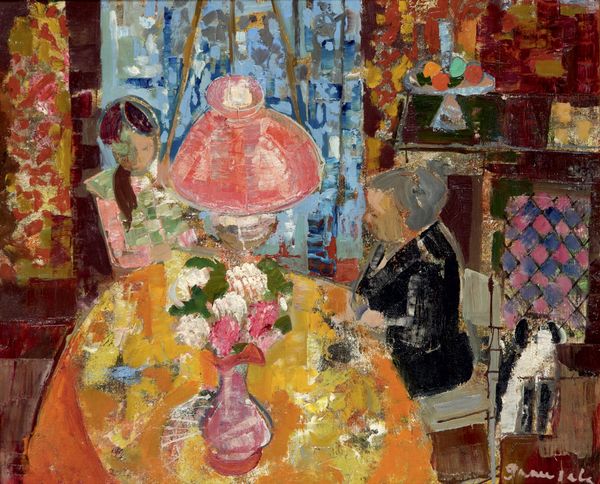
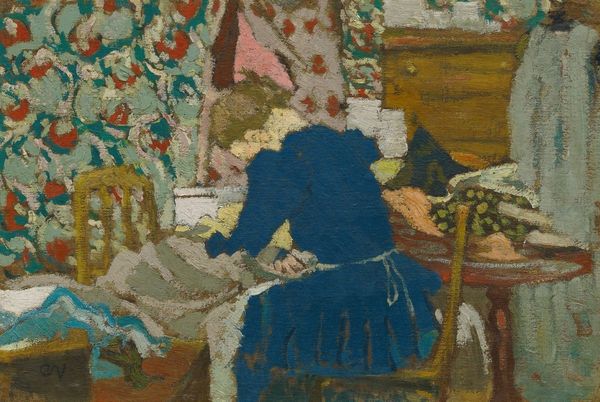
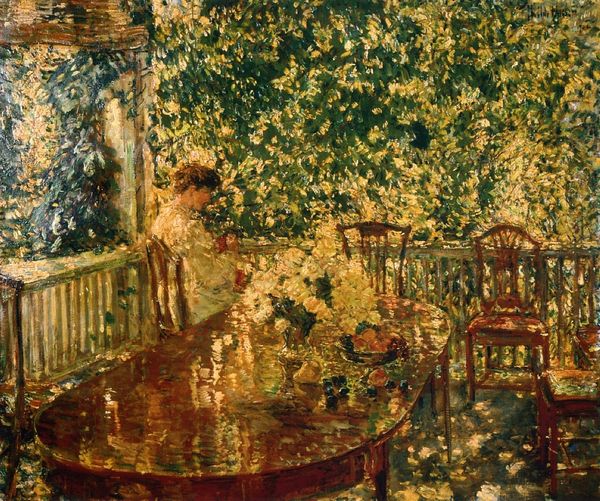
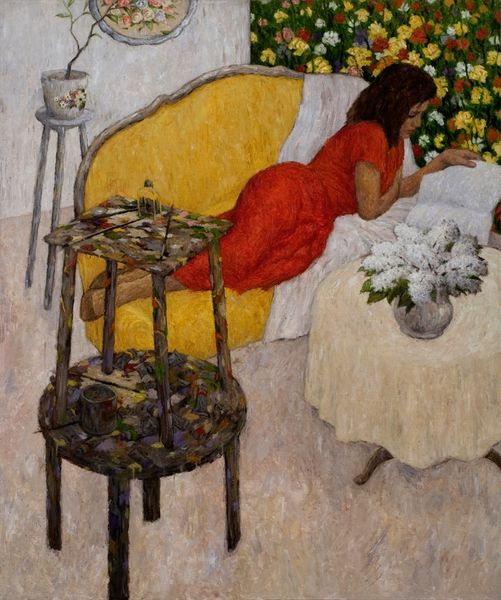
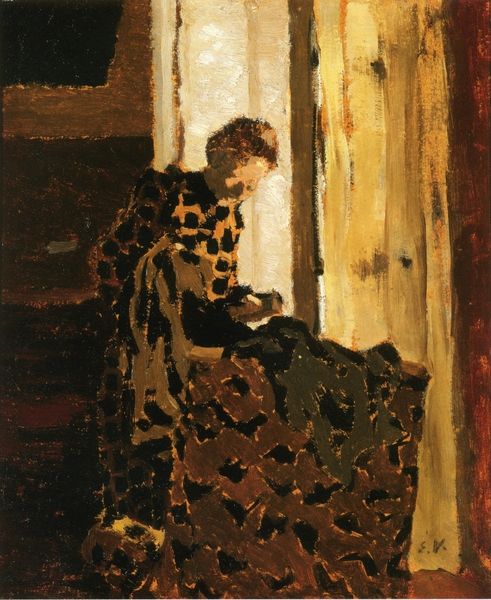
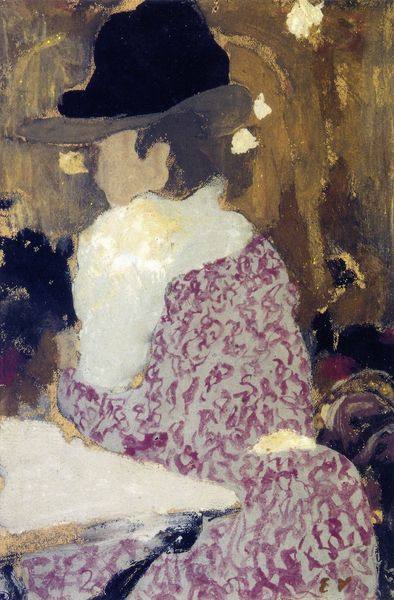
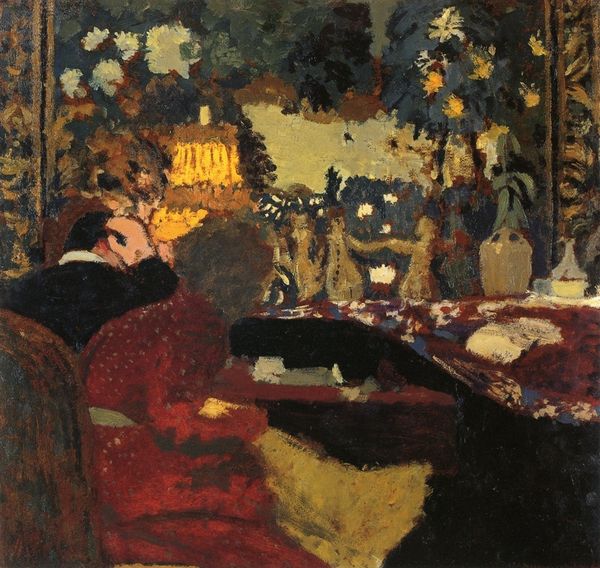
Curator: Édouard Vuillard's "Woman in a Striped Dress," completed around 1895, invites us into an intimate interior space. What strikes you upon viewing this work? Editor: The muted color palette creates a sort of hushed atmosphere. There's a pervasive feeling of quietude and introspective observation. Almost like peering into a private, everyday ritual. Curator: That sense of quiet aligns perfectly with the artistic movement called Intimism. Vuillard was a prominent member of the Nabis, who explored personal, domestic scenes. Notice the woman’s downcast gaze and the attention to the decorative elements. It is filled with visual symbolism. Editor: The stripes in her dress draw my eye. It almost looks like a cage and could represent limitations placed on women. Is that reading too much into it? Curator: Not at all! Stripes have often symbolized boundaries and social constraints. It can be a reference to historical tropes regarding gendered spaces, whether actual or socially manufactured. However, patterns of fabric here are an expressive device reflecting cultural fascination with decoration and modernity. Editor: I am also drawn to the surrounding vegetation, and the flowers on the table – especially the contrasts of color – the pale against the dark blooms. Curator: That could speak to the concept of fleeting beauty and the ever-present cycle of life. Notice the multiple perspectives as well— almost like visual layers. The scene takes place in a middle-class household in late nineteenth-century Paris; Vuillard suggests that everyday domestic spaces held multiple symbolic potentials. Editor: Seeing through your lens is fascinating; it seems like a simple scene contains multitudes. What would you say Vuillard hoped for the viewers to come away with? Curator: I think Vuillard sought to elevate the mundane, turning the overlooked into something profound and resonant. It encourages us to appreciate those intimate, uncelebrated aspects of everyday life. Editor: Now, considering the social climate and the cultural significance, it prompts me to consider my perceptions and biases and realize just how many hidden implications could exist within seemingly simple observations.
Comments
No comments
Be the first to comment and join the conversation on the ultimate creative platform.
 React
React Comment