1925
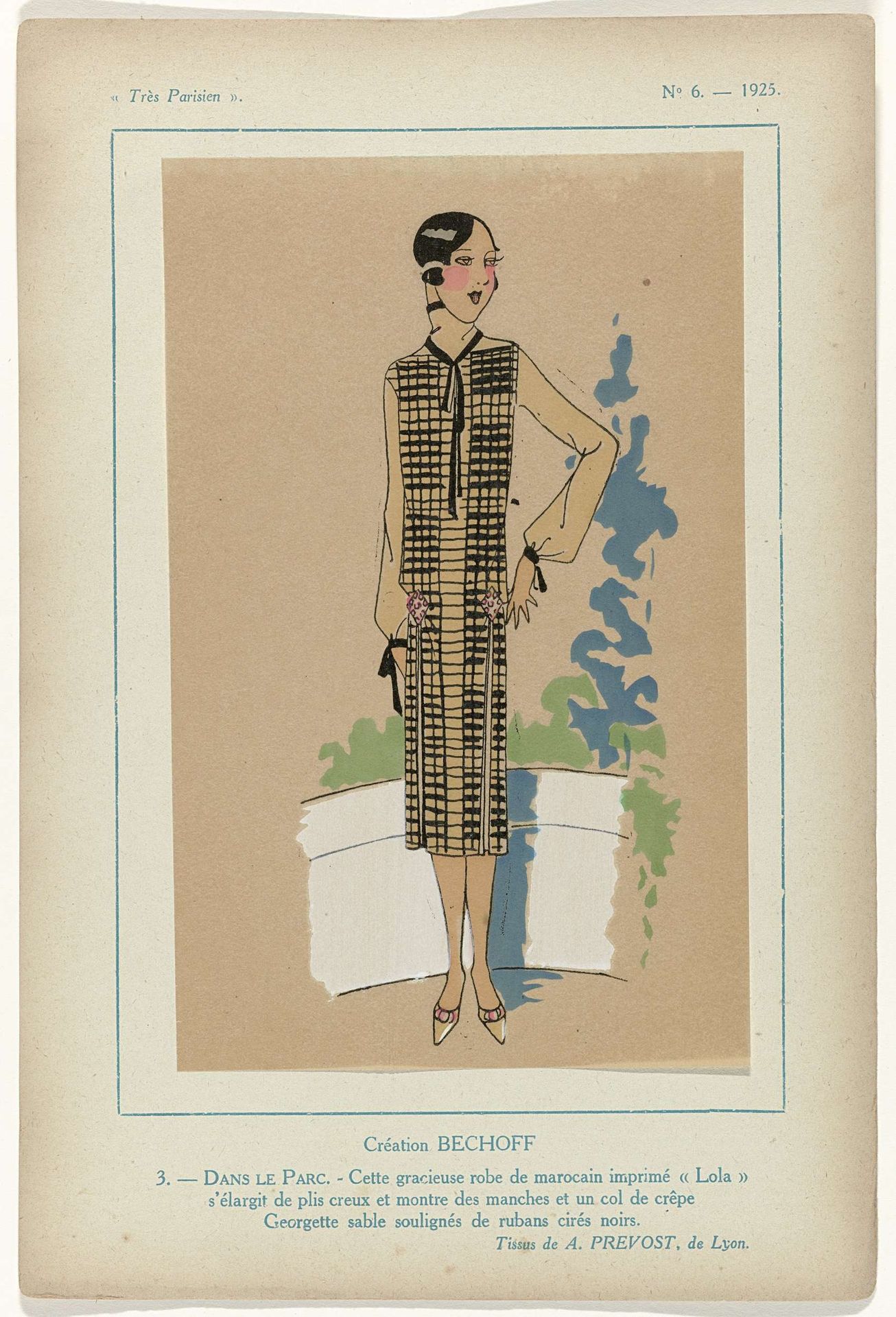
Très Parisien, 1925, No. 6, Pl. 3.: Création BECHOFF.- DANS LE PARC.

G-P. Joumard
@gpjoumardLocation
RijksmuseumListen to curator's interpretation
Curatorial notes
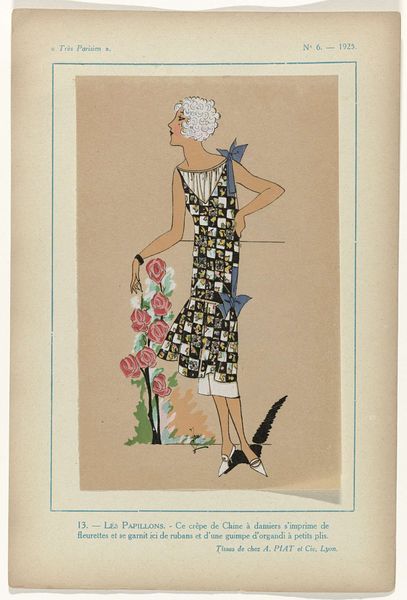
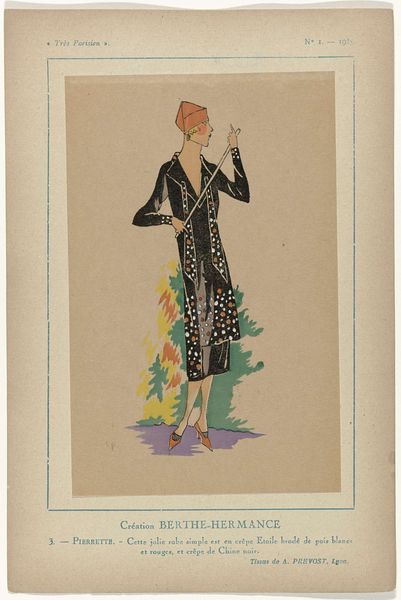
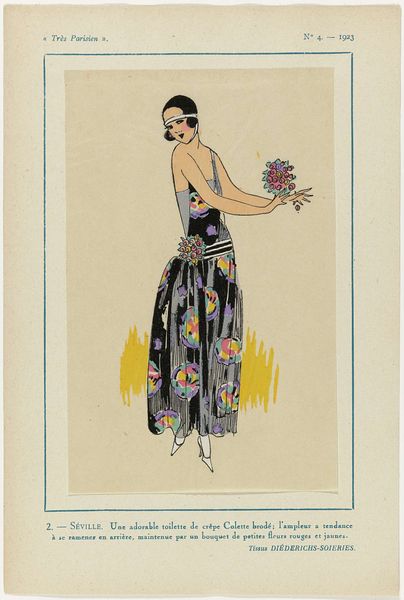
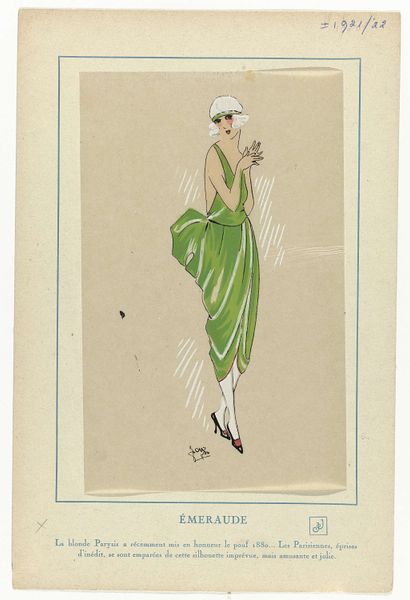
This fashion plate, “Très Parisien”, was made in 1925 by G-P. Joumard. Here we see a woman adorned in a dress of Moroccan print, a crepe collar, and georgette sable accentuated with waxed black ribbons. This ensemble tells us something about cultural identity and the collective desire for modernity. The ribbons evoke a subtle echo of mourning, yet they are rendered in a way that exudes elegance and sophistication, reminiscent of a society still processing the aftermath of the First World War. The black ribbon, an emblem seen in various forms throughout art history, is a powerful symbol of mourning and remembrance. Consider its presence in Victorian portraiture, where mourning jewelry was commonplace. Here, however, the ribbon is recontextualized, its somber undertones softened, transformed into an element of high fashion. This subtle interplay embodies how collective memory reshapes symbols. A gesture meant to convey profound sadness becomes integrated into the vivacity of modern life. This cyclical progression is the lifeblood of images.