c. 1629
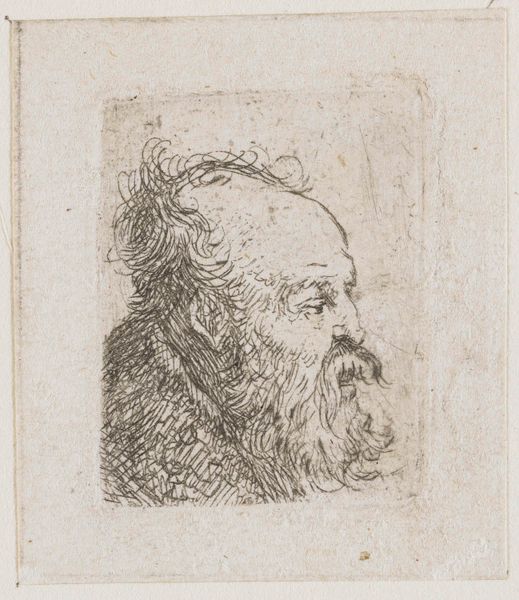
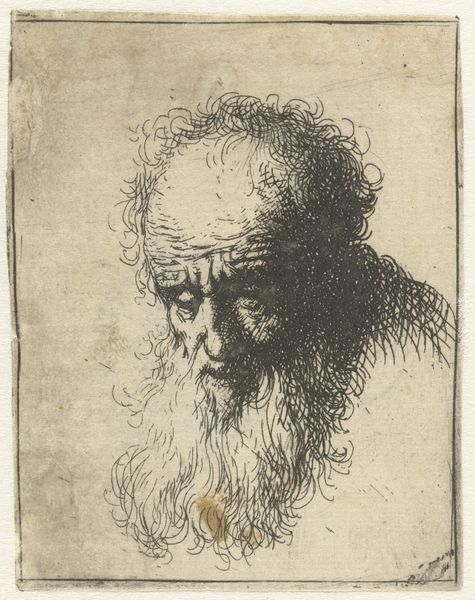
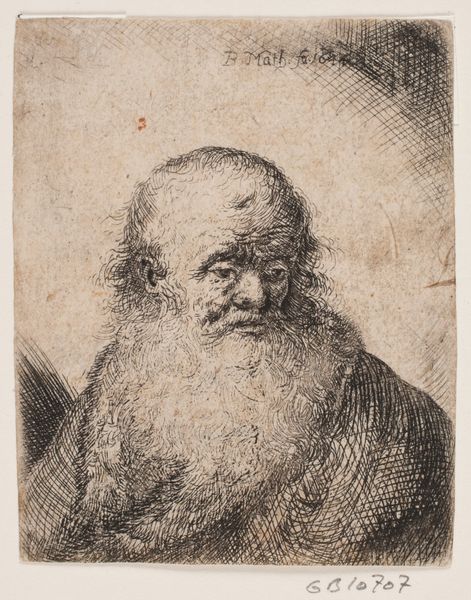
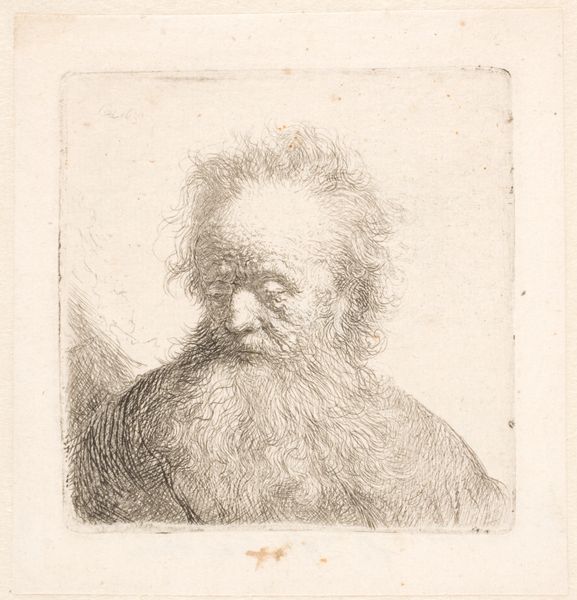
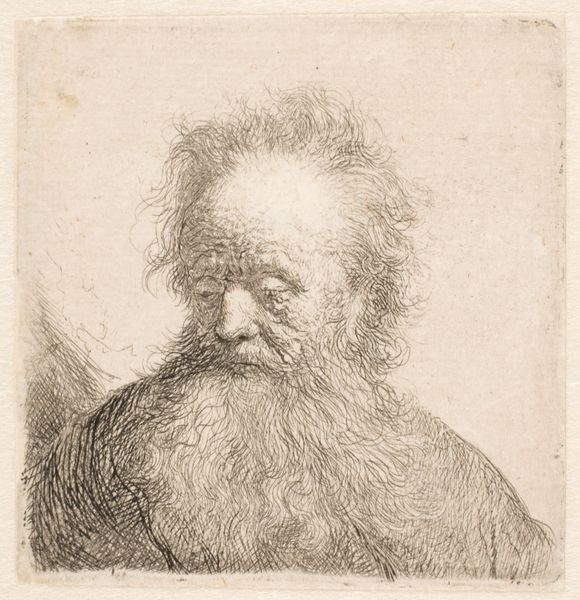
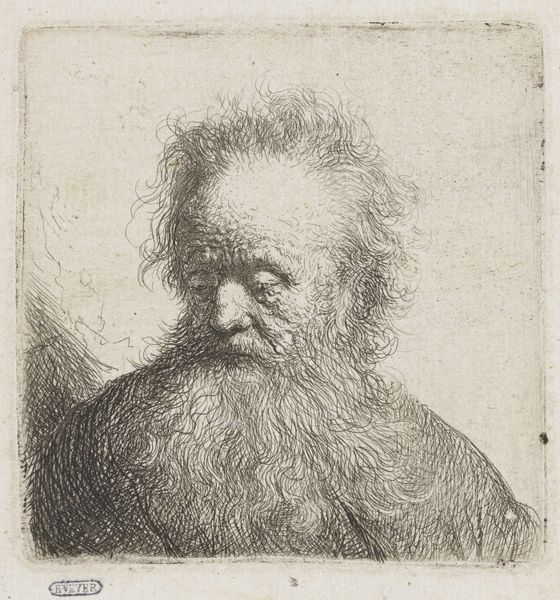
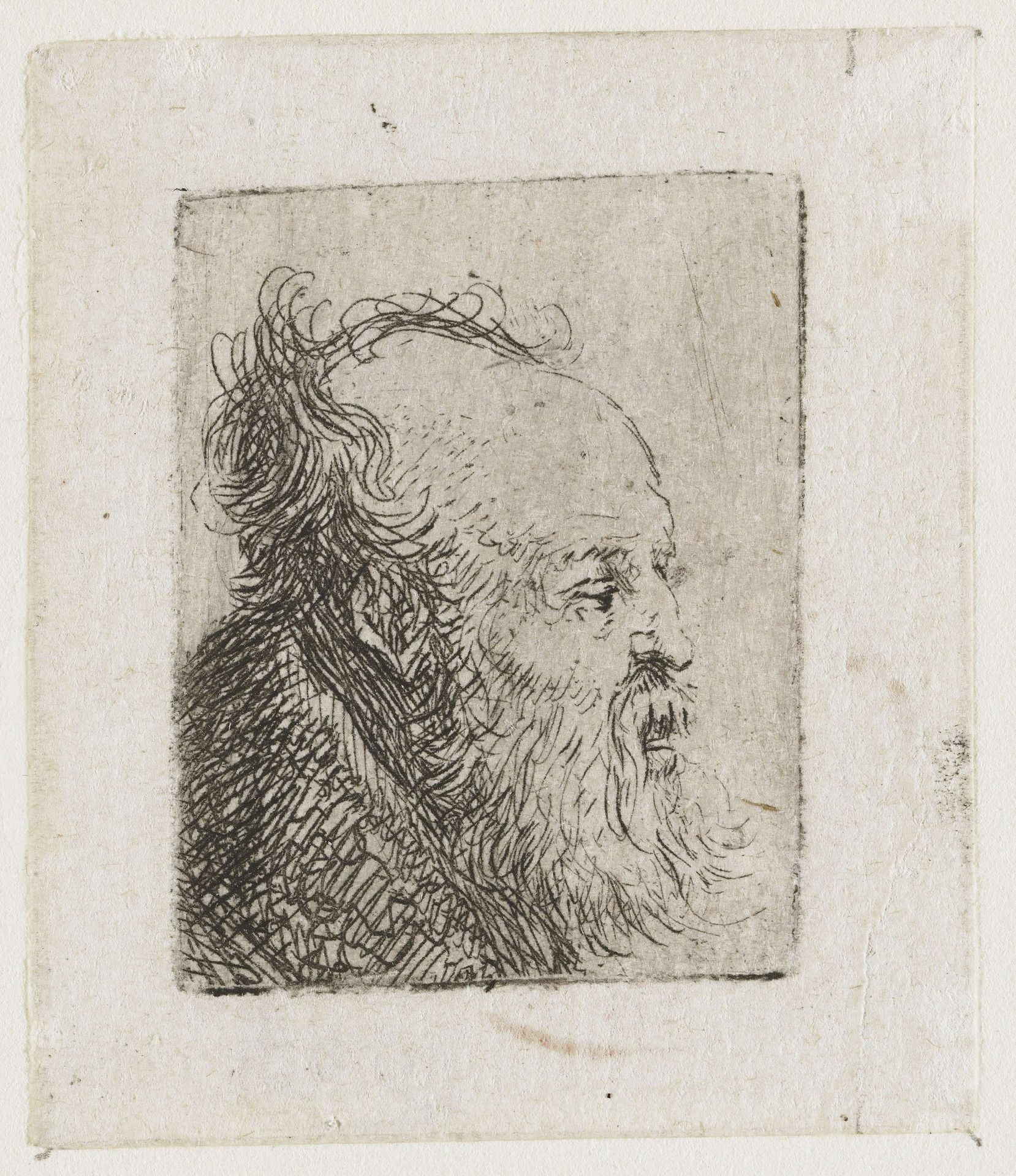
Old Bearded Man, with Mouth Half Open

Rembrandt van Rijn
1606 - 1669Location
RijksmuseumListen to curator's interpretation
Curatorial notes
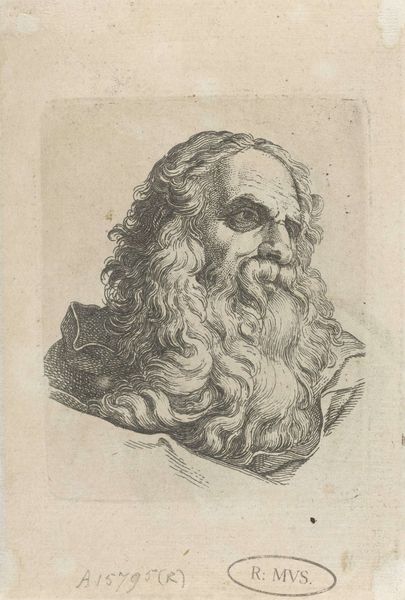
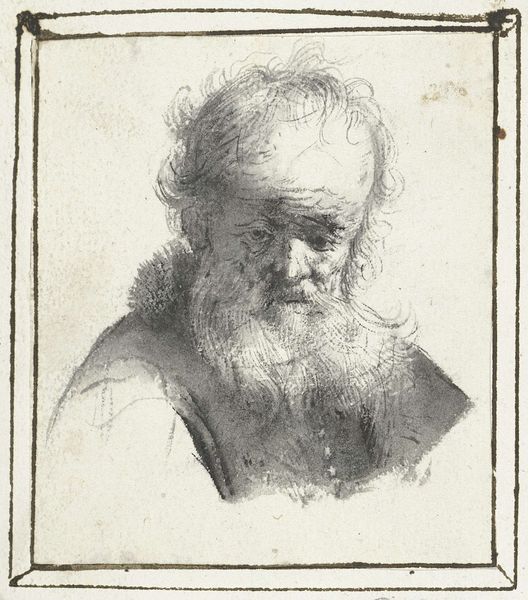
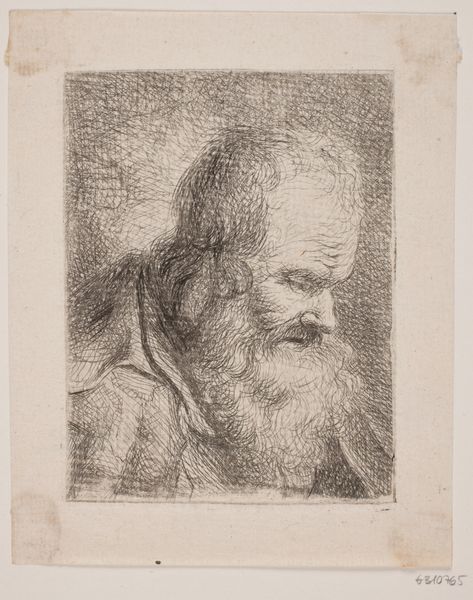
Editor: Here we have Rembrandt van Rijn's "Old Bearded Man, with Mouth Half Open," from around 1629, rendered in etching and ink on paper. It's such a quick, raw sketch – almost haunting in its directness. What stands out to you? Curator: What grabs me is how Rembrandt uses the figure of the "old man" – a recurring motif for him – as a space to explore themes of aging, wisdom, and, crucially, social vulnerability. Look at the etched lines; they aren’t just descriptive, are they? They speak to the precariousness of old age within a rapidly changing Dutch society, don't you think? A society that often marginalized those who couldn't contribute economically. How might his open mouth also be seen as symbolic of powerlessness, of being silenced? Editor: That’s a compelling idea. I was initially focused on the sort of immediacy of the technique but thinking about the social commentary is a new perspective. Curator: It’s essential to situate Rembrandt within his time. The Dutch Golden Age was, yes, a period of immense prosperity but also fraught with social inequalities. His interest in portraying elderly individuals, often those on the fringes, serves as a form of visual activism, drawing attention to overlooked experiences. The use of chiaroscuro is not merely aesthetic, right? It actively obscures parts of his face. Doesn't that create a metaphor for societal invisibility? Editor: It does. So, the roughness isn’t just a feature of the medium, but it’s contributing to the message, as well? Curator: Precisely. The art historical meets social observation. Consider how portraiture usually idealizes the subject, particularly wealthy patrons. Editor: Right! He's subverting those conventions. Curator: Exactly. It challenges us to reconsider who and what we value seeing. And what it means to see in art. Editor: Wow, I never thought of it that way before, I really learned a lot today. Curator: Absolutely! It’s a reminder of how artistic choices, even seemingly simple ones, can carry profound social and political weight, and of our own complicity in its continuing influence.