print, engraving
# print
#
landscape
#
figuration
#
romanticism
#
history-painting
#
nude
#
engraving
Dimensions: 182 mm (height) x 112 mm (width) (bladmaal)
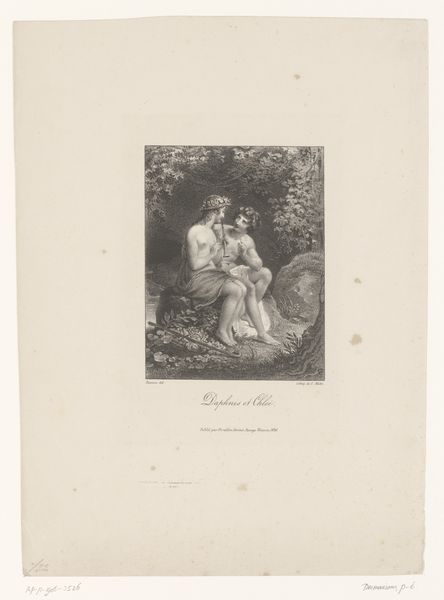
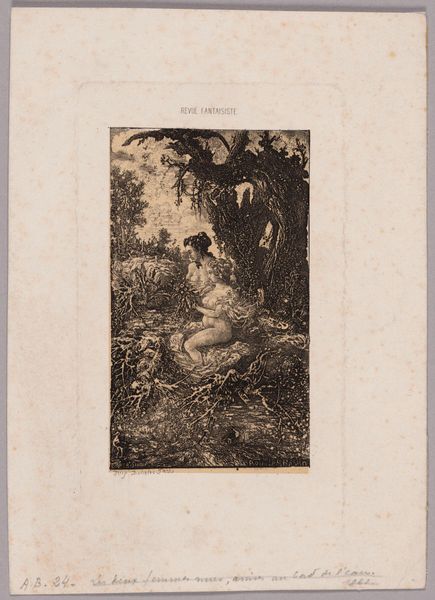
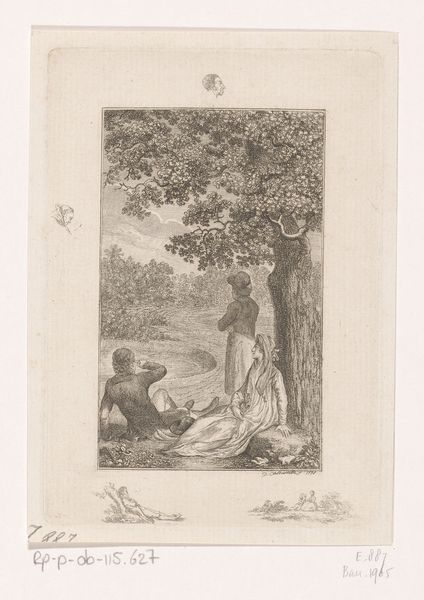
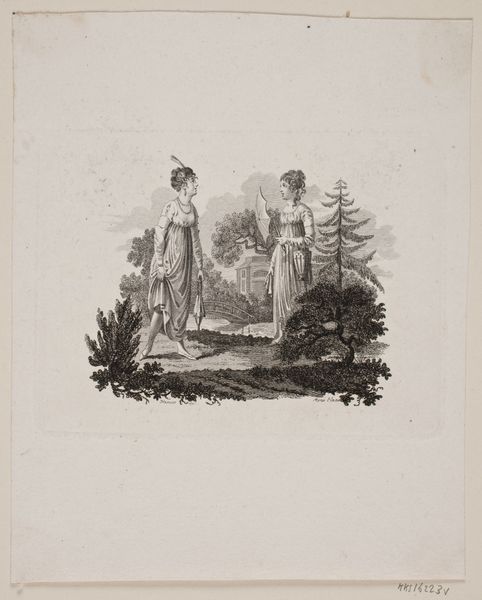
Editor: Here we have Meno Haas's "Bathing Woman" from 1824, an engraving on paper. It's a classic nude in a landscape, very romantic and idealized. The woman seems both vulnerable and powerful. What is your interpretation of this work? Curator: I see it as more than just an idyllic scene. Consider the socio-political climate of 1824. Romanticism often served as a retreat from industrialization and social upheaval, but it also contained seeds of resistance. This "Bathing Woman," seemingly innocent, could be read as an assertion of female autonomy and a connection to nature, away from the constraints of society. How does the act of bathing resonate with you, particularly considering societal expectations placed upon women during that time? Editor: I guess I hadn't really thought about it that way. It does feel a bit subversive to imagine her outside the male gaze, enjoying the water like that. Does the "history painting" aspect relate to any specific stories or mythology? Curator: Not explicitly, which is telling. Unlike many contemporary depictions of bathing goddesses or nymphs, this woman exists outside of a pre-defined narrative. She is an individual, presented without a clear mythological justification for her nudity. This could be a subtle commentary on the evolving role of women in society, perhaps yearning for more personal agency. The print medium is also important – it makes this image widely accessible, potentially circulating these ideas amongst a broader audience. What impact do you think this accessible imagery would have on contemporary viewers? Editor: I can see how that could offer a subtle message that might bypass direct censorship. That makes the romanticism seem much more radical now. Curator: Exactly. It makes me wonder what other “quiet” acts of resistance are embedded in art from this period. Thank you for letting me look at it in new light as well!
Comments
No comments
Be the first to comment and join the conversation on the ultimate creative platform.
 Collect
 React
React Comment
More like this