c. 1890 - 1900
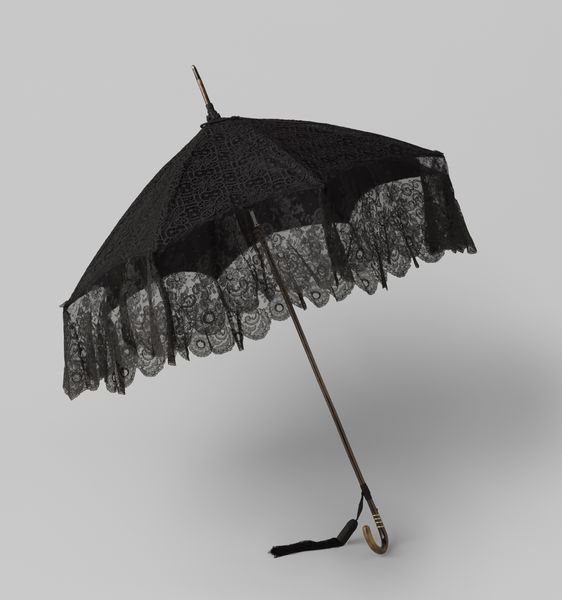
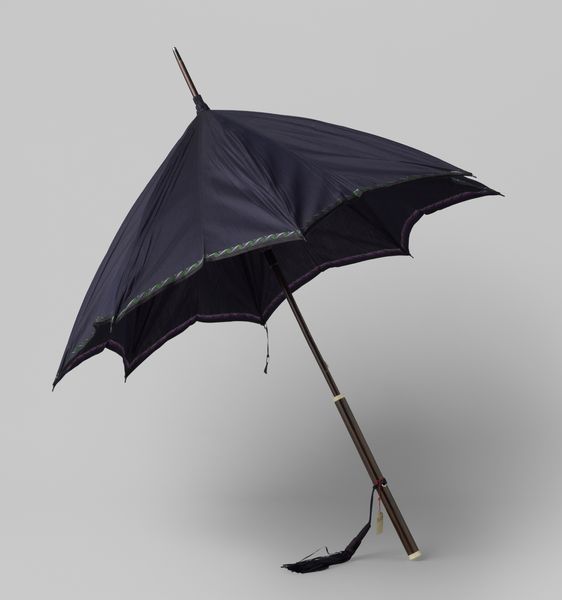
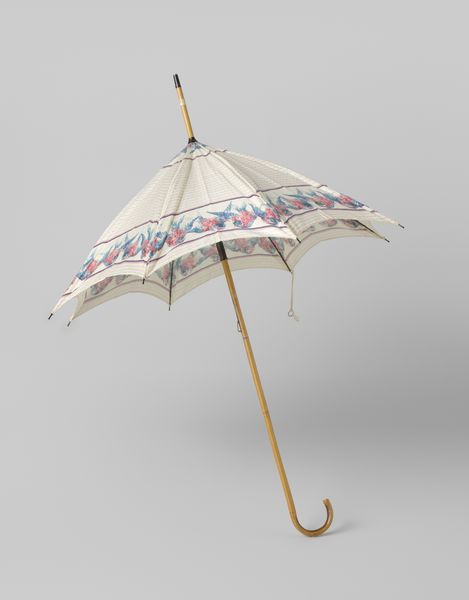
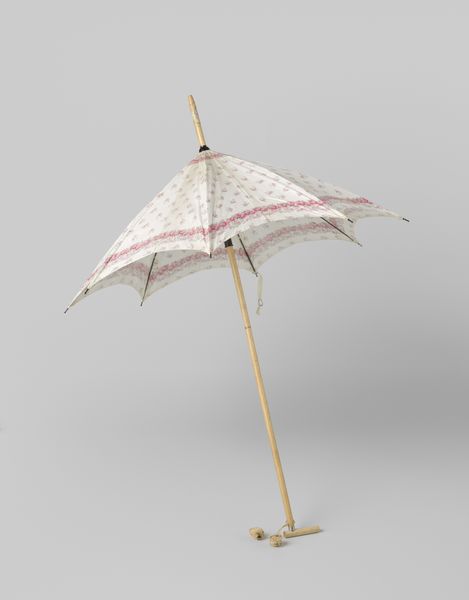
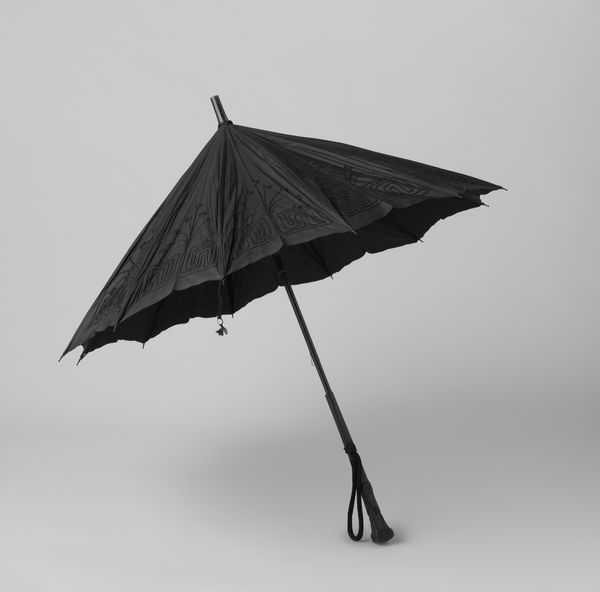
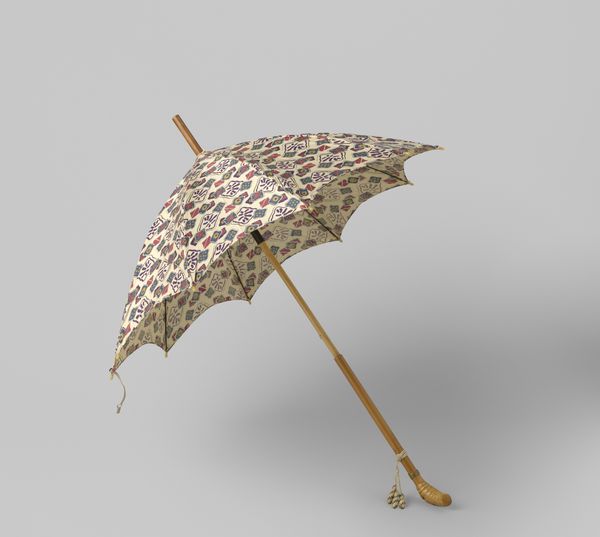
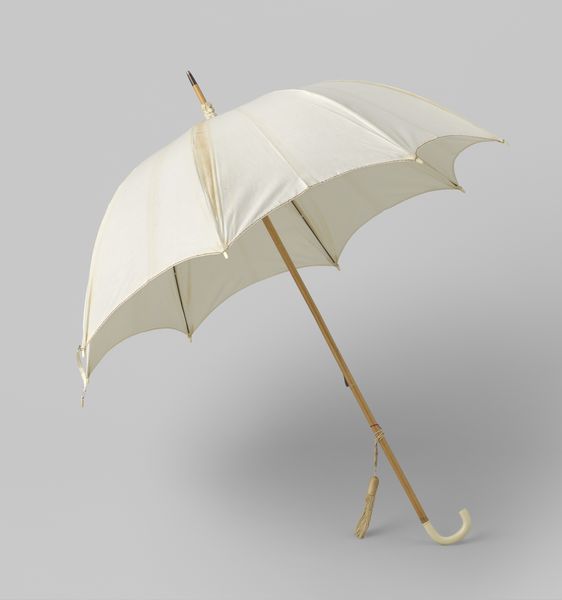
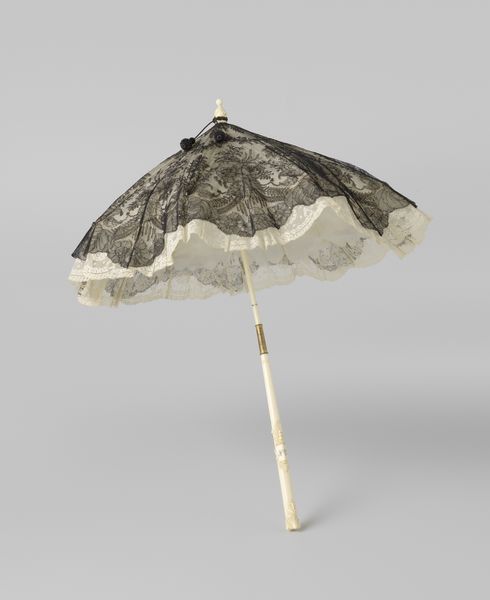
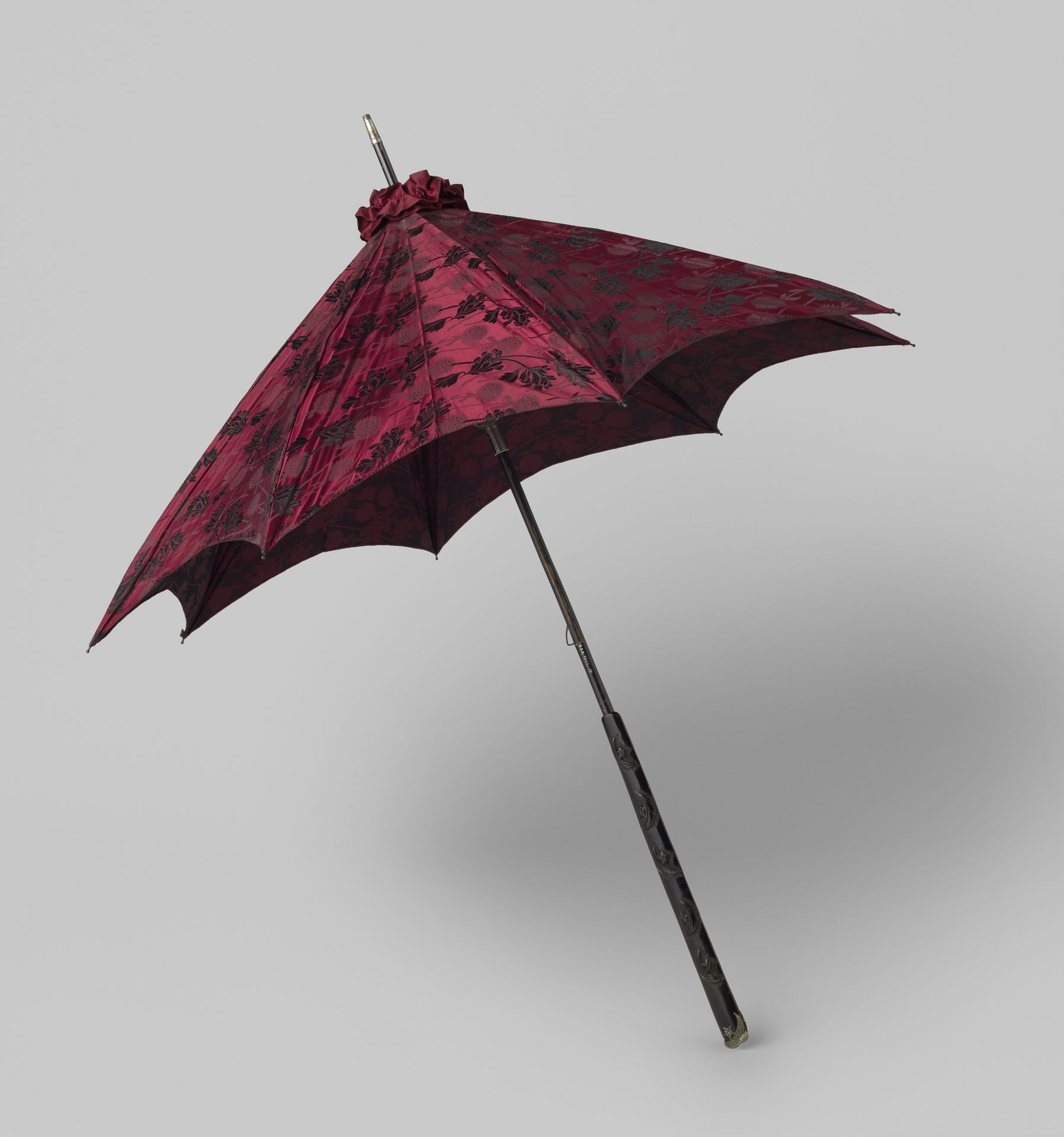
Parasol met dek van donkerrode zijde met ingeweven zwart en grijs floraal motief op een konische stok van hout waarop vijf halve manen in reliëf

Listen to curator's interpretation
Curatorial notes
This parasol was made anonymously, using dark red silk with a woven floral motif, stretched over a wooden frame. The choice of silk tells us a lot. Before industrialization, silk was precious. It was primarily associated with the elite, given its expense, and the labor-intensive processes required to create the fabric. The handle of the parasol is made of wood, decorated with five half-moon reliefs. This juxtaposition of materials, fine and relatively humble, is characteristic of the era when it was made. It is a reminder that while mass manufacture was expanding, so was the taste for handmade luxury. Consider the skills needed to make this object: the weaver, the woodworker, the assembler, all contributing to a single coordinated design. The parasol therefore speaks to the complex social relations of production, with the value of the object a sum of different expertises. It is an evocative demonstration of art, design, and craft working together.