photography
#
portrait
#
photography
Dimensions: height 105 mm, width 60 mm
Copyright: Rijks Museum: Open Domain
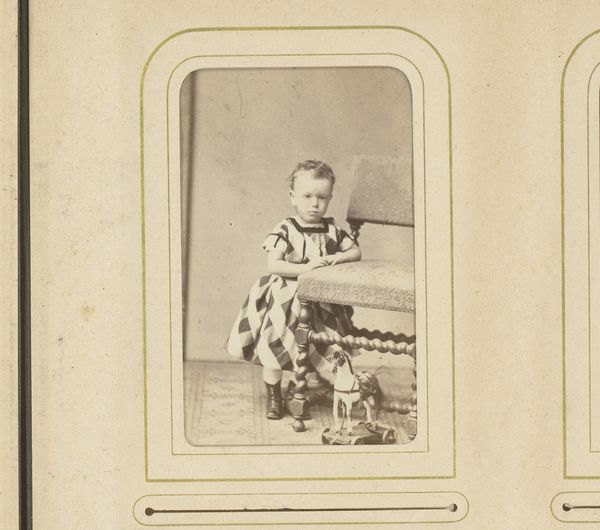
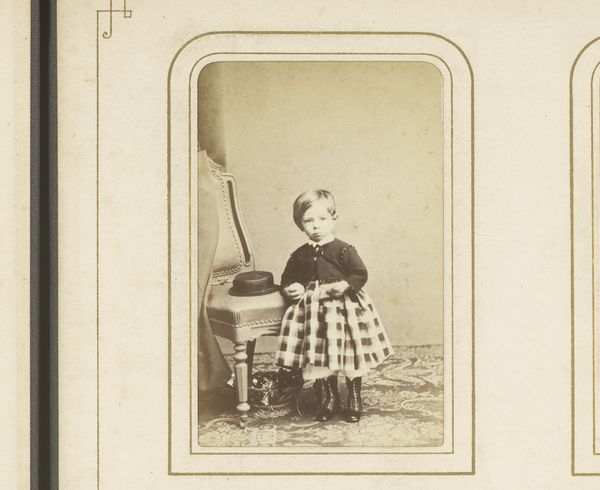
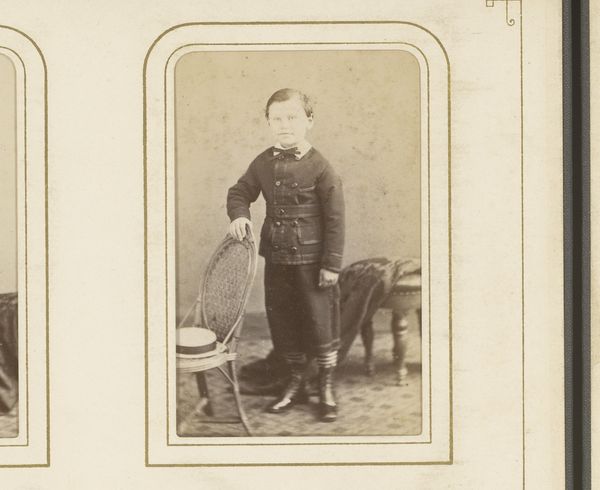
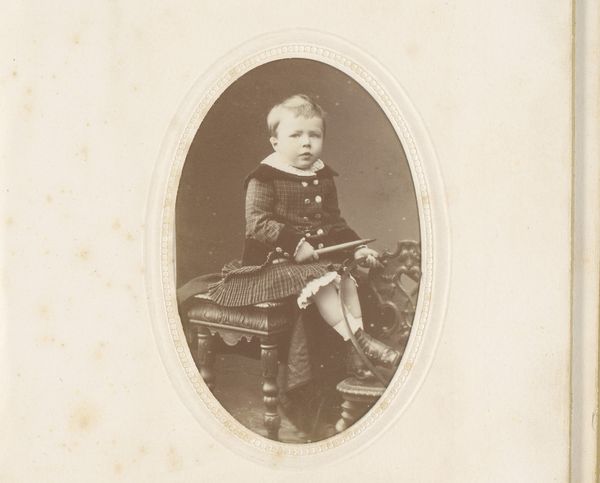
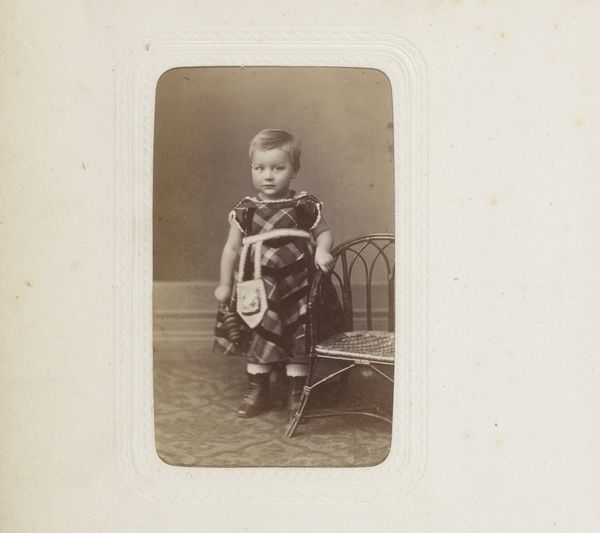
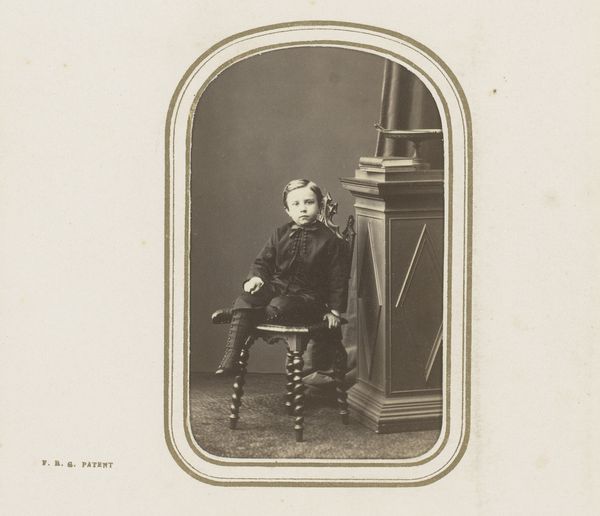
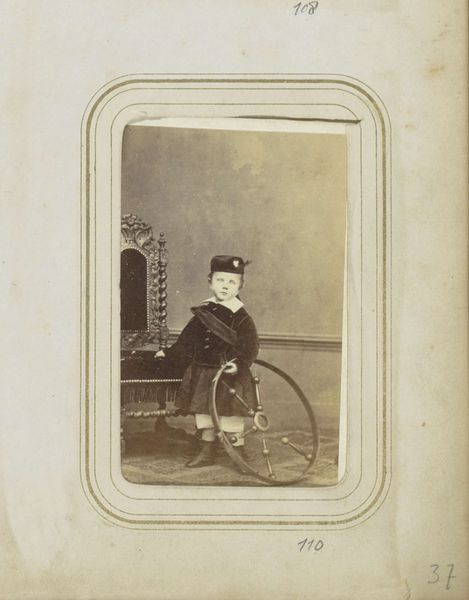
Editor: This is "Portret van een staand jongetje," or "Portrait of a standing young boy," a photograph by Albert Greiner, dating sometime between 1861 and 1874. It's part of the collection at the Rijksmuseum. I find it quite formal, almost stiff. What can you tell me about it? Curator: The stiffness you perceive reflects the socio-cultural constraints around photography at that time. Portraits like this served a crucial function in solidifying social status. The young boy’s clothing, his pose next to the ornate table, even the very act of commissioning a photograph – these were all signifiers of middle-class aspiration. Do you see any deliberate choices shaping the public's perception of this young subject and family? Editor: I suppose having the portrait taken at all implies a certain amount of social standing. And I notice his placement is on a pedestal… that's purposeful, right? He’s literally elevated. It all seems calculated to project an image of respectability and perhaps even wealth. Curator: Exactly. And who might have influenced this representation? The photographer, Greiner, played a significant role. Consider him not just a technician, but as an active agent shaping the image to align with the client's desired social narrative and, implicitly, his own understanding of bourgeois portraiture. Also, consider the consumption of such imagery: the role these portraits played when included in albums for display for visiting guests. Editor: So the photograph isn't just capturing reality; it's constructing a very particular version of it. Curator: Precisely! It highlights how photography, even from its early stages, functioned within and helped reinforce existing social hierarchies. In effect, a historical document, filtered through the lens of aspiration and social convention, reflecting very carefully chosen representations. Editor: I never considered the photographer as an active participant in crafting this type of social statement! That changes everything. Curator: It shows how understanding the historical context allows us to decode these images and glimpse the societal values they embodied.
Comments
No comments
Be the first to comment and join the conversation on the ultimate creative platform.
 Collect
 React
React Comment
More like this