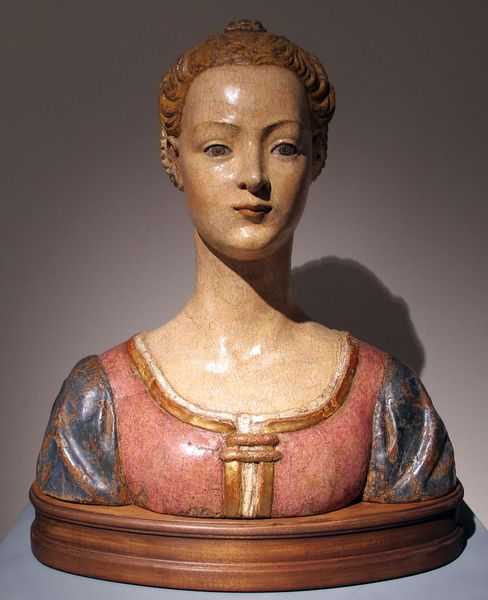
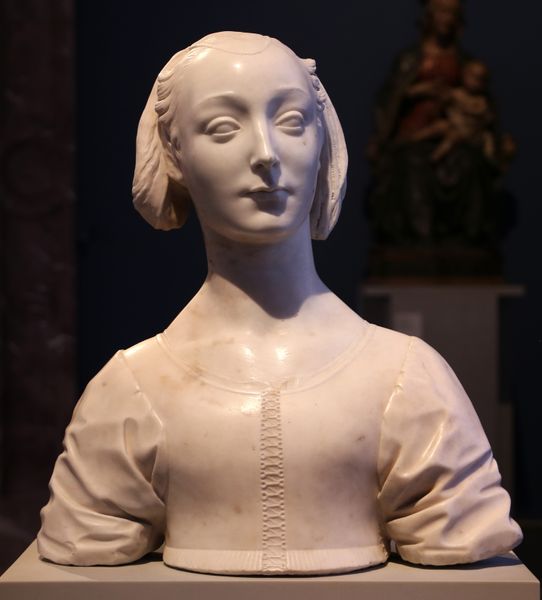
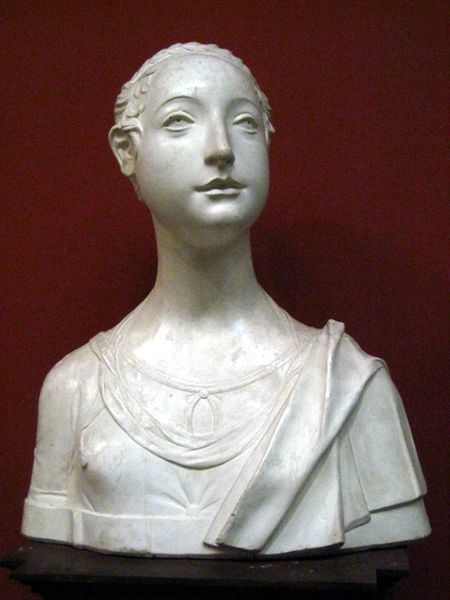
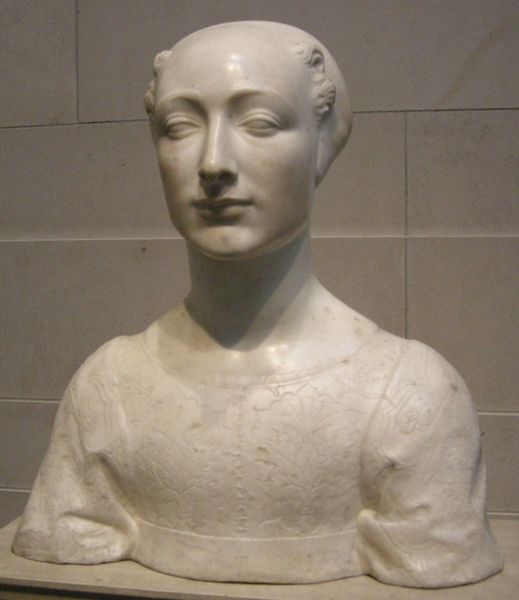
sculpture, marble
#
portrait
#
character portrait
#
sculpture
#
marble
#
italian-renaissance
#
realism
Copyright: Public domain
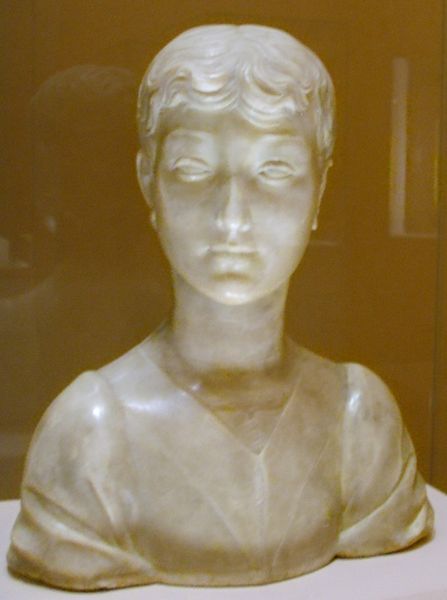
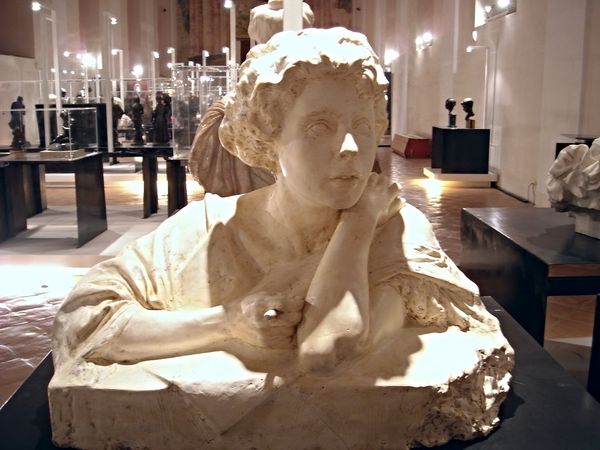
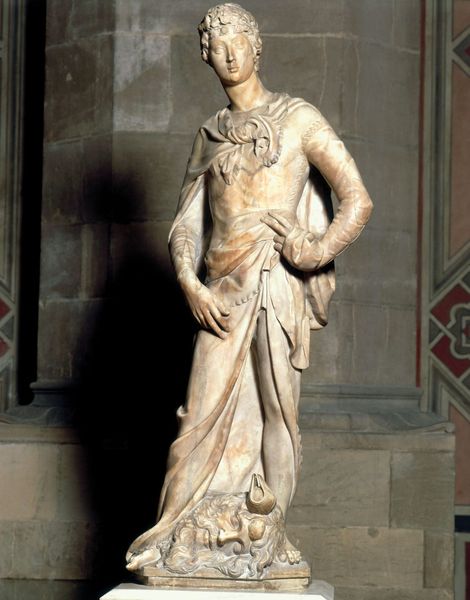
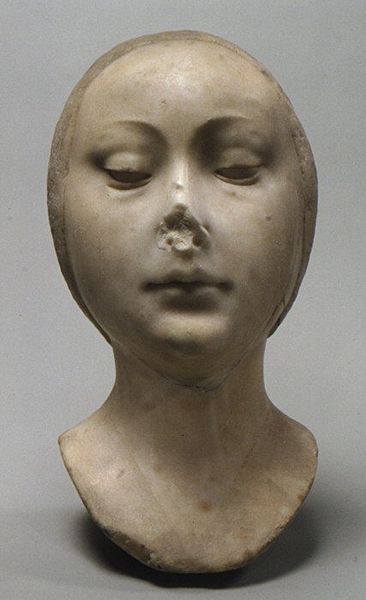
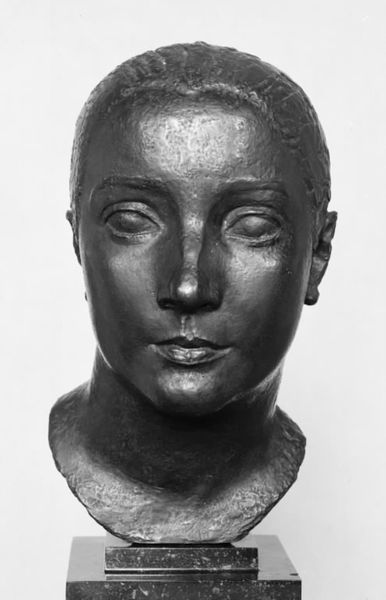
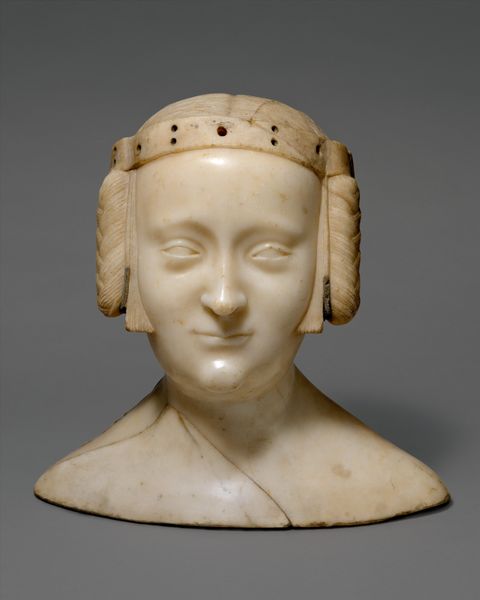
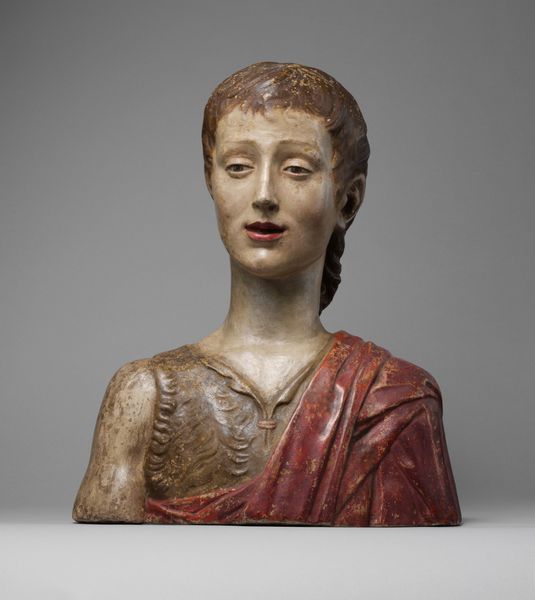
Desiderio da Settignano carved this painted terracotta bust of a woman in Florence during the mid-15th century. The sculpture reflects a broader cultural interest in the individual and the rise of portraiture during the Renaissance. The woman's identity is unknown, but her clothing and hairstyle would have signaled her status within Florentine society. The idealized features and delicate modeling of the face reflect contemporary standards of beauty, yet the sculpture also captures a sense of individual character. Florentine workshops had a guild system at the time, which would have shaped the conditions of artistic production. The patronage system, dominated by wealthy families such as the Medici, also played a crucial role in the art that was produced. This sculpture would have been commissioned by a wealthy patron, who was interested in conveying status. By studying the social and institutional contexts of the time, including guild records and patronage networks, we can better understand the meaning and significance of this beautiful bust.
Comments
No comments
Be the first to comment and join the conversation on the ultimate creative platform.
 Collect
 React
React Comment
More like this